Project to examine how AI is changing the way science is done
Posted on Wednesday 17 December 2025
The project, led by Dr Michael Stuart at the University of York, will bring together researchers from multiple disciplines to study what some academics describe as a major shift in scientific practice.
While science has long progressed through the use of tools that help people see, calculate and predict more effectively, little attention has been paid to the nature of those abilities themselves or to how new technologies may be altering them.
Space agencies, for example, now use AI to calculate more efficient flight paths for spacecraft. Some laboratories are beginning to use AI-powered robots to design and carry out experiments with minimal human intervention, but other studies, in medicine for example, have shown that doctors can actually become worse at certain tasks when they rely on AI support.
Day-to-day science
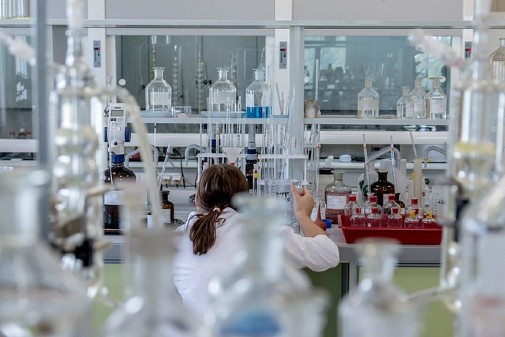
The project, which is supported by the prestigious ERC Consolidator grant, will examine the use of AI across four scientific fields, combining interviews, observations and data analysis to understand how researchers are deploying the technology in day-to-day work.
Dr Michael Stuart, from the University of York’s Department of Philosophy, said: “When people talk about AI changing the world, they often point to curing disease or tackling climate change. And those are really benefits meant to apply primarily to science, not our daily lives.
“Many scientists feel pressure from all sides to adopt AI, even when it isn’t clear yet what that means for their skills in the long run. If we want to know whether AI is actually good for us, we need to ask a simpler question: is it good for the way science is done?”
Detailed picture
Among the questions the team hopes to answer are: What problems are scientists using AI to tackle? How is AI reshaping core skills? And how might a clearer understanding of scientific abilities support more effective and ethical scientific training?
The project, called Scientific Progress and Artificial Intelligence: a Capabilities-Based Ethnographic Epistemology, aims to offer both the first comprehensive account of scientific ability and the first detailed picture of how AI is currently used in research laboratories.
Dr Stuart added: “There’s a growing concern that relying too heavily on AI could quietly erode core scientific skills, but we know that the most useful AI systems aren’t replacing scientists, they’re helping them search vast possibility spaces, design better experiments, and make sense of complex data.
“We aim to identify which scientific abilities are being strengthened, weakened or otherwise changed as AI systems become more widely used.”
The findings will inform a broader philosophical study of what counts as “scientific ability” and how improved abilities relate to traditional measures of scientific progress, such as increased knowledge or understanding.
Further information
The project takes a share of the ERC's record €728 million Consolidator Grant awards for 2025. The grants support mid-career researchers to carry out cutting-edge research projects lasting up to five years across a variety of fields.


.jpg)