York student creates fully-sustainable bio-polymer with potential to replace traditional plastic
Posted on Wednesday 23 April 2025
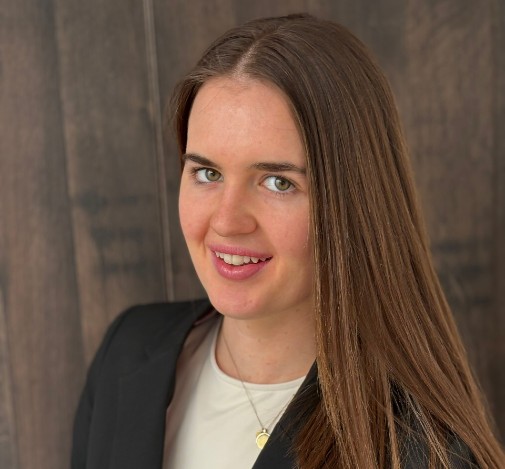
Maisy Whitehead, a 20-year-old student in the School for Business and Society, has developed a bio-polymer which is said to have the durability and versatility of conventional plastic while being entirely sustainable and biodegradable.
Maisy is launching her invention through her newly launched York-based company, VegoPak. The firm’s innovative bio-polymer, crafted from natural materials, could be used across a vast spectrum of uses, from children’s toys and food packaging to robust containers and even car parts.
Originally from Australia, the young entrepreneur is currently awaiting the outcome of a patent application for her product, which she says is not only non-toxic and sustainable but also meets the stringent standards required for health and hygiene products, as well as technology applications like protective casings and internal components. Crucially, unlike its fossil fuel-derived counterparts, VegoPak’s bio-polymer breaks down naturally, leaving no harmful residues behind.
Cutting-edge innovation
Maisy said: "Our goal at VegoPak is simple: to empower companies to meet their Corporate Social Responsibility aims by offering a truly sustainable bio-polymer that can seamlessly replace traditional plastics across many industries.
"We see cutting-edge innovation in materials as the best way to combat the growing global plastic crisis, and we're really excited to be launching a product that could be a game-changer in this crucial shift."
Investment
Maisy is now actively seeking investment from businesses and organisations committed to actively reducing their plastic footprint.
The University has played a crucial role in VegoPak’s early development. “Setting up the business has enabled me to put the skills I am learning through my BSc in Business and Management into practice”, Maisy said. “I also used the University’s Green Chemistry plant to test my product and verify its chemical structure and was impressed by the thorough service and rapid turnaround times”.
Maisy believes VegoPak’s breakthrough product holds immense promise to revolutionise the market and pave the way for a significantly more sustainable future.
Unique product
“I am deeply committed to finding a real solution to the pervasive plastic waste problem,” Maisy added. “With estimates indicating that around 400 million tonnes of plastic waste are generated annually, the urgency for effective solutions has never been greater. My ultimate aim is for my bio-polymer to completely replace all traditional plastics. Its non-toxic nature, full biodegradability, and potential for mass production make it a really unique product.”
Beyond her entrepreneurial endeavours, Maisy has also taken on the role of president of the University’s student-led Entrepreneur Society and is passionate about inspiring and supporting fellow students eager to embark on their own business ventures.

.jpg)