Researchers test impact of school smartphone ban in new Channel 4 documentary
Posted on Wednesday 11 September 2024
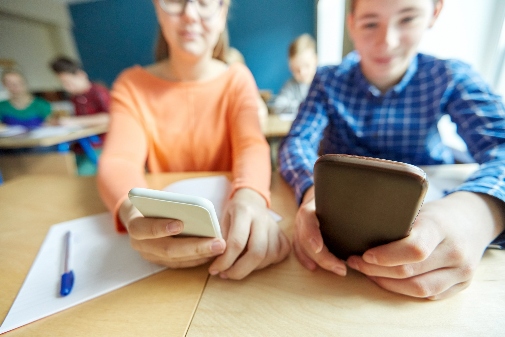
Swiped: The School that Banned Smartphones, hosted by Matt and Emma Willis, is based at The Stanway School in Colchester, and challenges a group of Year 8 pupils to give up their smartphones completely for 21 days.
The experiment, led by Professor Lisa Henderson and Dr Emma Sullivan from the University, will see the pupils undergo a series of tests, with experts monitoring their behavioural changes throughout the period, and repeating the tests at the end of the three weeks to conclude what effects giving up your phone really does have on your brain including sleep and attention.
By comparing them to a control group who are using their phones as usual, the experiment will be able to reveal what effects giving up your phone really does have on your brain including for sleep, cognitive abilities and wellbeing.
Improve understanding
The tests will include a series of cognitive tasks, testing attention, reaction times and memory, also measuring the brain directly with EEG. They will also participate in questionnaires covering sleepiness, mood, stress, loneliness, school enjoyment and social connectedness. The pupils will also wear watches to measure their sleep, daily activity and heart rate variability.
The tests will include a series of cognitive tasks, testing attention, reaction times and memory. They will also participate in questionnaires covering sleep, anxiety, depression, mood, stress, loneliness, enjoyment and social connectedness.
At the end of the experiment, the team aims to have a better understanding of how the group’s relationship with their smartphones has changed, and if the findings could be the catalyst for nationwide change for children under 16.
Sleep impacts
Professor Lisa Henderson, from the University of York’s Sleep Laboratory at the Department of Psychology, said: “The extreme total ban approach we are taking in this first-of-its kind experiment will allow us to reveal what giving up a smartphone does to young peoples’ wellbeing, how it affects their sleep, their cognitive abilities and the alertness of their brains.
“Studies that can address causality are a critical piece of the puzzle that we need to better understand the psychological costs and benefits of smartphones, so we can protect our young people, empower parents to create safe worlds for their children, and be in a stronger position to campaign for the appropriate safeguards and legislation to be put in place.”
It is reported that 50% of all 9-year-olds in the UK own a smartphone, with 43% of UK teens using their smartphones during school lessons. Frequent social media use has been found to increase a child’s risk of depression by 27%, and a recent Education Select Committee report revealed that one in four children now use their phones in a manner resembling behavioural addiction.
Spark change
Alongside Dr Rangan Chatterjee, – medical doctor, author, television presenter and podcaster - the series will also feature other experts, scientists, campaigners and politicians to uncover the effects of smartphone use.
Emma and Matt Willis said: “Our lives these days revolve around our smartphones, and the thought of three weeks without them is quite honestly daunting, yet fascinating.
“The statistics on children’s smartphone use are beyond worrying so the time feels absolutely right for the issue to be addressed. We're intrigued by the results of the experiment and hope it can spark change and have a lasting and positive impact on everyone.”