New research reveals too many ‘broken promises’ in the fishing industry post-Brexit
Posted on Wednesday 7 February 2024
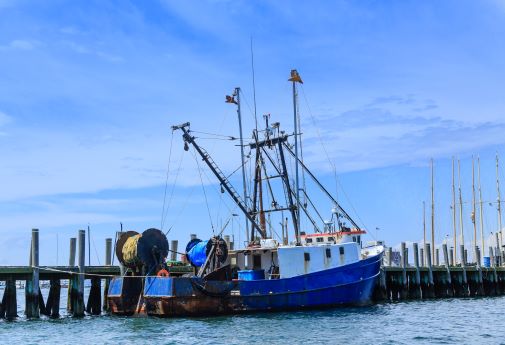
Strong trust between managers and fishers is essential for achieving sustainability across the sector, according to academics. But researchers actually found worryingly low levels of trust, following the UK’s departure from the European Union.
Pioneering methodology
The survey revealed perceived incompetence, indifference to livelihoods, and inadequate consultation as major drivers of distrust towards regulators.
The research was led by Maximilian Dixon, Dr Gaetano Grilli, Dr Silivia Ferrini and Dr Rosalind Bark at the University of East Anglia’s School of Environmental Sciences, along with Dr Bryce Stewart, Reader at the University of York’s Department of Environment and Geography.
Broken promises
Dr Stewart said the findings made clear that there had been too many ‘broken promises’ for the fishing industry in England.
He said: “Our research built a unique understanding of the nature of trust in the institutions which govern fisheries in England and it did not make for happy reading. We found these institutions are vulnerable to changes in policy, performance failure or personnel turnover which is putting pressure on fishers who are often struggling to make a living.”
The research did pinpoint a clear way to improve trust in the sector by directly involving fishing communities in the processes of governance.
Fierce debate
Dr Stewart said: “It’s a complex story that always inspires fierce debate. But there’s no getting away from the fact that ‘trust’ between policymakers and fishers is absolutely vital in building good working relationships and is the bedrock of a productive sector.
“After completing our research we recommended a focused institutional commitment to improve trust relations. It is so important to learn from unfolding extreme events, such as the mass die-off of marine life along the north east English coast, because these can have such dramatic impacts on the fishing industry.”
Nuanced picture
The survey was distributed between July and August 2022 in a variety of ways using mailing lists, official social media platforms and an article in the trade press. It used novel methodology that allowed researchers to capture diverse types of trust and build a truly nuanced picture.
Of the 94 responses collected, only 52 were complete and after removing responses from outside of England, 46 were used in the analysis, representing around 0.94 per cent of English fishers.
Commercially important
The research explores the effects of mass mortality of crustaceans along the coast of Teesside and Yorkshire in winter 2021, which heavily impacted the fisheries sector, including commercially important crabs and lobsters.
The survey found that the way it was handled by the Northern Eastern Inshore Fisheries and Conservation Authorities (NEIFCA) and Defra, and a subsequent string of reports into the cause will likely have affected trust relations, with elements such as transparency, competence and communication playing a large role in the conflict.
Rebuilding trust
However, overall local institutions inspired relatively more trust, benefiting from better communication.
Co-researcher Dr Gaetano Grilli, Lecturer at UEA’s Norwich Business School, said: “Improved communication between fishers and local officers could rebuild trust, enhancing confidence in institutions’ competence and commitment to fishers’ futures. This foundation of trust at the local level is pivotal for the co-operative management needed to ensure the long-term sustainability of England’s fisheries.”
The study was supported by UK Research and Innovation’s Sustainable Management of Marine Resources programme, the Pyramids of Life: Working with Nature for a Sustainable Future project (led by the University of York) and also involved the University of Siena, in Italy.