How looking at other people's selfies can make us feel bad about our own bodies
Posted on Thursday 12 October 2023
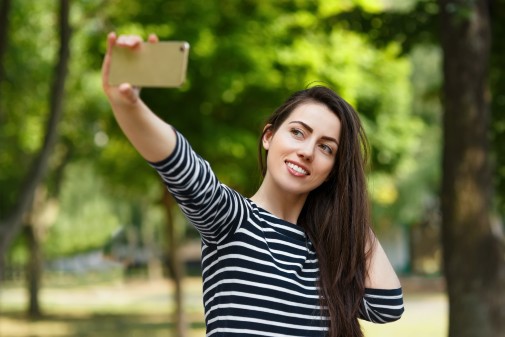
Researchers from the University of York and York St John University examined whether the angle a woman’s body was photographed and viewed from was related to judgments around attractiveness and weight.
Previous research indicates that spending time on image-based platforms like Instagram or TikTok can negatively affect body image.
Social media
This new study, published in PLOS ONE, aimed to identify the specific features of photos that contribute to this effect.
Selfies were judged as making women appear slimmer, while photos taken from a first-person perspective (looking down at the body) are seen as less attractive.
Lead author, Dr Ruth Knight from the Department of Psychology at York St John University, said: “Given the rising rates of body image concerns and eating disorders, it's crucial to understand the impact of social media on body image.
“One of the things that's unique about social media is that it allows us to take photos of ourselves, and then upload them for a vast network of people to see.
“Awareness of how we judge images can help mitigate negative effects on body satisfaction, dieting, and the risk of eating disorders.
“We are not saying looking at selfies of women makes you have an eating disorder, it is so much more complicated than that. But what we are saying is, it might be having an effect on how we feel about ourselves.”
Disordered eating
The study involved 10 models photographed from four angles: selfie, selfie using a selfie stick, allocentric (standard), and egocentric (looking down at their own body).
A different set of participants, who didn't know the models, then rated the images on attractiveness and slimness.
The study excluded participants with diagnosed eating disorders, but many showed signs of disordered eating, the researchers said.
Co author, Dr Catherine Preston, from the University of York’s Department of Psychology, added: “We found the judgements that people made across different perspectives were related to their own disordered eating thoughts and behaviours.
“It might be that those already vulnerable to body dissatisfaction are more likely to make different aesthetic judgements based on the angle that bodies on social media are viewed from, thus making them more vulnerable to feeling negatively about their own bodies in comparison.
“The relationship between body dissatisfaction and viewing bodies on social media is multi-layered and complicated – visual perspective may be one of many factors playing a small role in this.”