
Change in UK fishing habits would protect biodiversity, study shows
Posted on Friday 3 March 2023
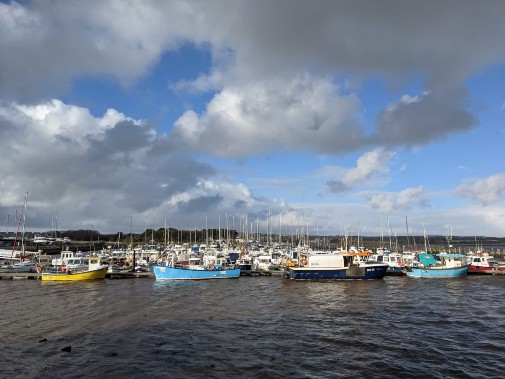
University mathematicians, in collaboration with Professor Mike Plank at the University of Canterbury New Zealand, constructed models of marine ecosystems and examined how different methods of fishing would affect various fish species over the course of 50 years.
The models showed that fishing lower in the food chain for smaller fish such as mackerel, herring and sprat was the best way forward, offering a more diverse and less destructive approach, and protecting rarer species from being over exploited.
The research is evidence that ‘balanced fish harvesting’ – fishing across a wider range of species, stocks and sizes in proportion to their natural abundance and productivity – could be an important strategy for tackling the twin global crises of biodiversity and food security.
Balance
Professor Richard Law, a mathematical biologist at the University, says: “There are around 100 species of fish found in UK waters – yet we eat only a tiny proportion of them. Fishing that operates in balance with the natural pyramids of biomass and productivity would provide sustainable yields and also protect biodiversity.
“The upshot is that we need to eat fewer large fish such as salmon, tuna, cod, and haddock, these being the ‘lions and tigers of the sea’. This won’t be easy - changing our existing habits will be a real challenge, especially for UK consumers. The fishing industry really needs to work with consumers, fishers and governments if this is to become a reality.”
'Big Five'
At present, 80% of the fish eaten by UK consumers is made up of the ‘Big Five’ – cod, tuna, prawns, salmon and haddock. Yet much of the cod is imported from other waters, since most UK cod stocks have declined due to overfishing and climate change. Tuna and larger prawns are imported from the tropics, while similar harvests from UK waters are typically exported. Even the salmon we eat is almost always intensively farmed, rather than caught in the wild.
The study forms part of the York-led research programme Pyramids of Life, a coalition of researchers in socio-economics, human behaviour, marine ecology and applied mathematics, working with partners in the seafood industry, including Seafish and Waitrose. The group aims to research and communicate the complex relationships between different species, human behaviours and marine ecosystem functions, and to nudge human behaviour towards more sustainable use of marine resources.
Biodiversity crisis
Professor Jon Pitchford, who leads the Pyramids of Life programme at the University said: “Overfishing is currently considered to be the biggest threat to marine ecosystems. The UK must play its part in resolving this. We have shown that changes to UK fisheries could help resolve the biodiversity crisis without damaging fishers’ livelihoods. Management which better respects ecological pyramids can be both more productive and surprisingly resilient to external challenges.”
The team is working to convert this academic observation into practical reality, examining the behaviour of consumers, and of fishers, to identify where change can be commercially viable as well as ecologically sustainable.




