University launches renewable chemistry institute
Posted on Friday 24 March 2023
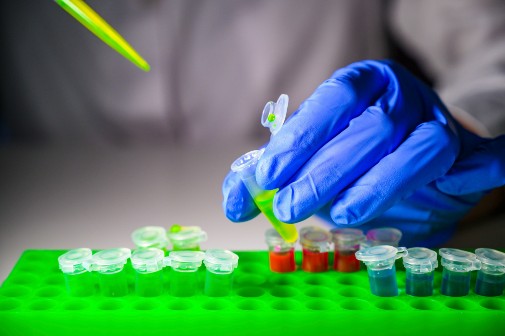
The new Institute aims to produce and promote bio-based products that are safer and more sustainable for the chemical industry. The partnership also means that students will be able to work on real-world projects in renewable chemistry to support their future careers in the industry.
A significant breakthrough of the partnership so far has been the creation of Cyrene™ - a multipurpose green solvent that often outperforms the toxic petroleum-based materials. Its application extends across pharmaceuticals, paints and coatings, textile recycling, agrichemicals and many more.
Environmentally responsible
Professor James Clark, Director of the CRCI at the University of York, said: “We have worked with Circa now for nearly a decade, and the strength of the relationship lies in the shared belief that the chemical industry can and will be environmentally responsible and able to transition from fossil-based chemicals to commercially viable bio-based products.
“We have seen the impact that Cyrene™ has had on the industry, and this is now our inspiration to continue to work on other green products that can be scaled-up to meet the demands of consumers without damaging our environment.”
Latest research
As part of the partnership, Circa and its key customers will have access to all of the latest research from the University’s Green Chemistry Centre of Excellence (GCCE), as well as the use of laboratories, equipped with the latest technologies. In addition to developing commercial applications for Cyrene™, the team will be looking for the next breakthrough in renewable chemistry.
Nick Smith, Head of Development and Commercialisation for Circa, said: “This partnership provides the skills and expertise of both the Green Chemistry Centre of Excellence and the Biorenewables Development Centre to support application and process development with market leaders who are moving their manufacturing processes to safer and more sustainable products, such as Cyrene™.”
Industry networks
The launch event included a panel discussion with chemical industry leaders including Croda, Synthomer and the Chemical Industries Association, and explored the barriers and critical success factors in the adoption of renewable chemistry.
Professor Boelo Schuur from the University of Twente and Dr Jane Murray from Sigma-Merck also gave guest lectures.
The CRCI will serve as a contact point for international and local chemical industry networks, as well as funders, future customers, academics, and government officials.
For more information about the Institute, visit the web pages.