UKRI Board visit University to hear more about our bioeconomy research
Posted on Wednesday 15 March 2023
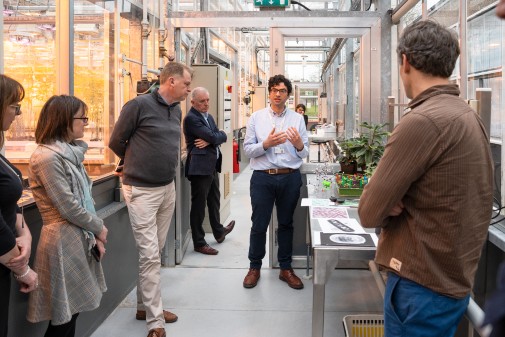
Board members met senior academics at the University and from BioYorkshire, a partnership between the University of York, Fera Science and Askham Bryan College.
Inward investment
The initiative aims to transform York and North Yorkshire into the UK’s first carbon negative region and be a hub for green innovation, skills development and inward investment.
The delegation also learnt more about the research being carried out at the University’s Centre for Novel Agricultural Products, the Centre for Anaerobic Digestion and at the Leverhulme Centre for Anthropocene Biodiversity.
The UKRI Board also heard about the work being done at Biorenewables Development Centre and met senior members of the team.
As part of the visit, the Board were given a tour of the glasshouses at the Department of Biology and heard from Dr Benjamin Lichman, a UKRI Future Leader Fellow in Plant Biology.
Pharmaceutical potential
Dr Lichman’s Lab investigates plant natural product biosynthesis, determining how plants make complex bioactive molecules. The research enables the development of bio-based production methods for valuable plant natural products with pharmaceutical potential.
The University of York’s Vice-Chancellor, Professor Charlie Jeffery said: “It was fantastic to host the UKRI Board today and the opportunity to showcase some of our world-leading research around the bioeconomy.”
“We have the right people, expertise and infrastructure to propel the region into growing a vibrant and dynamic bioeconomy - using renewable, biological resources to create greener products which minimise waste and reduce our reliance on fossil fuel.”
“Along with our partners, we can be the launchpad for green, inclusive economic growth across the region.”
Innovation and skills
BioYorkshire will help drive a new era of bio-manufacturing and farming, reduce carbon emissions and actively contribute to the UK’s Net Zero ambitions. It will reduce 2.8 million tonnes of CO2e annually, while reducing UK waste to landfill by 1.2 million tonnes per year.
It is estimated that innovation and skills developed through BioYorkshire will add around £1.4bn in GVA within the Yorkshire region, creating over 4,000 jobs across Yorkshire and the UK.
The Centre for Novel Agricultural Products (CNAP) aims to realise the potential of plant, microbial and algal-based renewable resources through gene discovery. From developing sustainable food crops and biofuels to advancing plants for land decontamination, maximising the value of plants without compromising food security.
The Centre for Anaerobic Digestion is based at the University and Yorkshire Water’s Naburn site and is part of a £1.2m project. Anaerobic digestion facilities are used as part of the process to treat biodegradable waste and sewage sludge, and reduce the emission of landfill gas into the atmosphere.
The Leverhulme Centre for Anthropocene Biodiversity examines how the relationship between humanity and the natural world is changing, and how we might develop and maintain a sustainable Earth. It was established in 2019 with funding from the Leverhulme Trust.
The Biorenewables Development Centre is a University of York subsidiary, working with academia and industry to develop, scale-up and help commercialise bio-based products and processes.