New £1.2m UK Centre of Excellence in York to turn waste into a resource
Posted on Wednesday 4 August 2021
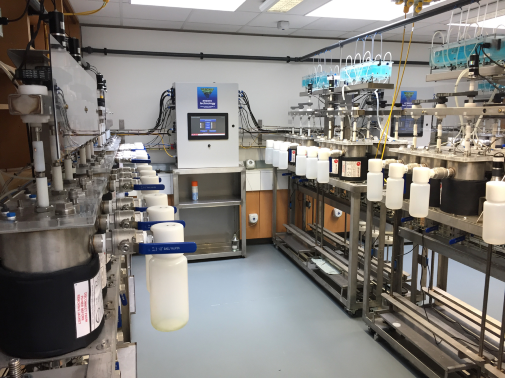
The Centre, based at the University and Yorkshire Water’s Naburn site, is part of a £1.2m project.
The funding will advance the Centre’s groundbreaking research over the next four years, enabling greater understanding of the processes behind anaerobic digestion (AD).
Potential
AD facilities are used as part of the process to treat biodegradable waste and sewage sludge, and reduce the emission of landfill gas into the atmosphere.
The new project aims to increase the potential of waste recycling and further boost renewable energy generation.
The two organisations first joined forces in 2016 and delivered the globally unique ‘System-60’ AD research facility in the Department of Biology at the University of York – the largest facility of its kind in the world.
The project will transform AD performance, strengthening the University's bio/circular economy research portfolio, and contribute to the region’s aspiration to become carbon neutral.
Real world applications
Professor James Chong from the University of York’s Department of Biology, said: “I'm very excited that a long-term partnership has developed with Yorkshire Water. This new project represents an important opportunity to develop both our fundamental understanding of the biology underpinning anaerobic digestion and how we translate this knowledge into real world applications, as a critical part of the UK/global drive towards net zero.”
Professor Matthias Ruth, Pro Vice Chancellor for Research at the University of York said, “The project will contribute to a sustainable green recovery from the pandemic, develop the intellectual foundations underpinning anaerobic digestion, and deliver real-world impact and benefits for the region's people, industries and environment. This long-term partnership will strengthen the bond between the institutions and represents a new chapter in our relationship.”
Tom Hall, Yorkshire Water head of bioresources said, “Anaerobic digestion facilities are vital to the way we treat our sewage sludge both now and into the future. We currently treat around 145,000 dry tonnes of sewage sludge each year and this is likely to increase to around 180,000 dry tonnes by 2035 given population growth in our region and new regulations linked to phosphorus removal."
Richard Kershaw, Yorkshire Water waste water innovation programme manager, said, “The strong partnership we have formed with the University of York is helping us to understand how existing anaerobic digestion facilities can be made to perform more effectively. This next project will enable us to increase digester throughput efficiencies, further boost renewable energy generation production and ultimately provide our customers with value for money.”