Post lockdown traffic getting back to normal but air remains cleaner as congestion is down, new research suggests
Posted on Friday 10 July 2020
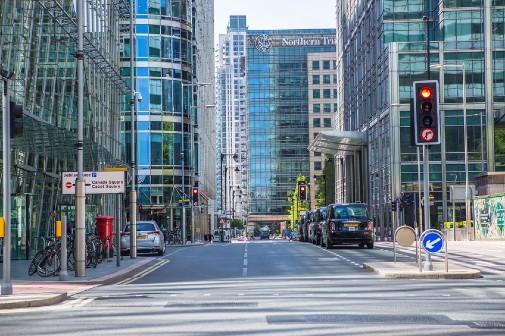
Findings by the University of York show that while road traffic is getting back to pre-lockdown levels, some concentrations of air pollutants like nitrogen dioxide (NO2) are still lower than expected.
Researchers suggest that factors such as staggered commutes and homeworking is reducing congestion – which plays a factor in air pollution.
Pollutant
Dr David Carslaw from the Department of Chemistry has been analysing data from roadside monitoring sites across the UK throughout the lockdown. This has included monitoring concentrations of NO2, which is a key pollutant caused by vehicles.
On average across the UK, NO2 levels were 56 per cent lower than normal at the height of lockdown and as of 1 July, with many restrictions currently lifted, they remained about 30 per cent lower. In York NO2 levels were 52 per cent lower than normal at the height of lockdown and as of 1 July, with many restrictions currently lifted, they remained about 18 per cent lower.
Emissions
Dr Carslaw said: “The data across the UK showed a deep plunge after lockdown for concentrations of nitrogen dioxide of around 50 per cent on average nationally and a slower recovery.
“Things are not back to normal according to the air quality data. It seems that while traffic levels look like they have mostly returned to normal, concentrations of some air pollutants are still quite a lot lower than expected. We think the reason is that congestion has not fully returned, and this has quite a large effect on emissions and hence concentrations.
“Trying to measure the impact on air pollution of congestion is very challenging as there are so many factors that affect emissions.
“The analysis of data gathered during lockdown and coming out of lockdown might give researchers an opportunity to better understand more about linkages between air pollution and congestion.”
Concentrations
Dr Carslaw’s team have been analysing data from more than 100 sites across a wide range of towns and cities in the UK as part of ongoing research into concentrations of roadside air pollutants.