York academic leads UK government effort to understand impact of air pollution changes during Covid-19 crisis
Posted on Wednesday 15 April 2020
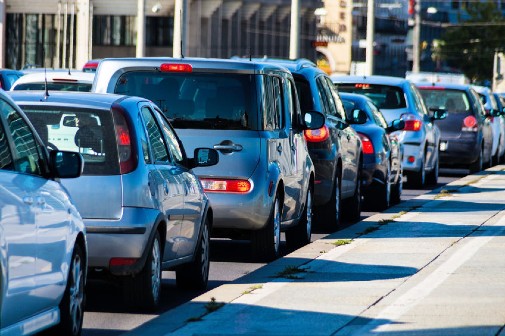
The pandemic has seen unprecedented changes in living and working patterns and is likely to have had a significant, but as yet unquantified, effect on air pollution in the UK.
Professor Alastair Lewis is the Chair of the UK Government independent science advisory group on air pollution - the Defra Air Quality Expert Group (AQEG) - who will use the data to inform future air quality management.
Air pollution
The AQEG is calling for evidence to address a series of urgent short-term issues related to recent and ongoing changes in UK air quality. These include:
- areas of socioeconomic activity that will or have shown a decrease in air pollution emissions
- changes in indoor and outdoor air quality
- how public exposure to air pollution has changed as a consequence of recent restrictions on movement
- how altered emissions of air pollutants over the next three months might affect UK summertime air quality
- the impact of air quality on viral infection
Professor Lewis, from the University’s Department of Chemistry, said: “Evidence and insight into possible changes to the factors that control air pollution will help us to refine and improve how we deliver the best possible air quality for the UK.”
“Air pollution has a significant adverse effect on public health affecting a broad spectrum of the population. It is a particularly significant environmental risk factor for vulnerable groups including those with underlying respiratory and cardiovascular diseases.”
Emissions
Current restrictions on travel will have changed road transport emissions, and altered the locations where people are currently exposed to pollution. The relative mixtures of different pollutants being emitted in the UK may also have changed.
But in order to provide more accurate assessment of the potential impacts of air pollution in the coming months, better estimates of UK emissions, concentrations and exposure during COVID-19 are needed, said the advisory group.
Evidence and analysis are being sought from any relevant experts working in the field of air pollution science, technology or management. These might be based on existing measurements (such as local authority and research data, earth observation, activity information, or emissions reporting), atmospheric modelling or theoretical analysis, as well as scenario modelling and sensitivity analysis.
Risk
John Newington, Head of Evidence, Air Quality and Industrial Emissions, Defra said: “Defra would ask the research community to support the UK government in its efforts to manage air pollution risk and impacts during the COVID-19 pandemic. Evidence and insight into possible changes to the factors that control air pollution will help us to refine and improve how we deliver the best possible air quality for the UK.”
Summary inputs can be sent to AQEG aq.secretariat@defra.gov.uk by 30th April 2020.
AQEG will undertake a rapid review of all evidence received and produce a summary synthesis report to Defra and Devolved Administrations.