Researchers to reconstruct richness of prehistoric oceans
Posted on Friday 11 October 2019
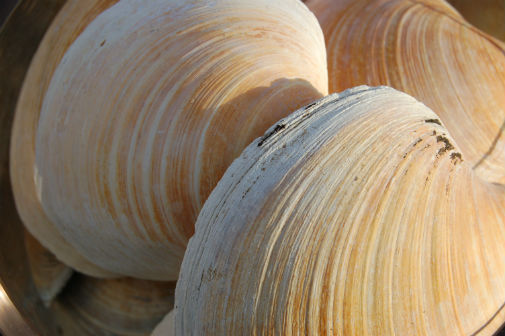
Ocean conservation is a major global concern and the Seachange project aims to discover how depleted the current marine environment is, what measures are needed to help biodiversity to recover and how long this might take.
Jointly led by the University of York, the University of Exeter, Johannes Gutenberg University Mainz (Germany) and the University of Copenhagen (Denmark), the project has been awarded a European Research Council Synergy Grant of 11.75 million euros (£10.5 million).
Human cultural transitions
The researchers will use sediments, shells and bones, and a host of cutting-edge analysis techniques to discover what the oceans were like before major impacts caused by humans.
Professor Callum Roberts, from the Department of Environment and Geography, said: “We will piece together changes across major human cultural transitions spanning hundreds to thousands of years.
“This will include Mesolithic to Neolithic in Denmark, pristine to inhabited in Iceland following Viking settlement in 874 AD, Medieval to industrial revolution in the North Sea, hunter-gatherer to colonial in eastern Australia, and pristine to industrial in Antarctica.
“By plotting ocean ecosystem change in detail through time, we expect to be able to detect the earliest signs of human influence on the sea. And by understanding how the seas of today are different from the past, we will be able to better manage them for the future.”
Richness and diversity
The project will analyse the shells of bivalve mollusks, marine sediment cores and archaeological kitchen waste materials including shells and bones.
The researchers will precisely date these materials and analyse them using zooarchaeological and palaeoecological, stable isotope geochemical and environmental DNA metabarcoding techniques.
Professor James Scourse, from the University of Exeter, said: “We will be able to reconstruct the full richness and diversity of the oceans immediately before they were impacted by significant human activity, for instance before Iceland was settled or there was significant whaling in Antarctica.
“This will provide a basis for assessing whether regions that we regard now as pristine, or not impacted significantly, are actually degraded remnants of a formerly much more diverse ecosystem.”
Seachange project partners include Curtin University, the University of Queensland (both Australia) and the University of Bergen (Norway).