It might be stretching the point, but you really can feel like Mr Fantastic
Posted on Wednesday 27 February 2019
The superhero, and founding member of the Fantastic Four, was famous for being able to stretch his body into any shape he desired.
Now psychologists at the University of York have discovered that us mere mortals are able to experience his superhuman powers – with a little help from an invisible finger stretching illusion.
Experiment
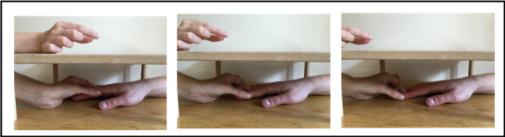
As part of the experiment, participants were asked to place their right hand under a wooden platform with a cape covering their forearm.
The researcher then gripped the base of each finger and gently pulled, while sliding her grip to the fingertip. At the same time the researcher mimicked identical actions in an empty space above the platform – extending beyond the length of the actual hand.
The results revealed that the invisible finger stretching illusion successfully manipulated perceived finger length. Two thirds of participants agreed that it felt like their finger was stretching
However, the illusion only goes so far with participants reporting no sense of having an invisible hand.
Abnormal
Dr Catherine Preston, from the University’s Department of Psychology, said the illusion worked because the brain “fuses” what you see and what you feel into a single event.
“We have shown that you can feel you have real extensions of the finger, even without seeing them. It demonstrates we can have abnormal representations of the body with minimal visual input.”
“The study shows that it is possible to experience stretchy fingers like Mr Fantastic without visual stimuli of a fake hand, even if we do not actually feel invisible like The Invisible Man.”
Dr Preston said the findings could have potential therapeutic benefits, particularly with regard to the treatment of arthritis and the use of prosthetics.
“Previous studies have shown illusions can be effective in reducing pain in arthritis. This low cost, low tech illusion has the potential to be an effective health intervention.”