Yorkshire food manufacturing could be improved by harnessing waste products
Posted on Tuesday 22 May 2018
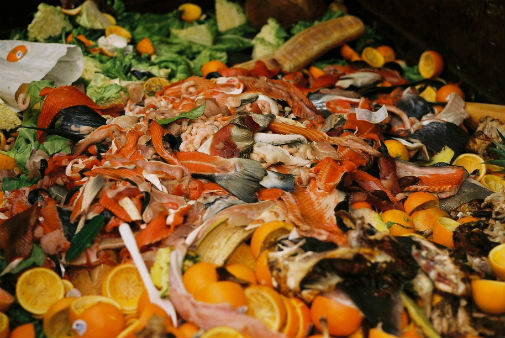
Food waste is a major global issue
The Yorkshire and Humber region has one of the UK’s largest concentrations of food and drink manufacturers, with over 3,000 food and drink companies. Food waste, however, is a major global issue and it’s estimated that a third of all food produced globally is wasted.
In a new report, led by BioVale in partnership with the University of York’s Management School and University subsidiary, the Biorenewable Development Centre (BDC) and Anthesis Group, researchers show that there are a number of opportunities to use the waste materials, called biowaste, to develop other products using more environmentally sustainable processes.
The new project mapped the region’s food manufacturing waste and then suggested a number of ways to add value to some of the most plentiful waste materials. These include using poultry feathers as a source of compounds for the cosmetics industry and using egg shell waste to remove heavy metals from water, as well as using carrot waste as a source of food colourant.
Sustainable
Professor Peter Ball, from the University of York’s Management School, said: “This project has not only mapped the region’s food manufacturing waste streams but also used a desk study and an innovation workshop with businesses, researchers and industry to identify the most promising opportunities for creating value from waste.”
The BDC, for example, is currently working with GSK to find a sustainable source of glucose, one of the key components used to manufacture pharmaceutical products. The teams identified that starchy by-products from bread and potato could be used as a more sustainable and economically beneficial starting material and they are now exploring ways to scale-up the process for use in commercial production.
Economic opportunity
Dr Maggie Smallwood, CEO of BioVale, said: “The sheer volume of unavoidable food waste being generated, together with the innovation capability in our universities and companies to find new ways to extract value from this waste offers a major new economic opportunity for the region.
“We have developed a unique interactive map of the region’s food manufacturing waste streams that will help to kick-start collaborations between food manufacturers who have unavoidable waste and technology providers who can use that waste to make useful products.”
Next steps
The project partners on the food waste mapping project are now working with companies and academics to develop new research collaborations and projects around creating value from the region’s biowaste.
The full report can be downloaded here.
The interactive map of key food waste generators in Yorkshire and the Humber is available on request from info@biovale.org.