Expert reaction: Breast cancer screening error
Posted on Thursday 3 May 2018
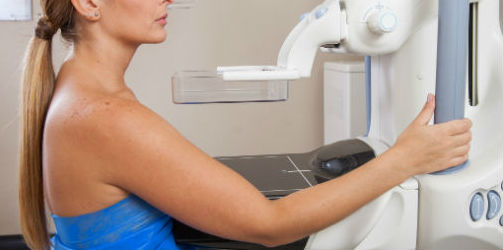
Image Credit: Bildarchiv University via Flickr.
"Breast cancer is the second leading cause of cancer deaths in women in developed countries with 11,000 breast cancer deaths in the UK and 40,450 in the US, annually, representing around 7% and 12% of all cancer deaths, respectively.
Survival
"Screening mammography is the best available tool for early detection of cancer. It has made an important contribution to the 20-35% reduction in breast cancer mortality since the 1970s. An estimated 88% of women with early diagnosis of breast cancer will survive at least 10 years.
"However, the sensitivity and specificity of screening mammography are lower than what is desirable, with false negative rate of 20-30% and false positive rate of 10% reported in North America. There are practically no risks to women to do screening apart from a bit of discomfort and some radiation which is negligible when acquiring the images and possible stress if the finding is a false positive.
Effective
"There are numerous reasons why cancers might be missed or false positives may occur and it is only a very small part due to human negligence. Using mammography, a non-invasive method of cancer detection has proven to be very effective and there is numerous research and initiatives in the UK, the US and Australia that is looking into further improving medical image perception from multiple sides.
"There are advances in imaging technology, improved training of medical experts, improved screening practices and computer aided detection technology. However, each country has different standards as to when women start to get regular screening and if they do and how often women are screened. These decisions are only partly based on scientific research and recommendations and are often dictated more by cost, logistics of implementation and feasibility.
Falsehoods
"One of the biggest problems that plagues screening programs is also the falsehoods that are spread in the media questioning the benefits of screening programs. It makes the public find justifications for their own inertia to go for testing and unwillingness to face the hard realities that our bodies will not always function perfectly. This is similar to the problems the vaccination program and preventative dentistry has had in the past."