Could yoga benefit older people with long-term health conditions?
Posted on Thursday 29 November 2018
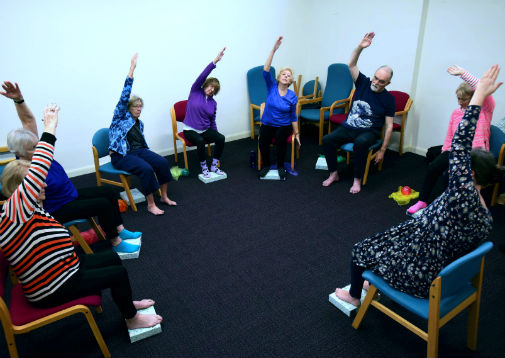
The £1.4 million study is recruiting almost 600 adults aged 65 and above
The results of the study will provide evidence to healthcare commissioners on whether yoga programmes should be funded in the NHS.
The £1.4 million study is recruiting almost 600 adults aged 65 and above who have multi-morbidity from across 12 different locations in the UK. The main focus of the study is assessing the effect of a yoga programme on people's overall quality of life.
The University of York’s Trials Unit is co-ordinating the clinical trial with Northumbria University’s Department of Sport, Exercise and Rehabilitation.
12-week programme
Helen Tilbrook, Trial Manager at the University of York’s Trials Unit, said: “The trial includes two groups of participants; one group that continues to receive their usual care without any additional support, while the second receives their usual care plus an invitation to join a 12-week yoga programme.
“The British Wheel of Yoga’s Gentle Years Yoga programme involves weekly group-based sessions and encouragement to perform specific yoga practices at home.
“The participants’ progress will then be assessed after three, six and 12 months to monitor changes in their quality of life and mental health.”
Quality of life
Common yoga poses are adapted as part of the programme so they can be done using chairs for example; this allows inactive older adults with long-term conditions such as osteoarthritis, high blood pressure and dementia to safely participate.
As well as assessing overall quality of life following the participation in the programme, the researchers will also review any changes in reported levels of depression and anxiety and if participants are having fewer falls because of improvements in physical function.
Associate Professor Garry Tew, from Northumbria’s Department of Sport, Exercise and Rehabilitation, said: “Yoga is thought to bring wide-ranging benefits, such as increases in strength, flexibility, balance and quality of life, and reductions in stress, anxiety and depression.
“In older adults specifically, there is promising evidence that yoga can improve physical function and quality of life, but more work is needed to understand the effectiveness and cost effectiveness of yoga in older people with multi-morbidity.
“We are also measuring participants’ use of healthcare resources, which will allow us to establish the cost-effectiveness of the yoga programme. If these results are positive, they will provide evidence for healthcare commissioners to fund yoga within the NHS.”
Results of an earlier pilot trial demonstrated not only the benefits of exercise, but that yoga classes provided a positive social element, which helped reduce feelings of isolation.