Scientists uncover evidence that microplastics are contaminating archaeological remains
Posted on Thursday 21 March 2024
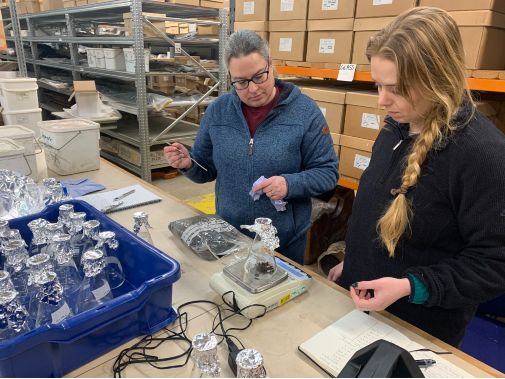
The team discovered tiny microplastic particles in deposits located more than seven metres deep, in samples dating back to the first or early second century and excavated in the late 1980s.
Tiny particles
Preserving archaeology in situ has been the preferred approach to managing historical sites for a generation. However, the research team say the findings could prompt a rethink, with the tiny particles potentially compromising the preserved remains.
Microplastics are small plastic particles, ranging from 1μm (one thousandth of a millimetre) to 5mm. They come from a wide range of sources, from larger plastic pieces that have broken apart, or resin pellets used in plastic manufacturing which were frequently used in beauty products up until around 2020.
The study, published in the journal Science of the Total Environment, was carried out by the universities of York and Hull and supported by the educational charity York Archaeology.
Professor John Schofield from the University of York’s Department of Archaeology, said: “This feels like an important moment, confirming what we should have expected: that what were previously thought to be pristine archaeological deposits, ripe for investigation, are in fact contaminated with plastics, and that this includes deposits sampled and stored in the late 1980s.
“We are familiar with plastics in the oceans and in rivers. But here we see our historic heritage incorporating toxic elements. To what extent this contamination compromises the evidential value of these deposits, and their national importance is what we'll try to find out next.”
In our seas
David Jennings, chief executive of York Archaeology, added: “We think of microplastics as a very modern phenomenon, as we have only really been hearing about them for the last 20 years, when Professor Richard Thompson revealed in 2004 that they have been prevalent in our seas since the 1960s with the post-war boom in plastic production,”
“This new study shows that the particles have infiltrated archaeological deposits, and like the oceans, this is likely to have been happening for a similar period, with particles found in soil samples taken and archived in 1988 at Wellington Row in York.”
The study identified 16 different microplastic polymer types across both contemporary and archived samples.
Chemistry of the soil
“Where this becomes a concern for archaeology is how microplastics may compromise the scientific value of archaeological deposits. Our best-preserved remains – for example, the Viking finds at Coppergate – were in a consistent anaerobic waterlogged environment for over 1000 years, which preserved organic materials incredibly well. The presence of microplastics can and will change the chemistry of the soil, potentially introducing elements which will cause the organic remains to decay. If that is the case, preserving archaeology in situ may no longer be appropriate,” added David Jennings.
The research team say further research into the impact of microplastics will be a priority for archaeologists, given the potential impact of these man-made chemicals on archaeological deposits.