COVID recovery choices shape future climate
Posted on Friday 7 August 2020
This is despite the sudden reduction of greenhouse gas emissions and air pollutants during lockdown having a negligible impact on holding down global temperature change.
The researchers warn that even with some lockdown measures staying in place to the end of 2021, without more structural interventions global temperatures will only be roughly 0.01°C lower than expected by 2030.
Economic recovery
However, the international study estimates that including climate policy measures as part of an economic recovery plan with strong green stimulus could prevent more than half of additional warming expected by 2050 under current policies.
This would provide a good chance of global temperatures staying below the Paris Agreement’s aspirational 1.5˚C global warming limit and avoiding the risks and severe impacts that higher temperatures will bring.
The study analysed newly accessible global mobility data from Google and Apple. They calculated how 10 different greenhouse gases and air pollutants changed between February and June 2020 in 123 countries.
Lockdown
The team’s findings, published today in Nature Climate Change, detail how despite carbon dioxide (CO2), nitrogen oxides (NOx) and other emissions falling by between 10-30% globally, through the massive behavioural shifts seen during lockdown, there will be only a tiny impact on the climate, mainly because the decrease in emissions from confinement measures is temporary.
The researchers also modelled options for post-lockdown recovery, showing that the current situation provides a unique opportunity to implement a structural economic change that could help us move towards a more resilient, net-zero emissions future.
Dangerous climate change
Study lead author, Professor Piers Forster, director of the Priestley International Centre for Climate at Leeds University, said: “The choices made now could give us a strong chance of avoiding 0.3˚C of additional warming by mid-century, halving the expected warming under current policies. This could mean the difference between success and failure when it comes to avoiding dangerous climate change.
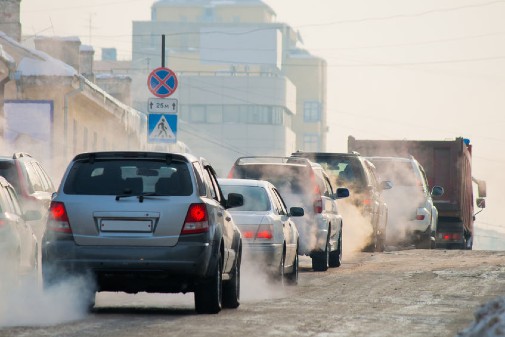
“The study also highlights the opportunities in lowering traffic pollution by encouraging low emissions vehicles, public transport and cycle lanes. The better air quality will immediately have important health effects - and it will immediately start cooling the climate.”
Study co-author Professor Mathew Evans. From Wolfson Atmospheric Chemistry Laboratories, University of York and the National Centre for Atmospheric Science, said: “The analysis of air quality observations from around the world showed us that the emissions reductions captured by Google and Apple’s mobility data were pretty close to those actually being experienced.”