University to host Reith Lecture
Posted on Wednesday 2 May 2018
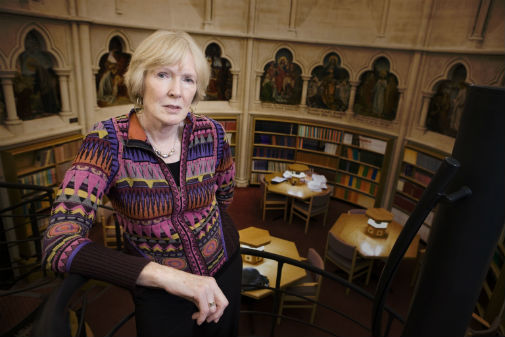
Professor MacMillan will deliver five lectures in the series. Pic Credit: BBC
This year’s Reith Lectures, which are delivered to an audience at each venue, will explore the tangled history of war and society and our complicated feelings towards it and towards those who fight.
Professor MacMillan will deliver five lectures in the series, with the University hosting one of them on 7 June as part of the York Festival of Ideas programme, Imagining the Impossible.
Heritage
The series will be broadcast on Radio 4 and the World Service weekly from Tuesday 26 June at 9am. The York lecture will be broadcast on Tuesday, 3 July at 9am.
Joan Concannon, Director of the York Festival of Ideas, said: “We are thrilled that such an eminent historian will deliver the second Reith Lecture at the University.
“The Lectures have a rich and proud heritage and have included such notable speakers as Hilary Mantel, Niall Ferguson and Eliza Manningham-Buller.
“We are delighted that Professor MacMillan can join us at this year’s Festival of Ideas, which promises to be as diverse and compelling as ever.”
Across her five lectures, Professor MacMillan will address the theme of war and humanity. She will ask why groups, whether nations or religions or gangs, get into wars and why individual men and women fight.
She will also explore the ways in which changes in society have affected the nature of war and how in turn wars have brought great change, for better and worse, to the societies that fight them.
Playwrights
Economies, science, technology, medicine, have all been instrumental in war but have also been shaped by it.
We might never have had penicillin or radar or rockets when we did without the impetus of war. Women, who have so often been the objects of violence in war, have seen their position in some societies change for the better as the need for their involvement has grown.
Finally, she will examine how we think and feel about war. Writers, artists, film-makers, playwrights, composers, have taken war as their theme, whether to condemn, exalt or simply puzzle about it.
The first lecture will be recorded in London at the BBC’s Radio Theatre on Monday 4 June, she will then go on to the University of York on 7 June. The other locations are: the Sursock Museum, Beirut [20 June], Stormont, Belfast [22 June] and The Canadian War Museum, Ottawa, Canada (27 June).
Further information
- Audiences can apply for tickets via BBC Shows and Tours, the details will be available on the Radio 4 website.
- Tickets will also be available from yorkfestivalofideas.com from 8 May.
- The Reith Lectures were inaugurated 70 years ago in 1948 by the BBC to mark the historic contribution made to public service broadcasting by Sir John (later Lord) Reith, the corporation's first director-general. John Reith maintained that broadcasting should be a public service which enriches the intellectual and cultural life of the nation. It is in this spirit that the BBC each year invites a leading figure to deliver a series of lectures on radio. The aim is to advance public understanding and debate about significant issues of contemporary interest.
- York Festival of Ideas was established and is coordinated by the University of York and runs from Tuesday 5 June to Sunday 17 June. For updates on the programme and speakers please subscribe to the Festival mailing list at yorkfestivalofideas.com.