Study suggests fracking is responsible for a reversal in atmospheric hydrocarbon trends
Posted on Tuesday 14 June 2016
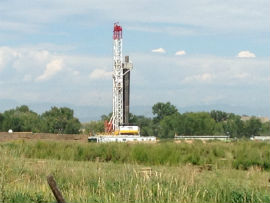
A surge in unconventional oil and natural gas production has occurred in recent years, particularly in the USA, where shale production is estimated to have increased 10–20-fold between 2000 and 2015.
This trend represents a hemispheric-wide reversal of the overall global steady decline in ethane that began in the 1970s, which was due primarily to stricter air quality emission controls.
Working with researchers at the University of Colorado, the National Centre for Atmospheric Science (NCAS) and the US National Oceanic and Atmospheric Administration (NOAA) and other international laboratories, the team observed the largest increases in ethane and propane over the central and eastern USA. .
Increasing concentrations year-on-year are apparent as far downwind as the Cape Verde islands, where the University of York operate a long-term atmospheric observing station, and European monitoring stations.
This new research, which is published in Nature Geoscience, indicates that ethane emissions are increasing at a rate of around 0.42 Tg (teragrams or million tons) per year, representing an increase in North American ethane emissions of nearly 50 per cent since 2007.
Methane, a very significant greenhouse gas which has been increasing since 2007 after nearly a decade of stable levels, is co-emitted with ethane from oil and natural gas production. Measured methane/ethane ratios from these sources are variable, but an extrapolation using a median ratio indicates that USA oil and natural gas production emissions of methane may have doubled over 2009-2014.
Professor Lucy Carpenter, of the Department of Chemistry at York who leads the group’s measurements at the Cape Verde station, said: “This careful study of ten years of hydrocarbon data from stations worldwide is a worrying indicator that unconventional oil and natural gas production is having a global impact.
“Not only will the increased hydrocarbon emissions bring higher levels of air pollution downwind of oil and natural gas production, but this study suggests that fracking could be a substantially larger emitter of methane than previously thought, with adverse affects on climate.”
Professor Alastair Lewis from NCAS said: “It is remarkable that one industry can reverse a global trend in ethane, a ubiquitous constituent of the Earth’s atmosphere.”
Professor Detlev Helmig, from the University of Colorado and lead author, added: “About 60 per cent of the drop we saw in ethane levels over the past 40 years has already been made up in the past five years.
“If this rate continues, we are on track to return to the maximum ethane levels we saw in the 1970s in only about three more years. We rarely see changes in atmospheric gases that quickly or dramatically.”