Taking the inequality debate to the next level
Posted on Monday 4 June 2018
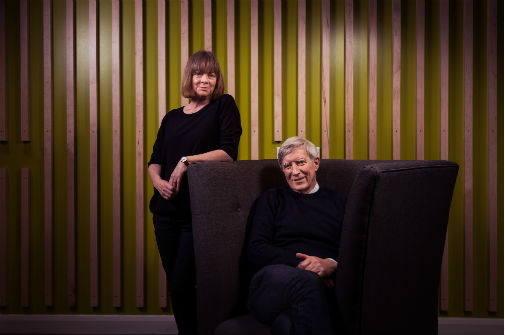
Professor Kate Pickett and Professor Richard Wilkinson
In a follow up to the hugely influential book, The Spirit Level, Richard Wilkinson, Visiting Professor at University of York's Department of Health Sciences, and Professor Pickett, take the debate further and argue that inequality alters how we think, feel and behave.
Their new book, The Inner Level, sets out the overwhelming evidence that material inequities have powerful psychological effects: when the gap between rich and poor increases, so does the tendency to define and value ourselves and others in terms of superiority and inferiority.
'Natural' difference
A deep well of data and analysis is drawn upon to empirically show, for example, that low social status is associated with elevated levels of stress hormones, and how rates of anxiety and depression are intimately related to the inequality which makes that status paramount.
In the book, the two authors describe how these responses to hierarchies evolved, and why the impacts of inequality on us are so severe. In doing so, they challenge the conception that humans are innately competitive and self-interested.
They undermine, too, the idea that inequality is the product of 'natural' differences in individual ability.
Despair and anxiety
Kate Pickett, Professor of Epidemiology at the Department of Health Sciences and the University of York’s Research Champion for Justice and Equality, said: “The central purpose of The Inner Level is to give people insights into, and an understanding of, the structures that lie behind these feelings of despair and anxiety and how we can move towards a more sustainable society based on a higher quality of life and not simply a nasty belt tightening exercise.
“Our work on The Inner Level brings together research from socio-neuro-biology, psychology, economics, environmental science, to present a powerful case for change. This kind of interdisciplinary work is the way forward for research – and is one the University of York is leading.”
Spirit level
The Spirit Level was first published in 2009 and has sold more than 112,000 copies in the UK and is available in 24 languages.
It won numerous awards including the Political Studies Association Publication of the Year and the Bristol Festival of Ideas Award. The book was shortlisted for Research Project of the Year in the Times Higher Education Awards.
Professor Pickett will be speaking at York Festival of ideas 2018 event “Connecting the Dots: Global inequality, poverty and wellbeing” on Friday 15 June.
The focus day will explore the relationship between economic and political decision-making and the impact of those decisions on the most vulnerable in our society http://yorkfestivalofideas.com/2018/talks/connecting-the-dots/.