
York Science and Innovation Grand Tour
University of York departments and centres are taking part in the Grand Tour, a visual celebration of York’s phenomenal achievements in science and innovation. They include:
Dr Mark Coles and Dr Peter O’Toole, Department of Biology
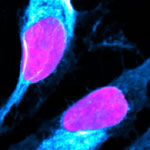 |
Did you know that University of York scientists use cutting edge 4-Dimensional imaging technologies to understand how your immune system works? |
Dr Kate Lancaster, Department of Physics
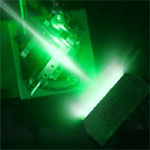 |
Fusion has the potential to provide us with an almost limitless source of energy and York physicists are developing ways to harness it. Nuclear fusion, which powers the sun, would make an excellent energy source if we could recreate it on earth. Physicists at the University's York Plasma Institute are helping to solve some of the problems, such as containing fusion fuel at 100 million degrees centigrade without touching it! Find out more |
Biorenewables Development Centre, York Science Park
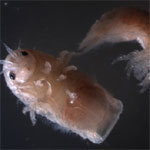 |
Enzymes found in the wood-boring isopod, the gribble, pictured here, could hold the key to converting wood and straw into liquid biofuels. For centuries sea-farers were plagued by wood-eating gribbles that destroyed their ships. Now research by scientists in the Biorenewables Development Centre on York Science Park is uncovering how this tiny creature digests the apparently indigestible. The potent enzymes could be harnessed as a crucial component in making liquid biofuels. Find out more |
Professor David Howard, Department of Electronics
|
|
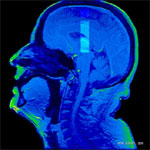
World leading researchers in the Department of Electronics are developing natural-sounding synthesised speech for people who have lost the use of their vocal chords. Researchers at York are exploring ways to recreate someone’s voice by making virtual models of the mouth and nose using magnetic resonance imaging (MRI). They then impose an electronic larynx on the MRI scans which produces natural-sounding speech. |
Further information