
Department of Education

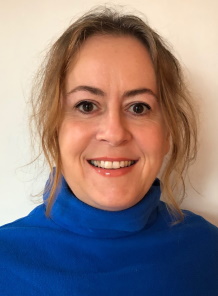
Dr Dusana Dorjee
Visit Dr Dusana Dorjee's profile on the York Research Database to:
- See a full list of publications
- Browse activities and projects
- Explore connections, collaborators, related work and more

Profile
Biography
I am a Senior Lecturer (Associate Professor) in Psychology in Education leading the Well Minds Lab. I combine my expertise in clinical psychology and cognitive neuroscience in my developmental translational neuroscience research on mental health and wellbeing. I investigate psychological and neural processes underpinning mental health and wellbeing and work on ‘translating’ new understanding of these processes into interventions, school curricula and policy.
I have authored and co-authored over 30 peer-reviewed articles and wrote three peer-reviewed books. My latest book - Making Sense of Mental Health and Wellbeing in Primary Schools: A Practical, Neuroscience-Based Guide – specifies key capacities underpinning mental health and wellbeing and presents a trauma-informed 7-Step approach to fostering these capacities systematically and gradually across primary school years.
I gained my PhD in Psychology and Cognitive Science (Cognitive Neural Systems) from the University of Arizona and have two master’s degrees, one in clinical psychology (Comenius University, Slovakia) and the other in cognitive psychology and cognitive science (University of Arizona). I also studied philosophy of mind and philosophy of science at doctorate level. I worked as a postdoctoral researcher at the University of Bristol and Bangor University.
Research
Overview
My research programme investigates cognitive, affective and neural mechanisms underpinning mental health and wellbeing (MHW) from a developmental perspective, and translates this research into interventions, school curricula and policy. Specifically, research in the Well Minds Lab I am heading focuses on three main themes. The first theme investigates capacities – neuro-cognitive-affective processes – underpinning MHW and ways these can be fostered in schools. I have formulated a new developmental framework - called the Neurodevelopmental Theory of Mental Health and Wellbeing Capacities (NDeTeC) - that specifies these processes in terms of two key capacities: the self-regulation capacity (as a source of effective attention and emotion regulation) and the self-world capacity (as a source of flexible, ethically-grounded and purposeful self-concept). The second research theme examines changes in these capacities as a result of various contemplative practices, mostly those cultivating mindfulness and compassion, and the impact of these changes on MHW, particularly in the school context. The third research theme builds on the first two themes and explores possible protective effects of the MHW capacities and contemplative practices in mitigating negative impacts of the current global crises on MHW.
Theoretical and methodological innovation is a hallmark of research in the Well Minds Lab. We have formulated new theoretical frameworks for research in each of the three themes. Guided by these frameworks we have been employing a range of research methods to provide new integrative empirical evidence. The methods we use include event-related brain potentials induced in experimental tasks, heart-rate variability measures, structural and functional MRI and experiential methods such as experience sampling and the SenseMaker. We have also developed (and are further developing) new self-report measures assessing the MHW capacities (Developmental Inventory of Mental Health and Wellbeing Capacities – DIWeC) and mechanisms underpinning contemplative practice (Mechanisms of Contemplative Practice Inventory – MCPI).
Research group(s)
- Psychology in Education Research Centre (PERC)
- I am heading the Well Minds Lab
Grants
My research and impact work has been supported by The British Academy, The Mind & Life Institute, Welsh Government, ESRC, UKRI Innovate UK and a Fulbright Fellowship.
Available PhD research projects
I am interested in supervising PhD projects that would further our understanding of the self-regulation and self-world capacities proposed in the NDeTeC theory or examine the modes of existential awareness (self-related states of awareness) proposed in my Mechanisms of Contemplative Practice framework (Dorjee, 2016; Dorjee, Nguyen & Märtins, 2025), from a developmental perspective. I am also interested in supervising projects exploring links between the capacities or modes of existential awareness and mental health effects of global crises, particularly the sustainability crisis and political polarisation. If you are interested in any of the following topics, please contact me to discuss PhD supervision options:
- Developmental trajectories of self-regulation and self-world capacities in relation to mental health and wellbeing outcomes in children or adolescents, including their experimental EEG/ERP or psychophysiological correlates (the project should use self-report/informant report, mixed methods and/or EEG/ERP and other psychophysiological methods);
- Developmental trajectories of existential awareness in children or adolescents in relation to their mental health and wellbeing outcomes, possibly including exploration of EEG/ERP or psychophysiological correlates (the project should use self-report/informant report, mixed methods and/or EEG/ERP and other psychophysiological methods);
- Can self-regulation and self-world capacities protect mental health and wellbeing in the face of global crises? Can they promote sustainable behaviour or mitigate affective political polarisation? (this could be a study with adults using self-reports, mixed methods and/or EEG/ERP and other psychophysiological methods);
- Effects of school-based universal mental health and wellbeing interventions on developmental trajectories of the self-regulation and self-world capacities and/or existential awareness in children or adolescents (the project should use self-report/informant report/mixed methods and experimental EEG/ERP or psychophysiological assessments);
- Impact of enriching religious education with contemplative practices on self-regulation and self-world capacities and/or existential awareness in children or adolescents and their mental health and wellbeing outcomes or sustainability behaviour (using self-report/informant report and/or mixed methods).
Supervision
I supervise BSc and MSc dissertations. I supervised seven PhD students to successful completion of their studies. Five PhD students are currently completing their research projects under my supervision.
External activities
Overview
Impact
My research and teaching bridges gaps between research, policy and practice. I contributed to several mental health and wellbeing policy initiatives, for example, I was an academic consultant for the Health and Wellbeing Areas of Learning for the new Welsh curriculum and an advisor on three UNESCO initiatives focusing on social and emotional learning in schools. I was the lead author on a chapter titled ‘The Science of Flourishing in Child and Adolescent Development’ published by UNESCO as a policy and practice guidance distributed to all 193 UNESCO member countries.
Over the past two years I worked in partnership with the PSHE Association, a leading provider of PSHE materials to schools in England, on translating my Neurodevelopmental Theory of Mental Health and Wellbeing Capacities (NDeTeC) into an innovative comprehensive mental health and wellbeing curriculum for primary schools called The Foundations for Wellbeing. This work was conducted as part of a KTP project funded by UKRI Innovate UK. This short article explains why I worked on this project and what it involved: How can we do a better job at teaching children mental health and wellbeing knowledge and skills in primary schools?
My outreach activities include interview and podcast contributions to various media outlets including the BBC as well as accessible articles in The Conversation. Here are some selected media contributions:
- Why resilience won’t solve the mental health crisis among young people. The Conversation. (9 January, 2025)
- Existential uncertainty: how it affects your mind – and what you can do about it. The Conversation. (21 October, 2024)
- YorkTalks 2022: Training softer skills for wellbeing in harder times.
- Coronavirus: Six ways of turning anxiety into positive mental health habits. The Conversation. (25 March, 2020)
- Neuroscience of Wellbeing: A developmental educational perspective. UNESCO Mahatma Gandhi Institute of Education for Peace and Sustainable Development. (June 2020)
- Six common misconceptions about meditation. The Conversation. (16 March 2018)
- Contribution to a BBC 4 Radio Programme (Woman’s Hour) on Neuroscience of Depression and Anxiety (9 July 2014)
Contact details
http://dorjeelab.net/