This Masters degree is designed to offer students an intensive and increasingly specialised programme that will equip them for the challenges of entering a film and television industry that is undergoing unprecedented and rapid change. Over time, we expect the MA to foster a distinguished roster of filmmakers and television innovators – as directors, producers, writers, cinematographers or editors. This course is accredited by Creative Skillset, the UK film and TV industry sector skills council.

Our facilities
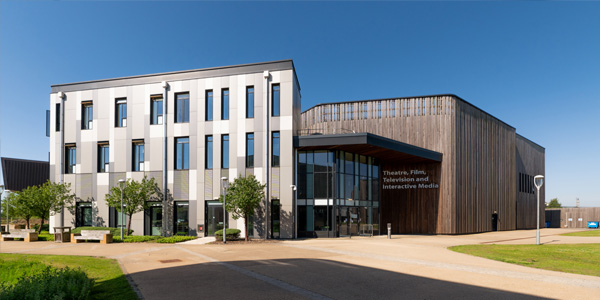
The equipment and facilities available to the course are of the highest quality found in professional film- and programme-making. A new £24 million departmental building on the Heslington East campus houses a further £6million investment in:
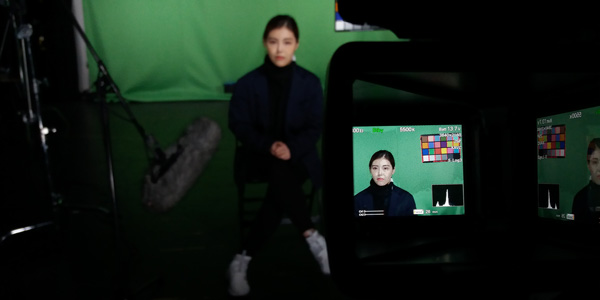
- a sound stage and (five- and three-camera) television studios
- a 148-seat cinema equipped with a 12-metre screen, DTS 5.1 sound, and 35mm film and Barco 2K digital projectors
- rehearsal rooms
- RED cameras (among others) and lenses
- full tungsten and daylight lighting kits (including HMIs)
- a dedicated graduate-only post-production lab running Final Cut Pro
- picture-finishing suites running Flame/Smoke/Lustre, as well as Nucoda Film Master, a motion-picture DI/grading workstation that is typically found in many of the best Soho postproduction facilities
- audio postproduction suites including two dubbing theatres and foley/ADR, all running Protools
- graduate-only facilities including study rooms (with full access to the department’s media servers) and common room
A full programme of lectures that introduce all aspects of the MA, from project development (including screenwriting to production/postproduction digital workflows
These will provide students with opportunities to experiment with new techniques and technologies in film and TV storytelling.
Offering a regular chance to meet and gain insights from some of the leaders in their field – from the film and television directors/producers/editors/etc successfully working in film or broadcast television to executives making decisions now that will affect students’ future career paths.
Providing opportunities to create short drama and/or documentary films, original television projects, and screenplays. We assess projects by assigning group and individual marks
All film and television screenings take place in our digital cinema and in a dedicated graduate screening room.
Working with our RED One, Epic and Sony F3 cameras, Angenieux Optimo lenses, and a range of lighting and grips, we teach the craft of cinematography so that students can work confidently and creatively with high-specification equipment. Subjects covered in lectures and in hands-on workshops include optics, naturalistic lighting, exposure, colour, and different modes of camera operation. Assessment is by soundstage and location camera tests and a technical/reflective essay.
Ten credits.
This module looks at digital production and postproduction processes for the creation of commercial film and television programmes. It examines the latest technical and aesthetic workflows for picture and sound. There are two associated labs- one for Picture Techniques and one for Sound Techniques - in which students put theory into practice by applying concepts and techniques covered in lectures. It is taken by all MA Digital Film and Television Production, MA/MScPostproduction with Visual Effects and MA/MSc Postproduction with Sound Design students. Assessment is through closed-book tests and portfolio-building individual project work.
Ten credits.
This module focuses upon a subject central to the work of all the Department‘s taught postgraduate programmes: the craft of storytelling. It provides a unique opportunity for students to enter into dialogue across the three media of theatre, film and television and is designed to stimulate a sense of common enterprise and to establish an arena of intellectual discovery and artistic experiment. It runs over two terms, and is taken by all Masters students. Assessment is by two essays.
Twenty credits. Module continues into the Spring Term.
This module examines the various strategies through which moving images communicate with audiences. Drawing on the close analysis of film and television texts as well as the industrial and technological conditions underpinning their production, students will explore the connections between theories of film and television and the practice of its production, distribution and consumption. It is taken by all MA Digital Film and Television Production, MA/MSc Postproduction with Visual Effectsand MA/MSc Postproduction with Sound Design students. Assessment is by essay.
Ten credits.
Directing is taught both as a creative discipline and as a highly technical craft. Students learn about strategies for blocking and staging action, working with scripts and writers, working with actors, working with production crew, and directing documentary. Assessment is by group and individual in-class tests and by a reflective essay.
Ten credits.
Teams of students (from Digital Film and Television Production, Visual Effects and Sound Design) will undertake two exercises: the first involves the creation of a title sequence for a film or television programme; the second involves the creation of an action sequence similar to those found in films and high-end TV drama. Students will specialise in their respective areas of study but work in collaborative teams to create programmes to professional standards. These exercises enable students to gain an understanding of the creative process and hone problem-solving skills in an industry-inspired applied setting. Assessment will be through practical work and reflective essays
Twenty credits.
From an initial idea for a film or television programme, we follow the processes of development and preproduction, all the way up to Day One of Principal Photography. Students will pitch and develop their ideas, or ideas to adapt, and will write treatments, screenplays, budgets and schedules, as well as learn about the business of development and production. Assessment is by written practical work, including a screenplay and a ‘production bible’.
Ten credits.
As described above, continuing from Autumn Term
A short film, documentary or pilot for a television programme, directed by MA students either from their own screenplays or from work that they have adapted for the screen. These films usually have a duration of up to thirty minutes, and can be on any subject of the students’ choosing, although we strongly recommend that these are developed during the earlier Project Development module. Final submission is in mid-September, and the finished work is assessed along with a technical and reflective essay.
Ninety credits.
Throughout the year there will be regular seminars featuring practitioners from industry discussing how theory relates to practice and sharing first-hand experience. These are not assessed and are simply to provide additional opportunities to chat with working practitioners.
The fees for postgraduate students commencing their first year of study in 2013/14 have not yet been released by the university.
Below are the standard annual tuition fees listed for postgraduate students commencing their first year of study in 2012/13 for reference purposes. Please note: these are not the fees for applicants commencing studies in October 2013.
Fees quoted are for one year of study only and are subject to increase in subsequent years. The University reserves the right to alter the level of fee.
| Fees 2012/13 |
Full Time | Part Time |
|---|---|---|
| Home/EU | £4,620 | £2,310 |
| Overseas | £16,540 |
Overseas students requiring a Tier 4 Student Visa:
If you are an overseas student who requires a Tier 4 Student Visa to enter the UK, you will not be permitted to undertake part-time study. For further information, please refer to the UKCISA website.
Further details coming soon.