Nuclear Physics

Nuclear Physics is the study of the heavy but tiny nucleus that lies at the centre of all atoms and makes up 99.9% by weight of everything we see. It is a large area of research covering many topics. The group consists of 6 members of academic staff, 5 post-doctoral researchers, an experimental officer and 12 graduate students.

Research Areas

Research at York concentrates on four aspects:

  • the structure of exotic nuclei - probing fundamental symmetries, shapes and collectivity in exotic nuclei with N = Z, through high-resolution gamma-ray spectroscopy with stable and radioactive beams.
  • shape evolution and coexistence - exploration of nuclear shape evolution and shape coexistence through Coulomb excitation, lifetime and conversion electron measurements and radiative capture studies.
  • nuclear astrophysics - investigation of reaction rates of key astrophysical interest in explosive nucleosynthesis.

Follow the links below for more information on the interersts of each staff member.

Charles Barton Charles Barton
Shape evolution and coexistence
Mike Bentley Mike Bentley
Structure of exotic nuclei, Shape evolution and coexistence
Brian Fulton Brian Fulton
Nuclear Astrophysics, Neutrinoless double beta decay
David Jenkins David Jenkins
Structure of exotic nuclei, Shape evolution and coexistence, Nuclear astrophysics
Alison Laird

Alison Laird
Nuclear Astrophysics

Bob Wadsworth Bob Wadsworth
Structure of exotic nuclei, Shape evolution and coexistence, Neutrinoless double beta decay
Ben Kay

Benjamin Kay
Evolution of nuclear shell structure,Nuclear structure relevant to neutrinoless double beta decay


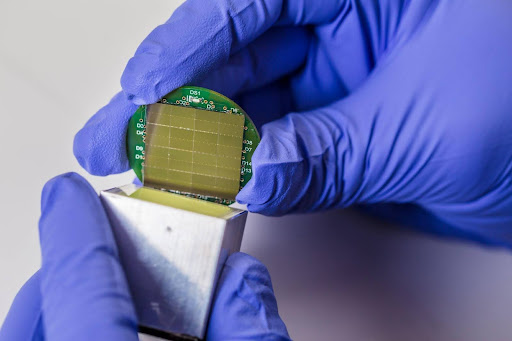
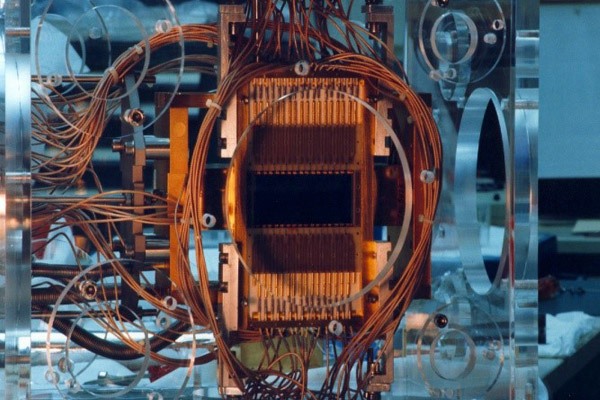
The group is extremely active in the development of new experimental equipment for its research programmes, making major contributions to gamma-ray (germanium), charged particle (silicon, diamond, gas) and neutron detection systems.

All the experimental measurements associated with this work are carried out at overseas laboratories, in particular those in Europe and North America. However, data analysis is carried out on the group's extensive computing facilities at York. The group is also seeking to develop links with industry for a variety of detector projects.