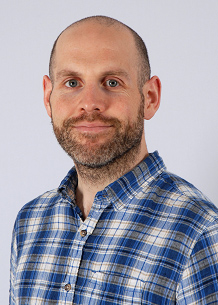
Scott Cairney
Professor
Profile
Biography
Professor Scott Cairney is an internationally recognised expert in the cognitive neuroscience of sleep and mental health. His research aims to uncover the neurocognitive mechanisms linking sleep to mental health and to apply this knowledge to generate meaningful societal benefits. Funded by the ERC, MRC, Wellcome Trust, NIHR, and industrial partners, Scott uses fMRI, M/EEG, and psychophysiology to explore how sleep impacts cognition and emotion. He leads the Emotion Processing and Offline Consolidation (EPOC) lab in the Department of Psychology and is Director of the University of York's Institute of Mental Health Research (IMRY).
Career
- Professor of Sleep and Mental Health, University of York, 2025-
- Senior Lecturer, University of York, 2023-2025
- Medical Research Council Career Development Award Fellow, University of York, 2017-2023
- Centre for Chronic Diseases and Disorders Research Fellow, University of York, 2015-2017
- Postdoctoral Research Associate, University of York, 2012-2015
- PhD Psychology, University of Manchester, 2008-2012
University roles
Director, the Institute of Mental Health Research at York (IMRY)
Research
Overview
The global economic burden of mental illness is expected to exceed $6 trillion annually by 2030. Despite this staggering projection, the biological mechanisms underlying the emergence, persistence, and resolution of mental health problems remain poorly understood. My research addresses this challenge by focusing on a transdiagnostic feature of nearly all psychiatric conditions: sleep disturbances. By integrating experimental psychology, advanced neuroimaging methods, and intervention-focused approaches in clinical settings, my research programme seeks to better understand the neurocognitive mechanisms linking sleep to mental health.
Projects
Sleep and emotion regulation: Funded by the MRC, one of my main research programmes addresses the relationship between sleep disturbance and emotional dysregulation—core features of common mental health disorders such as anxiety, depression, and post-traumatic stress disorder. Using functional brain imaging, my lab showed that sleep deprivation disrupts prefrontal brain mechanisms that prevent intrusive and adverse thoughts from emerging into conscious awareness. In other work using large online data sets, we showed that high-quality sleep reduced people's experiences of depression and anxiety during the COVID-19 pandemic.
Forgetting unwanted memories during sleep: Our ERC-funded research uses advanced neuroimaging methods to examine sleep’s role in forgetting traumatic memories. This work is grounded in a novel theoretical framework proposing that sleep can strengthen or weaken new memories depending on an individual’s cognitive and emotional goals.
Clinical collaborations: We have an extensive network of clinical collaborators across NHS Mental Health Trusts to support feasibility testing of sleep-focused interventions. Our team secured a NIHR Research for Patient Benefit grant to evaluate novel sleep interventions in secure psychiatric inpatient settings, complemented by a systematic review. My lab has also contributed to European Commission Joint Research Centre panels on depression risk mechanisms.
Research group(s)
- Emotion processing and offline consolidation (EPOC)
- Institute of Mental Health Research at York (IMRY)
Grants
Major Grants (Principal Investigator)
- 2025 – 2030: European Research Council, Consolidator Grant, SLEEPAWAY: Forgetting unwanted memories in sleep (€1,999,769)
- 2017 – 2023: Medical Research Council, Career Development Award, Understanding and enhancing the therapeutic function of sleep (£1,448,242)
Available PhD research projects
Feel free to get in touch if you're interested in joining my lab as a PhD student or independent research fellow. I'm happy to supervise projects related to sleep, mental health, emotion regulation and memory. When contacting me about a prospective project, please include a CV and a short statement (~200 words) outlining your research questions, fit to my lab and funding plans.
Supervision
Current and Former PhD Students
- Nicole Duerden-Brown
- Jiayu Liu
- Anna Klets
- Hannah Kirsop
- Vanessa Keller
- Ellie Redfern
- Emma Sullivan (completed in 2024)
- Anna Guttesen (completed in 2022)
Teaching
Undergraduate
BSc/MSci Psychology (Advanced Module): Understanding mental health and its disorders: a transdiagnostic approach
Publications
Selected publications
Harrington, M.O., Karapanagiotidis, T., Phillips, L., Smallwood, J., Anderson, M.C., Cairney, S.A. (2025). Memory control deficits in the sleep-deprived human brain. Proceedings of the National Academy of Sciences, 122
Guttesen, A.Á.V., Harrington, M.O., Gaskell, M.G., Cairney, S.A. (2025). Does overnight memory consolidation support next-day learning? Cognition, 106241
Cairney, S.A., Horner, A.J. (2024). Forgetting unwanted memories in sleep. Trends in Cognitive Sciences, 28, 881-883
Guttesen, A.Á.V., Denis, D., Gaskell, M.G., Cairney, S.A. (2024). Delineating memory reactivation in sleep with verbal and non-verbal retrieval cues. Cerebral Cortex, 34
Sullivan, E.C., James, E., Henderson, L.M., McCall, C., Cairney, S.A. (2023). The influence of emotion regulation strategies and sleep quality on depression and anxiety. Cortex, 166, 286-305
Antony, J.W., Schönauer, M., Staresina, B.P., Cairney, S.A. (2019). Sleep spindles and memory reprocessing. Trends in Neurosciences, 42, 1-3
Cairney, S.A., Guttesen, A.Á.V., El Marj, N. Staresina, B.P. (2018). Memory consolidation is linked to spindle-mediated information processing during sleep. Current Biology, 28, 1-7
Cairney, S.A., Durrant, S.J., Power, R., Lewis, P.A. (2015). Complementary roles of slow-wave sleep and rapid eye movement sleep in emotional memory consolidation. Cerebral Cortex, 25, 1565-1575
Full publications list