Have cats become more affectionate in lockdown? New research shows the impact of the pandemic on pets
Posted on Monday 28 June 2021
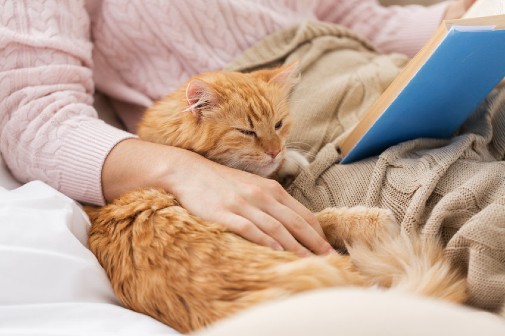
A study led by the Universities of York and Lincoln, has investigated reported changes in companion animal welfare and behaviour. The study examined the association between these changes and the variations to the daily lives, behaviour and mental health of their owners.
Participants in the study also reported more positive changes for cats relative to dogs, whereas there were more negative changes for dogs relative to cats.
Author Dr Emily Shoesmith from the Department of Health Sciences at the University of York, said: “Our findings indicate that poorer mental health may increase attention paid to one’s companion animal, and empathic engagement may increase reporting of any changes, both positive and negative, in animal welfare and behaviour.”
Social environment
Co-author, Professor Daniel Mills, from the University of Lincoln, added: “While it has long been recognised that pets can enrich the lives of humans, the welfare of a companion animal is strongly influenced by the behaviour of their owners, as well as their physical and social environment.
“During lockdown changes experienced by our pets may have included having owners around for more of the day due to furlough or working from home, alterations to their daily routine and limited access to animal-related services, such as training classes or veterinary care.”
During last year’s lockdown, the research team carried out a survey with more than 5,000 pet owners in the UK to find out more about mental health, human-animal bonds and reported changes in animal welfare and behaviour.
In the survey, 67.3 per cent of pet owners reported changes in their animal’s welfare and behaviour during the first lockdown phase. These reported changes were statistically grouped into separate positive and negative welfare scales.
Behaviour
Analysis of the responses indicated that companion animal owners with poorer mental health scores pre-lockdown reported fewer negative changes in animal welfare and behaviour. However, companion animal owners with poorer mental health scores since lockdown reported more changes, both positive and negative, in animal welfare and behaviour.
Overall, approximately a third of cats and dogs were reported to be unaffected by the first lockdown compared to around 40 per cent of other species, and many animals appeared to have improved welfare as a result.
Between 10–15 per cent of all owners reported that their animal appeared to be more energetic and playful, and 20–30 per cent indicated their animal seemed more relaxed, with at least three times as many owners reporting improvements rather than deteriorations in their animal’s physical condition.
“Our findings extend previous insights into the perceived welfare and behaviour changes on a very limited range of species to a much wider range of companion animal species. Owner mental health status has a clear effect on companion animal welfare and behaviour, and is clearly something we need to consider when we seek to do what is best for the animals we care for, ”Professor Mills added.