Researchers develop a new test for recruiting passport officers
Posted on Monday 28 June 2021
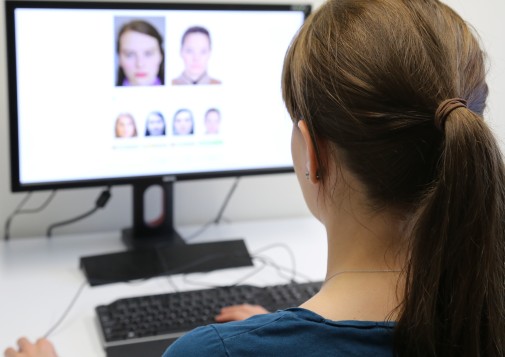
GFMT2 was developed by researchers at the University of York and the University of New South Wales Sydney (UNSW Sydney).
Representative
The new test is an updated version of the research team’s Glasgow Face Matching Test and has been published in the international journal Behavior Research Methods.
The new test includes variation in head angle, pose, expression and subject-to-camera distance, making the new test more difficult and more representative of challenges in everyday face identification tasks.
The original test has been used to select staff for professional roles that involve face identification in a variety of police and government agencies, in countries around the world including Australia, New Zealand, UK and Canada.
Challenging
Dr David White, from UNSW Sydney said: “Being able to recognise faces of friends and family is a skill that most of us take for granted. But comparing images of unfamiliar faces and deciding if they show the same person is a task that most of our participants find challenging, even passport officers with many years experience in the task.”
“Some people are much better than others at dealing with photos of faces. This is an insight that has changed the way staff are recruited, for example passport and police officers.”
“This is especially important in this day and age, where facial recognition software is increasingly used as a search engine in police investigation and security settings. This technology shows close matches to a suspect on a screen, and so human error at that stage can have serious implications.”
Harder
Dr Rob Jenkins, from the University of York’s Department of Psychology, said: “As the purpose of the test is to capture the whole range of human face-matching ability, we constructed harder and easier versions of the test.
“We’ve learned a lot from a decade of collaboration with professional groups. The new test is a response to their requirements.”
Further information
White, D., Guilbert, D., Varela, V.P.L. Jenkins, R., & Burton, A. M. (2021) GFMT2: A psychometric measure of face matching ability. Behavior Research Methods. https://doi.org/10.3758/s13428-021-01638-x