Step closer to nasal spray drug delivery for Parkinson’s disease
Posted on Monday 24 May 2021
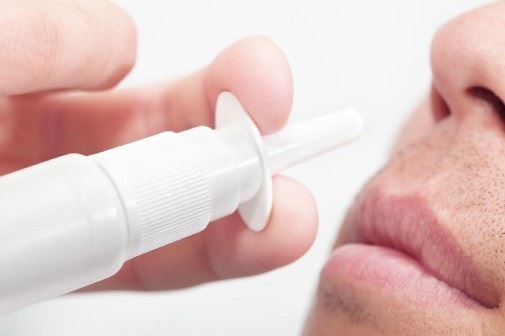
Researchers have developed a new gel that can adhere to tissue inside the nose alongside the drug levodopa, helping deliver treatment directly to the brain.
Levodopa is converted to dopamine in the brain, which makes-up for the deficit of dopamine-producing cells in Parkinson’s patients, and helps treat the symptoms of the disease. Over extended periods of time, however, levodopa becomes less effective, and increased doses are needed.
Increased dosage
Professor David Smith, from the University of York’s Department of Chemistry, said: “The current drug used for Parkinson’s Disease is effective to a point, but after a long period of use the body starts to breakdown the drug before it gets to the brain where it is most needed.
“This means increased dosage is necessary, and in later stages, sometimes, instead of tablets, the drug has to be injected. Investigations into nasal sprays have long been of interest as a more effective delivery because of its direct route to the brain via the nerves that service the nose, but the challenge here is to find a way of making it adhere to the nasal tissue long enough to release a good dosage of the drug.”
The researchers created a gel, loaded with levodopa, that could flow into the nose as a liquid and then rapidly change to a thin layer of gel inside the nose. The method was tested in animal models by a team at King’s College London, where levodopa was successfully released from the gel into the blood and directly to the brain.
Better uptake
Professor Smith said: “The results indicated that the gel gave the drug better adhesion inside the nose, which allowed for better levels of uptake into both the blood and brain.”
The team are now working to incorporate these materials in nasal spray devices to progress to clinical trials in humans. The approach may also be relevant to other neurodegenerative diseases such as Alzheimer’s.
Khuloud Al-Jamal, Professor of Drug Delivery and Nanomedicine from King’s College London, said: “Not only did the gel perform better than a simple solution, but the brain uptake was better than that achieved using intravenous injection of the drug. This suggests that nasal delivery of Parkinson’s drugs using this type of gel may have clinical relevance.”