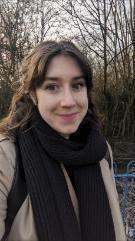
GINA LYLE
ASSOCIATE LECTURER IN ENGLISH STUDIES
Profile
Biography
BA English & Scottish Literature (Edinburgh); MA Scottish Literature, PhD Scottish Literature (Glasgow)
Gina joined the Norwegian Study Centre as an Associate Lecturer in September 2024, after serving as a Project Assistant at the University of Glasgow, and a Tutor and Co-Director at the Scottish Universities International Summer School. Her specialisms include contemporary Scottish literature, representations of bodies, and food, and her methodologies engage with animal studies and queer theory.
Departmental Roles
YorkCourse Coordinator
External Activity
Gina is an editor for The Literary Encyclopedia, supporting their Scottish Writing Post-1945 volume. She is also a member of the York-Anglo Scandinavian Society, the International Association for the Study of Scottish Literatures, and the Association for Scottish Literature.
Research
Overview
Gina works largely with contemporary British fiction, specialising in Scottish women’s writing. This focus stems from her PhD research at the University of Glasgow, where her thesis centred on the roles of meat in contemporary Scottish writing with an emphasis on class and gender. She has written about food consumption and food labours, and other research interests recently presented on include contemporary engagements with Shakespeare, climate fiction, and short stories for schools.
Currently, Gina is developing a project on how human bodies become ‘meaty’ in Scottish fiction, and researching literary representations of chicken farming, from P.G. Wodehouse to Lucie Rico.
Publications
- ‘Queer Pregnancies in Kirsty Logan’s Fiction’, Times of Horror, Magic, and the Reproductive Body in Popular Culture, ed. Ruth Barratt-Peacock, Taylor and Francis, June 2026.
- ‘Disruptions of Time: Found Manuscripts, Hogg’s Influence, and Queer Time in Helen McClory’s Bitterhall (2021)’, Humanities 14.12, December 2025.
- ‘Meat and Masculinity in Contemporary Scottish Fiction’, Cultural Representations of Food and Drinks in World Literature, eds. Monica Manolachi, Lorena Clara Mihăeș, Cambridge Scholars, November 2025.
- ‘Just Get It On The Table’: Gendered Food Labour in Janice Galloway’s Fiction’, Studies in Scottish Literature 50.1, October 2025
Teaching
Short Course
Gina’s Short Course offerings reframe canonical texts within new discussions, introduce experimental literary forms, and develop students’ critical literary skills through hands-on activities.
Current short course sessions with Gina include:
- Dystopian Literature
- British Crime Fiction
- The Body in Literature
- Flash Fiction
- A Beginner's Guide to Graphic Novels
YorkCourse
Gina leads "The Twenty-First-Century British Novel", which uses recent novels to explore how literature reflects and critiques the world around us. Students engage in key conversations in contemporary literature, from representations of Brexit to new technologies in publishing, and develop critical literary skills in supportive practical sessions.
Gina also co-teaches the interdisciplinary module "Food, Glorious Food", facilitating students’ explorations of the purpose and impact of food in literature.