
Health Sciences

- Health Sciences
- Research
- Centre for Health Research Inclusion
- Projects
- Children, parents and young people
Children, parents and young people
This section showcases studies that focus on the inclusion of children and young people (aged 18 or under) in health and care research. Projects also focus on infant-parent relationships. We are adding new studies to this section every few months, so please keep checking in to keep up-to-date.
Accessing Disabilities Library (ADLib)
Project Title
Nothing About Us Without Us: Co-producing inclusive data collections infrastructure with learning-disabled people
Project Aims
Nothing About Us Without us was a 1-year ESRC funded study designed to build sustainable data infrastructure to support researchers to be more able to meaningfully include learning-disabled children and young people in their research. We conducted a systematic review and an ethnographic study in a special school and, on the basis of the data, we co-produced a library of inclusive data collection tools with partners including staff and students in Applefields School; learning disabled and non learning-disabled researchers at Mencap; and a consultant speech and language therapist.
ADLib is a prototype of an open-access, evidence-informed, and co-produced online library of data collection tools for - and guides to - conducting research with learning-disabled children and young people. Tools and guides are currently available in English, Mandarin, Spanish, and Hindi, and the platform includes a crowdsourcing feature that allows researchers from outside the team to contribute to the library’s development.
Project Overview
 1.png)
Research Inclusion: Children and young people with learning disabilities
Learning-disabled people are often excluded from research, particularly those who communicate in non-traditional ways. This lack of inclusion is problematic, not just in a social and moral sense but in a legal sense too. However, designing truly inclusive research projects can be challenging, especially for researchers who do not have past experience of working with learning-disabled children and young people.
The ADLib team is passionate about amplifying the voices of learning disabled people in research and we believe that by making adaptable tools and guides for researchers, more projects can be designed in inclusive and accessible ways. The team has built great relationships with Mencap and Applefields School, our study partners, and will continue to develop and expand the library in 2026. We hope that, via the crowdsourcing function, members of the community will help us to build ADLib into a fully open-source, community owned and managed international resource.
Team
The core ADLib team is based in the University of York's Department of Education: Kathryn Asbury (PI), Laura Fox (Co-I) and Kayleigh Doyle. Other key contributors include: Astrid Bowen, Emma Jackson and Ryann Sowden (UoY research staff); Fran Copping (Speech and Language Therapist); Mo Hakim, Elliot Negru, Dan Newton and Mary Peachey (Mencap researchers), Phil Harrison, Finn McLellan and Dave Shaw (UoY Research IT), staff and students at Applefields School.
 2.jpg)
From left to right: Kayleigh Doyle, Laura Fox, Kathryn Asbury.
Find out more on the study website: https://sites.google.com/york.ac.uk/adlib/
This study was funded by the Economic and Social Research Council (ESRC), grant number UKRI112
The ASSSIST-2 Trial
Project title
Autism Spectrum Social Stories in Schools Trial 2 (ASSSIST-2)
What we did
Autism Spectrum Disorder (ASD) is a lifelong neurodevelopmental disorder that affects up to 1.6% of children in the UK. Many children with autism struggle to manage social anxiety and feelings of anger, which can lead to outbursts of aggression, and social communication difficulties are frequently associated with disruptive behaviour. Carol Gray’s Social Stories™ aim to support children to understand social situations more easily. We carried out a cluster-randomised controlled trial which aimed to establish whether Social Stories™ are clinically and cost-effective in improving child social responsiveness, reducing challenging behaviour and improving social and emotional health in children with ASD in primary schools.
We found that after 6 months, children allocated to receive Social StoriesTM scored lower on the Social Responsiveness Scale-2 indicating fewer social challenges, though this was not statistically significant. For children who received the full exposure as intended, a greater and significant reduction was observed. Children in the intervention group met their individual socio-emotional goal more frequently than children receiving usual care alone and this was statistically significant. No statistically significant differences were found in other secondary outcomes.
The trial was largely affected by the COVID-19 pandemic and this introduced considerable uncertainty to the results. Nevertheless, Social Stories™ represents a low-cost, low-burden intervention with potential benefits in terms of social skills and individual goal attainment.
How we did it
We recruited 87 educational settings and 249 children and their families across Yorkshire and Humber. Settings were randomly allocated to receive training on how to write Social StoriesTM and to deliver Social StoriesTM at least six times over a 4-week period or to continue care and education as usual. We assessed a range of outcomes at baseline, and at 6-weeks and 6-months post-randomisation. The primary outcome was social skills measured using the Social Responsiveness Scale 2. We also looked at other outcomes such as quality of life, individual goal achievement, resource use, and parent/carer wellbeing.
Research inclusion: Children with autism
Children are an underserved group in terms of research. We included PPIE including key stakeholders such as parent/carers of autistic children, health and educational professionals, charities representing the autistic community, and autistic adults who were involved in all aspects of the research from conception.
The trial sample included children from ethnic minority groups and children from areas of high deprivation.
Team
The ASSSIST-2 team comprised researchers from University of York: Professor Barry Wright, Professor Catherine Hewitt, Dr Kerry Bell, Dr Jane Blackwell, Laura Mandefield, Charlie Welch, Dr Han-I Wang, Emma Standley, Dr Jude Watson, Professor Dean McMillan, Steve Parrott, Dr David Marshall, Dr Danielle Varley, Olivia Taylor; University of Birmingham: Dr Arabella Scantlebury; Leeds and York Partnership NHS Foundation Trust: Dr Catarina Teige, Leah Attwell, Hayley Carrick, Amelia Taylor, Rachel Hodkinson, Hannah Edwards, Hannah Pearson, Rebecca Hargate. Anne Mclaren was a co-applicant and PPI representative.
The study Chief Investigators are Professor Barry Wright and Professor Catherine Hewitt.
Find out more: https://www.york.ac.uk/healthsciences/research/trials/ytutrialsandstudies/archive/asssist-2/
This trial is funded by the National Institute for Health and Care Research (NIHR) Health Technology Assessment (HTA) Programme: NIHR 16/111/91
BAY Project
Project title
Behavioural Activation for young people with depression in specialist CAMHS
What is the BAY Project?
The BAY project is a large-scale study (Randomised Controlled Trial) testing a psychological treatment called Behavioural Activation (BA) for young people aged 11 to 17 who are experiencing moderate to severe depression.
Currently, many young people face long waiting lists for specialist therapy in Child and Adolescent Mental Health Services (CAMHS). The project aims to see if BA—a brief, 8-session programme—is an effective and cost-efficient "first-line" treatment.
- The Approach: It uses a "blended" model, meaning young people can use online workbooks on a co-produced website alongside in-person sessions with a mental health professional.
- The Goal: By using junior mental health staff (Band 4 or 5) to deliver this structured programme, the study hopes to reduce waiting times and make evidence-based support more widely available.
Research Inclusion and Underserved Groups
A core priority of the BAY project is ensuring that the research is inclusive and accessible to all young people, particularly those from underserved backgrounds. Key inclusion strategies include:
- Cultural Representation: The team includes a dedicated Cultural Advisor to ensure the intervention and recruitment materials are culturally appropriate.
- Lived Experience: Patient and Public Involvement (PPI) is central to the project. Young people and carers with lived experience of depression are part of the study team and advisory panels, helping to design the website and research processes.
- Addressing Barriers to Access:
- Maximum Variation: The research team actively seeks a diverse range of participants across different ages, genders, and socioeconomic backgrounds.
- Digital Inclusion: The study assesses participants' access to digital devices and the internet to ensure the "blended" online approach does not exclude those without technology.
- Flexible Delivery: Assessments and therapy can take place face-to-face, at home, or via video call, depending on the family's preference and needs.
The Team
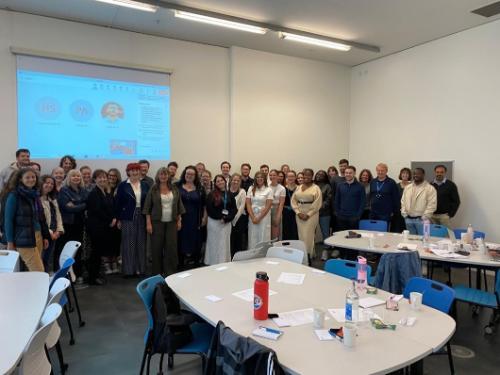
The study is led by a multi-disciplinary team of experts from several universities and NHS Trusts:
- Chief Investigator: Professor Bernadka Dubicka (University of York and Hull York Medical School).
- Trial Management, Statistics and Health Economics: Led by the York Trials Unit (University of York) including Professor Catherine Hewitt, Rachel Ellison, Emma Standley, Alex Mitchell, Camila Piccolo Lawrance, Abbie Cowling, and Han-I Wang. Contact us at bay-project@york.ac.uk
- Qualitative Study and Digital Tool Development: Led by the University of Manchester including Professor Penny Bee, Dr Gokce Cokamay Yilmaz, Elinor Hopkin, and Charlotte Stockton-Powdrell.
- NHS Trusts: Greater Manchester Mental Health NHS Foundation Trust (Bernadka Dubicka and Melissa Street), Pennine Care NHS Foundation Trust (Paula Hull), Cambridgeshire and Peterborough NHS Foundation Trust (Anupam Bhardwaj and Clare White), Nottinghamshire Healthcare NHS Foundation Trust (Kapil Sayal and Hannah Strange), Manchester University NHS Foundation Trust (Rachel Elvins and Paul Wallis), and Lancashire and South Cumbria NHS Foundation Trust (Susanne Marwedel).
- Inclusion Leads: Ade Kolade (Cultural Advisor), Sam Young (PPI Lead), Toni Wakefield (PPI Carers Lead) and Emma Wakefield (PPI Young Persons Lead).
- Sponsor: Greater Manchester Mental Health NHS Foundation Trust.
Find out more on the study website: https://bayresearchstudy.co.uk/about-our-research
The project is funded by the National Institute for Health and Care Research (NIHR) through its Health Technology Assessment (HTA) Programme (Reference: NIHR132808).
The BRIGHT study
Project title
Behaviour change intervention (education and text) to prevent dental caries in secondary school pupils: BRIGHT RCT, process and economic evaluation

What we did
Tooth decay has an impact on children and young people’s daily lives, particularly those living in deprived areas. For young children, programmes to improve toothbrushing with fluoride toothpaste help prevent tooth decay. The Brushing RemInder 4 Good oral HealTh trial (BRIGHT) investigated whether a secondary-school-based toothbrushing programme would work.
We developed a new programme which included a lesson and twice-daily text messages sent to pupils’ phones. In total, 4680 pupils, aged 11–13 years, from 42 secondary schools in the United Kingdom took part in the trial. At each school, one year group was randomly selected to receive the programme, while the other year group did not receive it. All pupils were followed up for 2.5 years to see whether there were any differences in levels of tooth decay, frequency of toothbrushing, plaque or quality of life. We also considered the programme’s value for money and the views of pupils and school staff.
How we did it
We undertook a multicentre, school-based, assessor-blinded, two-arm cluster randomised controlled trial with an internal pilot phase, and embedded health economic and process evaluations. Secondary schools in Scotland, England and Wales with above national average percentage of pupils eligible for free school meals (FSM) were recruited. Schools had to have pupils aged 11–16 years and at least 60 pupils per year group. Participating pupils were aged 11-13 years.
The intervention consisted of two components: (1) a 50-minute classroom-based session (CBS) about dental health delivered by teachers using a lesson plan and pupil-facing materials followed by (2) a series of twice-daily text messages to participants’ mobile phones about toothbrushing. Year groups allocated to the control arm received routine education only.
Pupils were followed up for 2.5 years and the primary outcome was the presence of at least one treated or untreated carious lesion in any permanent tooth. We followed up 2383 pupils and found no difference in tooth decay, plaque or quality of life. We found those who had the programme were more likely to brush their teeth twice daily after 6 months than those who did not. The programme was not good value for money overall. However, the programme appeared to be of more benefit at preventing tooth decay in pupils eligible for free school meals compared to those not eligible. In the schools with more pupils eligible for free school meals, the chance of the programme representing good value for money increased.
Research inclusion: Young people
As well as the 4680 participants in the trial, young people were involved throughout the trial, in the design, conduct and dissemination. The trial design was developed following surveys and workshops involving 319 pupils aged 11–16 years from deprived areas. We also formed a BRIGHT Youth Forum who commented on the wording and timing of the text messages, contributed to the development of the participant information and data collection resources, assisted in the design of the process evaluation topic guides, and conducted some peer-to-peer facilitation of the focus groups of pupils in schools.
Team
The BRIGHT research team was led by Professor Zoe Marshman (School of Clinical Dentistry, University of Sheffield) and Professor Nicola Innes (School of Dentistry, Cardiff University). Researchers from York Trials Unit, University of York, included methodologists (Professor David Torgerson), statisticians (Caroline Fairhurst, Professor Catherine Hewitt), and trial managers (Hannah Ainsworth, Dr Katie Whiteside, Kate Hicks, Debbie Sykes).
Find out more on the study website: https://www.york.ac.uk/healthsciences/research/trials/ytutrialsandstudies/archive/bright/
Funder information
The research was commissioned by the National Institute for Health and Care Research (NIHR) Health Technology Assessment (HTA) programme (Award ID: 15/166/08).
The EPLAYS-2 Trial
Project title
E-PLAYS-2: Enhancing Pragmatic Language skills for Young children with Social communication impairment trial
What we aimed to do
Some children experience difficulties with social communication and struggle with conversational tasks such as appropriate use of greetings, conversational turn-taking, understanding of non-literal language, social conventions like politeness, taking the perspective of the other person and responding with relevant information. These difficulties have profound effects on children’s social development, mental health, and education and are strongly associated with bullying, isolation and school exclusion.
Researchers at the University of Bedfordshire, helped by games designers, teachers, speech and language therapists and children, developed a novel intervention called E-PLAYS, a computer game, played in pairs, for children aged 5-7 years with social communication difficulties.
We aimed to establish the effectiveness and cost-effectiveness of care as usual plus the E-PLAYS programme delivered in primary schools, compared to care as usual only.
The E-PLAYS programme did not improve scores on the primary outcome, the Test of Pragmatic Skills (TPS); however, improvements were observed on some of the secondary outcome measures relating to following directions and recalling sentences.
How we did it
The E-PLAYS-2 trial was a multi-centre, two-arm, observer-blind, cluster-randomised controlled trial. The trial took place in 88 state-funded mainstream UK primary schools; teachers selected children 5-7 years-old with social communication difficulties. Data were collected at three times points: baseline, 15–20 weeks post-randomisation, and a long-term follow-up at 35-40 weeks post-randomisation. The primary outcome measure was the Test of Pragmatic Skills (TPS) score at 35—40 weeks post-randomisation with secondary measures also being included.
Research inclusion: Children with social communication difficulties
Children with social communication difficulties (SCD) can be excluded from research as they may be unable to engage with the intervention itself and/or the assessments used within the study to measure attainment pre and post intervention. To ensure children with social communication difficulties were included in the study, teachers were required to complete the Social Communication Behaviour Checklist* to identify a target sample for recruitment. The checklist is a brief screening tool developed to identify key social‑communication difficulties in children. It is often used in clinical trials for referral/screening purposes where practitioners need to quickly decide if a child shows behaviours suggestive of social communication impairment.
A PPIE advisory group contributed to the development of an accessible Participant Information Sheet, as well as other participant-facing study materials and guidance for teaching assistants. The group included a diverse mix of parents of children with social communication difficulties (SCD), teachers, speech and language therapists, and representatives from relevant charities.
Team
The EPLAYS-2 team comprised researchers from University of Bedfordshire: Dr Suzanne Murphy, Dr Rosemary Davidson, Dr Erica Cook; University of Essex: Professor Victoria Joffe; The Open University: Professor David Messer, Professor Sarah Crafter; University of York: Professor David Torgerson, Dr Kerry Bell, Caroline Fairhurst, Dr Lyn Robinson-Smith, Charlie Welch, Kate Hicks, Dr Han-I Wang.
Dr Suzanne Murphy was the lead investigator.
To learn more about EPLAYS visit: https://www.beds.ac.uk/ihr/about/centres/mchrc/current-projects/eplays/what-is-e-plays/
This research was funded by the National Institute for Health and Care Research (NIHR) Public Health Research (PHR) Programme: NIHR131745
*Adams, C., Lockton,E., Freed,J., Gaile,J., Earl,G., McBean,K., et al.(2012). The Social Communication Intervention Project: A randomized controlled trial of the effectiveness of speech and language therapy for school-age children who have pragmatic and social communication problems with or without autism spectrum disorder. International Journal of Language and Communication Disorders,47(3), 233–244.
The INTERACT Trial
Project title
Intensive Interaction for children and young people with profound and multiple learning disabilities: The INTERACT trial
What we do
INTERACT is an NIHR-funded 52-month cluster-randomised controlled trial that aims to evaluate the effectiveness and cost-effectiveness of Intensive Interaction (II) to improve the communication skills of children and young people with profound and multiple learning disabilities (PMLD).
Over 10,000 children and young people in England have PMLD, all have multiple disabilities, the most significant being profound intellectual disability and great difficulty communicating.
Intensive Interaction teaches communication skills and works on early interaction abilities, how to enjoy being with other people, to relate, interact, know, understand and practise communication routines. Intensive Interaction is widely used but currently lacks robust evidence for children and young people with PMLD in educational settings. In our trial, we provide structured training in II to educational setting staff and parents/carers with coordinated activities developed jointly for each child/young person to be delivered within the educational setting and at home.
How we’re doing it
We have recruited 67 educational settings and 328 children and young people and their families from England and Wales. Settings were randomly allocated to receive training and deliver II or continue care and education as usual. We are assessing a range of outcomes at baseline and at 32- and 52- weeks post-randomisation. The primary outcome is communication skills measured using the Communication Complexity Scale. We also look at other outcomes such as quality of life, behaviour, resource use, and parent/carer wellbeing.
Research inclusion: Children and young people with profound and multiple learning disabilities
Children and young people with PMLD are an underserved group. We have an active Research Advisory Group (PPIE) including key stakeholders such as parent/carers of children with PMLD, health and educational professionals who have been involved in all aspects of the research from conception.
Ahead of recruitment, the team collated the most recent educational setting level data from multiple national sources to identify educational settings with 5 or more children and young people with PMLD, alongside the index of multiple deprivation and income deprivation affecting children index and ethnicity. These data were linked and combined to identify target educational settings to ensure recruitment from geographic populations with high ill-health and socio-economic burden, which have been under researched in this field.
Team
The INTERACT team comprises researchers from University of York: Professor Catherine Hewitt, Dr Kerry Bell, Dr Katie Whiteside, Dr Jane Blackwell, Imogen Fountain, Katie Carlisle, Kalpita Baird, Charlie Peck, Dr Han-I Wang, Professor Joy Adamson, Dr Lyn Robinson-Smith, Emma Standley; University of Birmingham/University of Kent: Professor Jill Bradshaw, Dr Nick Gore, Joanne Sweeney; University of Sheffield: Professor Judy Clegg, Dr Sara Lavaggi, Dr Aydan Suphi, Vicki Roberts; Newcastle University: Professor Lindsay Pennington; Bangor University: Dr Fliss Kyffin; PAMIS: Jenny Miller; and the Council for Disabled Children: Amanda Allard, Ruby St. Leger. Lucy Ziegler is a co-applicant and parent of a child with PMLD.
The study Chief Investigators are Professor Jill Bradshaw and Professor Catherine Hewitt.
Find out more on the study website: www.interacttrial.com
This trial is funded by the National Institute for Health and Care Research (NIHR) Health Technology Assessment (HTA) Programme: NIHR151428