
Department of Chemistry

- Department of Chemistry
- Research
- York Structural Biology Laboratory
- News
- York Structural Biology Lab at the forefront of insulin research
York Structural Biology Lab at the forefront of insulin research
Posted on 18 February 2020
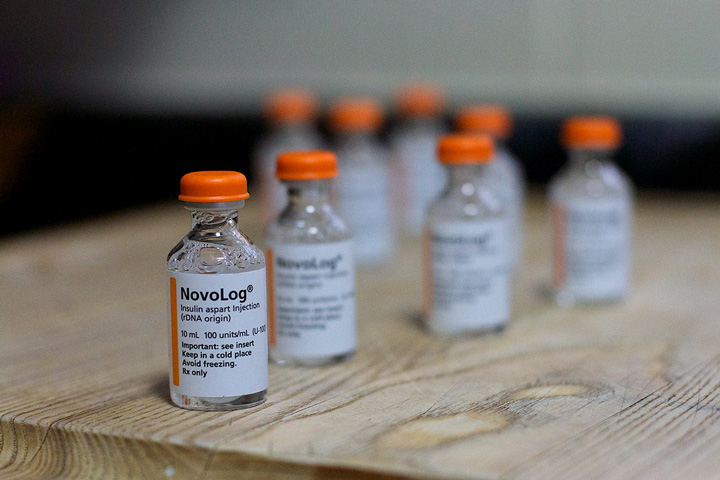
The main function of the hormone insulin is to bind to a receptor on the surface of cells and increase the rate at which glucose is absorbed to provide energy. When levels of insulin are too low, people experience diabetes.
YSBL determined the structure of many different insulin molecules and analogues and worked with the company Novo Nordisk to use this information to guide the design of new forms of insulin with improved properties.
The first discovery (in the mid-1980s) changes insulin biochemically so that it is very fast-acting. The second discovery (in the mid-1990s) was in understanding how additives can make insulin very slow-acting, by increasing the biochemical stability of the hormone.
These modified insulin molecules allow patients to control more tightly the amount of insulin in their bodies, and are now being used to treat millions of diabetes sufferers worldwide with improved outcomes and fewer side effects than previously.
In 2013, YSBL and collaborators were the first to determine the structure of insulin when bound to the receptor.
In addition to providing insight into a fundamental process in biology, this newly discovered structure is stimulating ideas on how to design synthetic mimetics of insulin for therapy.
Professor Rod Hubbard said: “The long-term collaboration with Novo Nordisk was built on the pioneering work of Professor Guy Dodson on the structure of insulin.
“This was an early example of how industrial and academic scientists can work effectively together to generate scientific insights that lead to new medicines and treatments that benefit patients worldwide.”