
Department of Biology

- Department of Biology
- Research and impact
- Molecular and Cellular Medicine
- Southgate, Professor Jenny
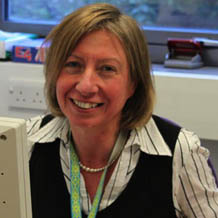
Professor Jenny Southgate
Director, Jack Birch Unit for Molecular Carcinogenesis and York Biomedical Research Institute theme lead for Molecular and Cellular Medicine
Research

Professor Jenny Southgate is Director of the Jack Birch Unit for Molecular Carcinogenesis (JBU) and holds a Research Chair funded externally by York Against Cancer. The research of the JBU focuses on human epithelial tissues and their cancers. Our aims are to understand the processes that control proliferation, differentiation and cellular organisation in normal and wounded epithelial tissues and how dysregulation of these processes leads to the development and progression of malignant disease.
Most of the work in the Unit focuses on urothelium, the specialised epithelium that lines the urinary tract and gives rise to bladder cancer. A range of cell and tissue culture systems have been developed to study urothelial cells from normal and diseased tissues, and methods have been established using retroviruses to enable gene manipulation in order to recapitulate the early stages of neoplastic development. The capacity for in vitro-propagated normal human urothelial cells to undergo differentiation and form a functional urinary barrier has led to an interest in reconstructing urothelial cells into functional tissues for the purpose of tissue engineering and we are also examining the use of natural biomaterials as scaffolds for this purpose.
Teaching and scholarship

As the holder of a Research Chair, I am passionate about science and “passing on the torch” to the next generations of young scientists. My teaching goal is to instil how underpinning scientific principles and learning can be combined with robust research practices to advance scientific knowledge and its translation into clinical and medical advances.

I currently lecture on the 3rd year module Cell and Tissue Engineering. As a relatively new and multidisciplinary research field, this provides an exciting forum to explore how research can be driven by the practical goal of addressing clinical need, alongside some of the particular challenges that face translation into the clinic. My approach in these lectures is to provide a framework of clinical need, illustrate how basic scientific knowledge can be applied in a multidisciplinary research setting and use examples, including my own research, to demonstrate possible approaches. We also take a look at some examples from the literature to illustrate the importance of incorporating sound scientific and ethical principles in order to avoid the risk of doing harm.
I am a visiting lecturer on the Master Program in Bioengineering at the École Polytechnique Fédérale de Lausanne (EPFL), Switzerland (since 2010).

I offer a stage two tutorial in the area of “epithelial tissue homeostasis and cancer”. The content is not prescribed as I see this as the starting point for encouraging self-directed learning and thinking by students through discussion. I aim to support the development of key academic research skills through practice with presentations and reports. Frequently we review research papers selected and brought to the tutorial by the students, with the aim of developing a critical eye to sourcing and evaluating the literature.

I am particularly enthusiastic that through the final year projects, we are able to offer the opportunity for undergraduate students to join us in the Jack Birch Research Unit to sample the environment of the well-run research unit for future career decisions. Projects are invariably aligned to our current research, with laboratory mentoring by members of the research team. We pride ourselves in providing high quality training in experimental design and research techniques which may include cell and tissue culture, histology, microscopy, RNA isolation and analysis using PCR amplification techniques, and protein analysis by western blotting and immunochemistry.
Contact details
https://www.york.ac.uk/biology/jack-birch-unit/