Professor Sue Hartley
Director of York Environmental Sustainability Institute

Profile

Career

2010- Director Environmental Sustainability Institute, University of York
2010- Professor of Ecology
Department of Biology, University of York
2009 Royal Institution Christmas Lecturer
2004-2010 Professor of Ecology
School of Life Sciences, University of Sussex
2001-2004 Reader School of Life Sciences, University of Sussex
1996-2000 Principal Scientific Officer
Centre for Ecology & Hydrology, Banchory
1993-1996 Royal Society Edinburgh Fellowship
Centre for Ecology & Hydrology, Banchory
1990-1993 Post-doc Centre for Ecology & Hydrology, Banchory
 1987-1990 NERC Fellowship
University of York
 1987 DPhil (Ecology)
University of York
1984
BA (Biochemistry)
University of Oxford
null

Contact details

Prof. Sue Hartley
Director of York Environmental Sustainability Institute
Room B/E001

Tel: 01904 328640

Research

Overview

Key research interests

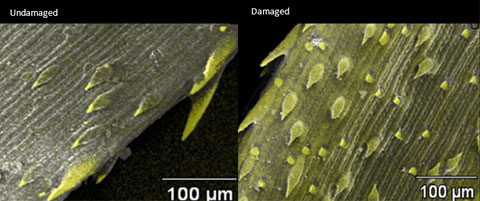
I study the interactions between plants and other organisms, principally insect and mammalian herbivores, but also fungi and parasitic plants. I seek to understand the chemical mechanisms by which plants defend themselves against attack, how they optimise resource allocation to their defences, and the consequences of these defences for the abundance, performance and behaviour of organisms seeking to exploit plants. I am also interested in how plants mediate interactions between organisms which share the same host plant, how such interactions structure ecological communities and how these interactions will respond to environmental change. Current research is focussed on investigating the role of silica-based defences in grasses in driving the population cycles of small mammals using a combination of large-scale field experiments and modelling.

Selected publications

•    Massey, F.P and Hartley, S.E. (2006). Experimental demonstration of the anti-herbivore effects of silica in grasses: impacts on foliage digestibility and vole growth rates. Proceedings of the Royal Society 273: 2299-2304.
•    Massey, F.P. Ennos, R. and Hartley S.E. (2007). Herbivore specific induction of silica-based plant defences. Oecologia  152: 677-683
•    Massey, F.P., Smith M.J., Lambin, X. and Hartley, S.E. (2008). Are silica defences driving vole population cycles? Biology Letters 4: 419-422
•    Hartley, S.E. and Gange, A.C. (2009). The impacts of plant symbiotic fungi on insect herbivores: mutualism in a multi-trophic context. Annual Review of Entomology 54: 323-342
•    Eichhorn, M.P., Nilus, R., Compton, S.G., Hartley, S.E., Burslem, D. (2010). Herbivory of tropical rain-forest tree seedlings correlates with future mortality Ecology 91:1092-1101
•    Bass, K., John, E.A., Ewald, N.C. and Hartley, S.E. (2010). Insect herbivore mortality is increased by competition with hemi-parasitic plants. Functional Ecology 24:1228-1233
•   Garbuzov, M., Reidinger, S. and Hartley, S.E (2011) Interactive effects of plant available soil silicon and herbivory on competition between two grass species. Annals of Botany 108: 1355-1363.
 •  Johnson, S.N., Staley, J.T., McLeod, F.A.L., & Hartley, S.E. (2011) Plant-mediated effects of soil invertebrates and summer drought on above-ground multi-trophic interactions. Journal of Ecology 99: 57-65.


Discoveries

Our research has provided the first experimental evidence that silica is an inducible defence, i.e. levels increase following damage, and that this induction occurs only after herbivore attack and not after mechanical damage, so is a specific response to herbivore feeding. We have also shown that silica reduces the ability of herbivores to absorb nitrogen from their food and so reduces their growth rate, and we have provided the first link between the silica content of grasses in the field and the population densities of herbivores. Other research has provided the first experimental demonstration of direct competition between insect herbivores and hemi-parasitic plants sharing the same host plant. Using a metabolomic approach to characterise the response of creeping thistle to infection by endophytic fungi, we have demonstrated the fungally-induced production of chemicals previously only detected in Arapidopsis but known to be involved in defence against wounding and insect herbivory.

Current projects

  • Do silica based defences drive plant-herbivore dynamics? (Funding body: NERC)
  • Multi-trophic effects of heavy metal accumulation by plants (Funding body: BBSRC)
  • Signalling plant defence levels to herbivores: is there a link between chemical and visual cues? (Funding body: BBSRC)

Research group(s)

 Status Name
Project
Post doctoral fellow
Dr Stefan Reidinger (with University of Aberdeen and Heriot-Watt University)

Do silica based defences drive plant-herbivore dynamics?
  Claudia Harflett (with University of Sussex)
Role of zinc accumulation in plant-plant and plant-herbivore interactions
  Lynne Robinson (with Centre for Ecology & Hydrology, Edinburgh)
Plant-mediated impacts of soil food webs on foliar-feeding insects and their parasitoids
   Rosie Foster (with University of Sussex)

Signalling plant defence levels to herbivores: is there a link between chemical and visual cues?
   Matt Dray (with Cardiff University) The consequences of increasing atmospheric CO2 for litter quality, processing and detritivory in soils and waters
 PhD student Sam Amy (with Centre for Ecology and Hydrology)  Impacts of habitat structure on invertebrate predator community composition and function
 PhD student Kevin Rich (with Food and Environment Research Agency) Exploiting 'SOS' signals for sustainable pest control - a novel approach for improving crop resistance to root-herbivores
 PhD student Ruth Wade (with James Hutton Institute)   How will predicted changes in precipitation shape cereal ecosystems?
 PhD student Vicky Chadfield (co-supervisor Dr Kelly Redeker; with Food and Environment Research Agency) Plants as pesticide: developing co-cropping techniques to provide sustainable agricultural yields into the next century
Technician
 Debbie Coldwell (20%)
Do silica based defences drive plant-herbivore dynamics?

Available PhD research projects

Host-mediated competition between parasitic plants and insect herbivores: molecular mechanisms. (for 2012-13)

Parasitic plants attach to the roots of their host plants to obtain nutrients - they have negative impacts on the growth of the infected host and alter its suitability as a resource for other organisms, such as insect herbivores (Bass et al. 2010). Thus insects might be expected to perform badly on plants infected by parasitic plants, but this is not always the case; effects vary with type of herbivore (Ewald et al. 2011), possibly because parasite infection reduces the host's ability to defend itself against other organisms. Such antagonistic "cross-talk" between defence pathways has been demonstrated for plant pathogens and insect herbivores, and between different types of herbivore. It has not yet been tested with parasitic plants, although parasites are thought to induce the same defence pathways as pathogens and sap-sucking herbivores and impair those induced by chewing herbivores (Runyon et al. 2008). This project will test the defensive responses (including changes in gene expression) of plants under attack by these contrasting organisms and so determine the molecular mechanisms underpinning host-mediated interactions between parasitic plants and different types of insect herbivore. The student will receive training in a diverse range of skills including experimental design and analysis, entomology, analytical chemistry and molecular approaches to ecological interactions.

Mechanisms of resource acquisition by plant mutualists: multiple host benefits from arbuscular mycorrhizal fungi? (BBSRC funding; with Dr Angela Hodge)

Arbuscular mycorrhizal (AM) associations are ubiquitous occurring on c. two-thirds of plant species.  AM fungi (AMF) are central to the phosphorus cycle, transferring P to their hosts; they were considered to be a minor component in the nitrogen cycle, but this has recently been completely re-evaluated (Hodge & Fitter 2010).  By changing the nutrient status of their host, AMF potentially alter the vulnerability of plants to herbivores, but the effect is variable with positive, neutral and negative interactions between colonisation and herbivory reported. This variation may be due to different AMF species benefitting their hosts to varying degrees, both in terms of nutrient acquisition and protection against herbivory, but the mechanisms underpinning these are unknown. We will address this knowledge gap by examining the impact of different AMF species on host nutrient acquisition and its chemical composition and the hosts vulnerability to herbivores.
The objectives of the project are to determine:
1. If AMF species differ in their ability to protect plants from herbivory.
2. How herbivory on the host, and on the AMF, influences N and P acquisition by different AMF.
3. The chemical mechanisms responsible for these effects.

Plant-mediated interactions between above- and below-ground crop pests: molecular and biochemical mechanisms (BBSRC funding; with Prof Pete Urwin, University of Leeds)

Biotic stresses are often studied in isolation, but plants are frequently subjected to multiple coincident stresses, both above and below ground. Organisms feeding on plant roots can have profound effects on above-ground herbivores through plant mediated interactions. Similarly, herbivory of aerial tissues may influence the success of root pests. This project will investigate the mechanisms underpinning the interaction between root-feeding parasitic nematodes and above-ground, phloem-feeding aphids, specifically changes in plant resource allocation and induction of defence responses. Both aphid attack and nematode infection activate salicylic acid (SA)-mediated defense responses. Treatment with exogenous SA causes resistance to both cyst and root-knot nematodes, although  nematodes may also cause localised suppression of SA-mediated plant defences with clear implications for plant vulnerability to aphid attack. Sedentary endoparasitic nematodes induce specialised feeding structures in host roots that act as strong sink tissues, resulting in global changes in plant metabolite biosynthesis e.g. the major transport amino acids are enriched in nematode feeding cells with a systemic reduction in green tissue, where other, as yet unidentified metabolites, are increased, with predicted impacts on aphid.
The project will investigate the potato cyst nematode Globodera pallida and the peach-potato aphid Myzus persicae, two major crop pests in the UK whose impact on one another remains uncharacterised. Our research approaches will be:
1. Determine the susceptibility of potato plants, parasitised by G. pallida at a range of infection levels, to subsequent aphid attack.
2. Carry out reciprocal experiments, inoculating aphid-infested plants with nematodes.
3. Characterise both local and systemic SA-mediated responses to each pest singly and in combination.
4. Analyse expression of SAR marker genes by qPCR and measure SA levels in roots and leaves.
5. Carry out metabolite analysis of tissue for plants infested with either or both pests. Determine those metabolites that change, locally and systemically, upon infestation and compare changes in amino acids, sugars and secondary metabolites with pest success.
6. Compare aphid responses to nematode-infested wildtype, susceptible potatoes and to transgenic lines with cystatin-mediated partial resistance to G. pallida.

Publications

Selected publications

Garbuzov, M., Reidinger, S. and Hartley, S.E (2011) Interactive effects of plant available soil silicon and herbivory on competition between two grass species. Annals of Botany 108: 1355-1363.

Johnson, S.N., Staley, J.T., McLeod, F.A.L., & Hartley, S.E. (2011) Plant-mediated effects of soil invertebrates and summer drought on above-ground multi-trophic interactions. Journal of Ecology 99: 57-65.

Eichhorn, M.P., Nilus, R., Compton, S.G., Hartley, S.E., Burslem, D. (2010). Herbivory of tropical rain-forest tree seedlings correlates with future mortality Ecology 91:1092-1101

Bass, K., John, E.A., Ewald, N.C. and Hartley, S.E. (2010). Insect herbivore mortality is increased by competition with hemi-parasitic plants. Functional Ecology 24: 1228-1233

Denyer J.L., Hartley, S.E., John, E.A. (2010). Relative importance of bottom-up and top-down processes for maintaining plant diversity in an edaphically heterogeneous ecosystem. Journal of Ecology 98: 498-508.

Eichhorn, M.P., Nilus, R., Compton, S.G., Hartley, S.E., Burslem, D. (2010). Herbivory of tropical rain-forest tree seedlings correlates with future mortality Ecology 91:1092-1101

Hartley, S.E. and Gange, A.C. (2009). The impacts of plant symbiotic fungi on insect herbivores: mutualism in a multi-trophic context. Annual Review of Entomology 54: 323-342

Massey, F.P and Hartley, S.E. (2009). Physical defences wear you down: progressive and irreversible impacts of silica on insect herbivores. Journal of Animal Ecology 78: 281-291

Massey, F.P., Massey, K., Ennos, A.E. and Hartley, S.E. (2009). Impacts of silica-based defences in grasses on the feeding preferences of sheep. Basic and Applied Ecology 10: 622-630

Hartley, S.E. and Gange, A.C. (2009). The impacts of plant symbiotic fungi on insect herbivores: mutualism in a multi-trophic context. Annual Review of Entomology 54: 323-342

Sinka, M., Jones, T.H. and Hartley, S.E. (2009). Collembola respond to aphid herbivory but not to honeydew addition. Ecological Entomology  34: 588-594

Eichhorn, M.P., Compton, S. G. and Hartley, S.E. (2008). The influence of soil type on rain forest insect herbivore communities. Biotropica 40: 707-713

Massey, F.P., Smith M.J., Lambin, X. and Hartley, S.E. (2008). Are silica defences driving vole population cycles? Biology Letters 4: 419-422

Romeis J., Bartsch D., Bigler F., Marco P. Candolfi M.P., Gielkens M.C., Hartley, S.E., Hellmich, R.L. et al. (2008). Assessment of risk of insect-resistant transgenic crops to non-target arthropods. Nature Biotechnology 28: 1-6

Walker, M., Hartley, S.E., and Jones, T.H. (2008). Assessing the relative importance of resources and natural enemies in determining herbivore abundance: thistles, tephritids and parasitoids. Journal of Animal Ecology 77: 1063-1071

Massey, F.P., Smith M.J., Lambin, X. and Hartley, S.E. (2008). Are silica defences driving vole population cycles? Biology Letters 4: 419-422

Massey, F.P. Ennos, R. and Hartley S.E. (2007). Herbivore specific induction of silica-based plant defences. Oecologia  152: 677-683

Massey, F.P and Hartley, S.E. (2006). Experimental demonstration of the anti-herbivore effects of silica in grasses: impacts on foliage digestibility and vole growth rates. Proceedings of the Royal Society 273: 2299-2304.

External activities

Memberships

  • British Ecological Society: BES Vice President (2004-2007) and Chair BES Publications Committee (2006-2010); Organiser BES Annual Symposium (2010) The Integrative Role of Plant Secondary Metabolites in Ecological Systems
  • Fellow Royal Entomological Society

Editorial duties

Advisory boards and review panels

  • STEPS Centre (Social, Technological and Environmental Pathways to Sustainability), ESRC/University of Sussex (2010- )
  • Ad-Hoc Expert, GMO Panel of European Food Safety Authority (2004-2009)
  • BBSRC review panel: Research relevant to environmental change (2007-2009)

Grant panels

  • Royal Society Newton International Fellowships Committee (2008- )

Editorial boards

  • Biology Letters (2010- )
  • Ecological Reviews (2008- )

PURE database