Professor Jane K Hill
Professor

Profile

Career


2010 - Professor Department of Biology, University of York
2001 - 2009 Lecturer, Senior Lecturer, Reader Department of Biology, University of York
1997 - 2001 Post-doc University of Durham
1994 - 1997 Post-doc University of Leeds
1992 - 1994 Post-doc Liverpool John Moores University
1991 PhD University of Wales, Bangor
1987 MSc University of Manchester
1982 BSc (Hons) University of Manchester   


Departmental roles

Associate Head of Department

Research

Overview

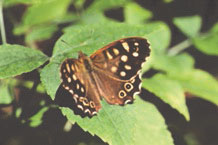
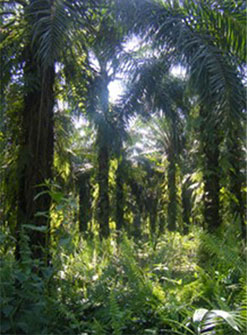
Our research interests focus on the effects of habitat degradation and climate change on biodiversity (with particular emphasis on temperate and tropical insects). We are studying climate-driven range shifts of species at their leading-edge and trailing-edge range boundaries, and the factors affecting species’ ability to respond to climate and habitat changes. We are doing this via the analysis of historical records, collecting new field data, and the development of theoretical models. We are exploring potential methods for promoting adaptation of biodiversity to climate warming, for example by examining whether improving habitat connectivity will aid species’ range shifts, and the role of Protected Areas. We are also investigating methods for conserving biodiversity in tropical habitats, including logged forests and oil palm plantations. 

Pateman, R.M., Hill, J.K., Roy, D.B., Fox, R. & Thomas, C.D. (2012) Temperature-dependent biotic interactions drive rapid range expansion. Science 336, 1028-1030.

Chen, I.C, Hill, J.K., Ohlemüller, R., Roy, D.B. & Thomas, C.D. (2011) Rapid range shifts of species associated with high levels of climate warming. Science 333, 1024-1026.

Chapman, J.W., Nesbit, R.L., Burgin, L.E.,  Reynolds, D.R., Smith, A.D.,  Middleton, D. R. & Hill, J.K. (2010) Flight Orientation Behaviors Promote Optimal Migration Trajectories in High-flying Insects. Science 327, 682-685.

Discoveries

We have discovered that species from a wide range of taxonomic groups, and from both temperate and tropical regions, are shifting their distributions in response to climate warming, and that Protected Areas are important for facilitating range expansions. Our radar studies have revealed that migrant lepidoptera select seasonally-advantageous high altitude winds to aid their migration. Our tropical studies show that logged forests and small forest remnants can contribute substantially to regional diversity and that their conservation value should not be overlooked. 

Current projects

Title: The Socially and Environmentally Sustainable Oil Palm Research Programme (SEnSOR). Funding body: RSPO/SEARRP 

Title: Variable rates of responses by species to climate change. Funding body: NERC 

Title: Using wild ancestor plants to make rice more resilient to increasingly unpredictable water availability. Funding body: BBSRC SCPRID.

Title: The role of dispersal in species’ ability to respond to climate change. Funding body: NERC

Research group(s)

Post doctoral research assistant

Dr Audrey Zanesse (University of East Anglia)

The role of dispersal in species’ ability to respond to climate change.

Post doctoral research assistant

Dr Jennifer Lucey

SEnSOR project.

Research Student

Anna Riach

Interactions between plants and their insect herbivores under warming climates: a metabolomics approach. (BBSRC, with Steve Penfield, Exeter)

Research Student

Michael Senior 

Assessing ecosystem functioning in fragmented tropical landscapes. (NERC, with ProForest)

Research Student

Louise Mair

Linking local dispersal behaviour in butterflies with long-distance colonisation success during climate-driven range shifts. (NERC)

Research Student

Hayley Jones

The role of dispersal capability in the long-term population dynamics of British macro-moths. (BBSRC, with Jason Chapman, Rothamsted Research)

Research Student

Yeong Kok Loong

Dynamics of dipterocarp seedlings in forest fragments in Sabah. (Earthwatch)

Research Student

Sarah Scriven

Promoting resilience and biodiversity in tropical agricultural landscapes. (NERC)

Available PhD research projects

Developing sustainable tropical agricultural landscapes (for 2012-13)

Our research has shown how conversion of tropical forest to agriculture (oil palm plantations) reduces biodiversity. Retaining patches of natural forest within plantations has been suggested as a method to reduce biodiversity losses, but we have shown that habitat quality of very small forest patches is too poor to support much biodiversity. Thus there is a need to develop better rules of thumb for developing sustainable landscapes that minimise biodiversity losses and optimise yield. The project will build on our existing research on butterflies and ants in Sabah (Malaysian Borneo) to examine the role of patch size, location and habitat quality on species richness and faunal composition. Connectivity of patches is also important in this context, and the project will examine methods for making the plantation matrix less inhospitable in order to promote species dispersal. The project will collect new field data on species richness and dispersal among fragments, and use existing models to examine how placement of patches affects connectivity. There would also be scope to develop models relating yield and biodiversity. 

Climate change and phenology: a tri-trophic study (co-supervisor Prof Sue Hartley, for 2012-13)

Many species have responded to recent climate change by altering their phenology. For example, phenological events such as flowering and bud burst have advanced over the past few decades. However, there are few experimental studies investigating impacts of phenology change on communities of interacting species. Thus, it is unclear whether evidence of phenology changes are simply useful indicators of climate change, or are evidence that climate change will affect ecosystem functioning. This project will capitalise on Quercus (oak) provenance trials planted at sites across the UK, where our previous work has shown consistent patterns in timing of budburst among provenances planted at different locations, and between year. The project will examine relationships between budburst phenology and the relative abundance of herbivores and their parasitoids; it will quantify genetic diversity and quality of different oak provenances and relate timing of budburst to abundance of herbivores and their parasitoids. By comparing genetic diversity among provenances and measuring budburst at different sites and in different years, the project will examine the relative importance of phenotypic plasticity and genetic adaptation on budburst phenology. The student will receive skills and training in insect sampling, identification, plant tissue analysis, molecular genetic techniques and statistical analysis.

Publications

Selected publications

since 2010:

Senior, M.J.M., Hamer, K.C., Bottrell, S., Edwards, D.P., Fayle, T.M., Lucey, J.M., Mayhew, P.J., Newton, R., Peh, K.S-H., Sheldon, F.H.,  Stewart, C., Styring, A., Thom, M.D., Woodcock, P. & Hill, J.K. (2013) Trait-dependent declines of species following conversion of rain forest to oil palm plantations. Biodiversity & Conservation 22, 253–268.

Thomas, C.D., Gillingham, P.K., Bradbury, R.B., Roy, D.B., Anderson, B.J., Baxter, J.M., Bourn, N.A.D., Crick, H.Q.P.,  Findon, R.A., Fox, R., Hodgson, J.A., Holt, A.R., Morecroft, M.D., O’Hanlon, N.J., Oliver, T.H., Pearce-Higgins, J.W., Procter, D.A., Thomas, J.A., Walker, K.J., Walmsley, C.A., Wilson, R.J. & Hill, J.K. (2012) Protected areas facilitate species’ range expansions. PNAS 109, 14063-14068.

Chapman, J.W., Bell, J.R., Burgin, L.E., Reynolds, D.R., Hill, J.K., Bonsall, M.B. & Thomas, J.A. (2012) Seasonal migration to high latitudes results in major reproductive benefits in an insect. PNAS 109, 14924-14929.

Mair, L., Thomas, C.D., Fox, R., Botham, M. & Hill, J.K. (2012) Temporal variation in responses of species to four decades of climate warming. Global Change Biology 18, 2439-2447.

Stefanescu, C., Páramo, F., Åkesson, S., Alarcón, M., Ávila, A., Brereton, T., Carnicer, J., Cassar, L.F., Fox, R., Heliola, J., Hill, J.K., Hirneisen, N., Kjellén, N., Kühn, E., Kuussaari, M., Leskinen, M., Liechti, F., Musche, M., Regan, E., Reynolds, D.R., Roy, D.B., Ryrholm, N., Schmaljohann, H., Settele,J., Thomas, C.D., van Swaay, C. & Chapman, J.W. (2012) Multi-generational long-distance migration of insects: studying the painted lady butterfly in the Western Palaearctic. Ecography 35, 1-14.

Oliver, T.H., Thomas, C.D., Hill, J.K., Brereton, T. & Roy, D.B. (2012) Habitat associations of thermophilous butterflies are reduced despite climatic warming. Global Change Biology 18, 2720-2729

Suggitt, A.J., Stefanescu, C., Páramo, F., Oliver, T., Anderson, B.J., Hill, J.K., Roy, D.B., Brereton, T, & Thomas, C.D. (2012) Habitat associations of species show consistent but weak responses to climate. Biology Letters 8, 590-593.

Pateman, R.M., Hill, J.K., Roy, D.B., Fox, R. & Thomas, C.D. (2012) Temperature-dependent biotic interactions drive rapid range expansion. Science 336, 1028-1030.

Lucey, J.M. & Hill, J.K. (2012) Spillover of insects from rainforest into adjacent oil palm plantations. Biotropica 44, 368-377.

Chen, I.C, Hill, J.K., Ohlemüller, R., Roy, D.B. & Thomas, C.D. (2011) Rapid range shifts of species associated with high levels of climate warming. Science 333, 1024-1026.

Hill, J.K., Gray, M.A., Chey Vun Khen, Benedick, S., Tawatao, N. & Hamer, K.C. (2011) Ecological impacts of tropical forest fragmentation: how consistent are patterns in species richness and nestedness? Phil. Trans Roy Soc. B. 366, 3265-3276.

Proctor, S., McClean, C.J. & Hill, J.K. (2011) Protected Areas of Borneo fail to protect forest landscapes with high habitat connectivity. Biodiversity and Conservation 20, 2693-2704.

Klorvuttimontara, S., McClean, C.J. & Hill, J.K. (2011) Evaluating the effectiveness of Protected Areas for conserving tropical forest butterflies of Thailand. Biological Conservation 144, 2534–2540.

Tawatao, N., Harper, N.E., Mohamed, M., Chey V. Khen, Searle, J.B. & Hill, J.K. (2011) Impacts of forest fragmentation on the genetic diversity and population structure of Pachycondyla obscurans in Sabah, Malaysian Borneo. Asian Myrmecology 4, 59–68.

Hodgson, J.A., Thomas, C.D., Cinderby, S., Cambridge, H., Evans, P. & Hill, J.K. (2011) Habitat recreation strategies for promoting adaptation of species to climate change. Conservation Letters 4, 289-297.

Alerstam, T., Chapman, J.W, Bäckman, J., Smith, A.D, Karlsson, H., Nilsson, C., Reynolds, D.R., Klaassen, R.H.G. & Hill, J.K. (2011) Convergent patterns of long-distance movement in syntopically-migrating insects and passerines. Proceedings of the Royal Society B. 278, 3074-3080.

Thomas, C.D., Hill, J.K.,  Anderson, B.J., Bailey, S., Beale, C.M., Bradbury, R.B., Bulman, C.R., Crick, H.Q.P., Eigenbrod, F., Griffiths, H.M., Kunin, W.E., Oliver, T.H., Walmsley, C.A., Watts, K., Worsfold, N.T. Yardley, T. (2011) A framework for assessing threats and benefits to species responding to climate change. Methods in Ecology and Evolution 2, 125-142.

Hill, J.K., Griffiths, H.M., Thomas, C.D. (2011) Climate change and evolutionary adaptations at species’ range margins. Annual Review of Entomology 56, 143-159.

Chen, I-C.,  Hill, J.K., Shiu, H-J., Holloway, J.D., Benedick, S., Chey, V.K., Barlow, H.S. & Thomas, C,D. (2011) Asymmetric upper and lower boundary shifts of tropical moths over four decades of climate warming. Global Ecology and Biogeography 20, 34-45.

Suggitt, A.J., Gillingham, P.K.,  Hill, J.K., Huntley, B., Kunin, W.E., Roy, D.B., & Thomas, C.D. (2011) Habitat microclimates drive fine-scale variation in extreme temperatures. Oikos 120, 1-8.

External activities

Memberships

  • Member of the Royal Society - South East Asia Rainforest Research Programme
  • Member of the NERC Peer review college

Editorial duties

  • Editor: Ecological Entomology
  • Associate editor: Ecology Letters
Dr Jane K Hill

PURE database

Contact details

Prof. Jane K Hill
Professor
Department of Biology (Area 18)
University of York
York
YO10 5DD

Tel: 01904 328642

http://www-users.york.ac.uk/~jkh6/index.htm