
School of Physics, Engineering and Technology

- School of Physics, Engineering and Technology
- People
- Clément Moissard
Clément Moissard
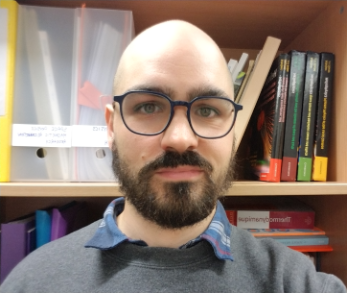
Lecturer
Email: clement.moissard@york.ac.uk
Areas of Expertise:
● Space (plasma) Physics: transient events and their impacts on planets
● The Science of Learning
● Energy and Humanity
Biography
I am a Lecturer in the School of Physics, Engineering and Technology specialising in plasma physics. I am deeply committed to help students thrive at University and beyond: I keep well-informed on the science of learning and teaching, implement aspects of it throughout my teaching, strive to educate students on the most important controllable factors for academic success and wellbeing, and have recently begun to contribute my own original research on the topic. A large part of my thinking time is currently devoted to the science and uses of Energy, and their role in shaping human civilisation. My background is in Space Physics and I maintain a research activity in that domain. I am the current Year 3 Leader.
Publications
PhD Thesis
Moissard, C. (2021). Interplanetary sheaths driven by magnetic clouds and their impact on Earth's magnetosheath. PhD Thesis, 2021.
Publications in Peer-Reviewed Journals
● Moissard, C. (2025). Can students improve their academic performance? The perspective of those who have done so. University of York's Science of Teaching and Learning journal (Accepted).
● Moissard, C., Butcher, C., Ruler, E., Richardson, J., Michotte de Welle, B., Steward, W., Pritchard, M., Gonzalez Del Valle, D., Defayet, V., Bernal, A., Cavicchi, V., David, V. (2025). The speed of interplanetary shocks through the magnetosheath: a toy model. Geophysical Research Letters. https://doi.org/10.1029/2024GL113488
● Moissard, C., Fontaine, D., Savoini, P., Modolo, R. (2024). Acceleration of an interplanetary shock through the magnetosheath: a global hybrid simulation. Frontiers in Astronomy and Space Sciences. https://doi.org/10.3389/fspas.2024.1330397
● Kilpua, E., Fontaine, D., Good, S., Ala-Lahti, M., Osmane, A., Palmerio, E., Yordanova, E., Moissard, C., Hadid, L., Janvier, M. (2020). Magnetic field fluctuation properties of coronal mass ejection-driven sheath regions in the near-Earth solar wind. Annales Geophysicae. https://www.ann-geophys-discuss.net/angeo-2020-17/
● Moissard, C., Fontaine, D., Savoini, P. (2019). A Study of Fluctuations in Magnetic Cloud-Driven Sheaths. Journal of Geophysical Research: Space Physics. https://doi.org/10.1029/2019JA026952
● Kilpua, E., Fontaine, D., Moissard, C., Ala-Lahti, M., Palmerio, E., Yordanova, E., Good, S., Kalliokoski, M., Lumme, E., Osmane, A., Palmroth, M., Turc, L. (2019). Solar Wind Properties and Geospace Impact of Coronal Mass Ejection-Driven Sheath Regions: Variation and Driver Dependence. Space Weather. https://doi.org/10.1029/2019SW002217
● Fox, W., Matteucci, J., Moissard, C., Schaeffer, D., Bhattacharjee, A., Germaschewski, K., Hu, S. (2018). Kinetic simulation of magnetic field generation and collisionless shock formation in expanding laboratory plasmas. Physics of Plasmas. https://aip.scitation.org/doi/10.1063/1.5050813
● Matteucci, J., Fox, W., Bhattacharjee, A., Schaeffer, D., Moissard, C., Germaschewski, K., Fiksel, G., Hu, S. (2018). Biermann-Battery-Mediated Magnetic Reconnection in 3D Colliding Plasmas. Physical Review Letters. https://journals.aps.org/prl/abstract/10.1103/PhysRevLett.121.095001
Research
My main research focus is on solar storms and their impact on the planets and moons of the Solar System. This is a multi-scale problem, which branches into several subtopics that are research areas in their own right within plasma physics: magnetic reconnection, shocks, and the study of fluctuations (or turbulence).
Teaching
Philosophy: Thinking like a physicist is an empowering tool to understand many aspects of the world; and learning physics can be one of the most exciting intellectual journeys one can take. However it is not straightforward, and I believe that teaching requires deep pedagogical reflection, and that learning requires deep engagement by the student. I place a high value on discussions around learning approaches and on acknowledging that learning takes place within a larger context - that of life. Attention to this ''periphysics'' student support has become central to how I view and enact my role as an educator.
Lectures
- Astrobiology (Year 3 Physics & Year 2 Biology students)
- Electromagnetism (Year 1)
- Space Physics (Year 2)
- Laser Interactions and High Energy Density Physics (MPhys & MSc)
Laboratory Classes
- Data Analysis for Magnetic Confinement (MSc/CDT students)
- Tokamak Simulations (Year 3)
- General Physics Laboratory Classes (Year 1)
- Astrophysical Observations (Year 1)
Example of Final Year Projects
- Solar Storms on the Solar System Planets
- Mapping the solar wind as a function of heliocentric distance using satellite data and machine learning
- Toy model for interplanetary shock propagation through the magnetosheath
- Exploring Saturn’s magnetosphere using CASSINI data
- Test-particle study of wave–particle energy transfer mechanisms in interplanetary sheaths
- Magnetic reconnection and Maxwell’s equations in Earth’s magnetosheath
- Laser energy deposition in a plasma
- Radiative magnetic reconnection (particle-in-cell simulations)
External activities
● Course co-written: Energy is Classical & Modern Physics (École CentraleSupélec, France)
● Étudier la Physique (Book)