
Humanities Research Centre

- Humanities Research Centre
- How we support our postgraduate students
- Opportunities
- HRC project grants
- Project grants awarded
- Designing Futures: Interdisciplinary approaches in Humanities and STEM
Designing Futures: Interdisciplinary approaches in Humanities and STEM
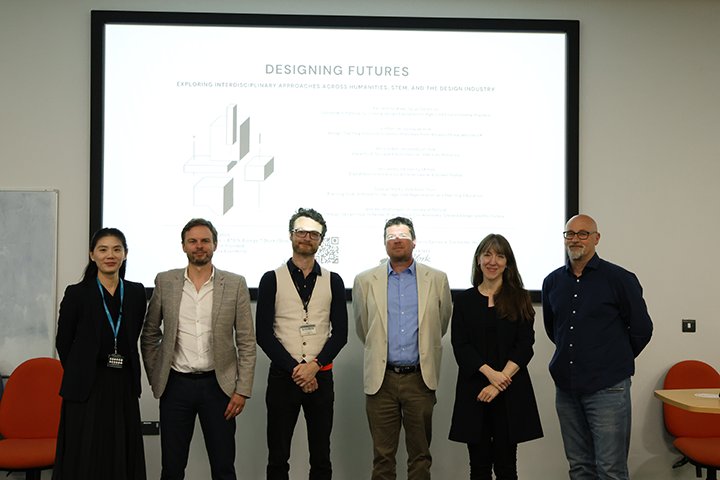
The event, organised by Jin Fan and funded by the Humanities Research Centre (HRC) and the Centre for Modern Studies, brought together experts from academia, industry, and cultural institutions to explore how design can transcend disciplinary boundaries and respond to today’s social and industrial challenges. Centered on the theme of interdisciplinary innovation, the discussions combined the depth of academic research with the foresight of industry practice.
Speakers shared insights from a wide range of fields. From architecture design to building materials, from atmospheric chemistry to virtual space media, from contemporary urban planning to building heritage conservation, from West to East, design was no longer presented as the product of a single discipline, but as a bridge connecting science, the humanities, and the arts. This cross-disciplinary perspective not only opened up new research horizons but also offered inspiration for future collaborations in education and industry.
The symposium highlighted the interplay between design and commercial applications, by presenting speakers’ research and practice, emphasising how design education can create value for society through engagement with businesses and communities. They stressed that design is shifting away from being solely a matter of aesthetics toward becoming a driving force for innovation and for improving quality of life.
The event also invited forward-looking reflections: in a world oscillating between globalisation and de-globalisation, how can design find a balance between the local and the international? How might public institutions, universities, research centres, and industries collaborate to build new knowledge systems and applications? These questions sparked lively debate and offered directions for ongoing exploration.