|
Andrii Pastushenko
Simon Kuznets Kharkiv National University, Ukraine; University of Oxford
July 2026 – facilitated by HRC Visiting fellowships scheme
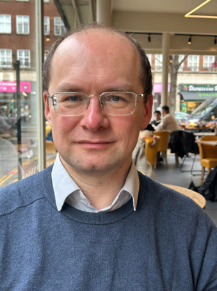 |
I had the brilliant opportunity to spend 13–22 July 2026 as a Humanities Research Centre Visiting Fellow, at the University of York’s Centre for Renaissance and Early Modern Studies. The Centre provided an excellent environment in which to work on my new book about British and Irish naval personnel in Spanish service during the Anglo-Spanish War (1585–1604). In particular, during the fellowship I analysed digitised copies of Spanish naval payrolls from 1589–90 that I had obtained from the General Archive of Simancas. Working with these complex financial records requires considerable concentration, and the environment at the Centre was highly conducive to this kind of focused research. I also had access to the University of York Library, where I was able to consult relevant literature for my research.
I greatly appreciated the green surroundings of the university campus, its very pleasant atmosphere, and the good company of local researchers and visiting fellows. The fellowship therefore enabled me not only to focus fully on my research but also to develop my connections with British academia. Our meetings were extremely interesting, thought-provoking and simply delightful.
I am grateful to everyone involved, and especially to Dr Emilie Murphy, Dr Bill Sheils, Dr Simon Ditchfield, fellow Visiting Fellow Dr Liesbeth Corens, and Matthew Whiteley, for making this such a memorable experience
|
Liesbeth Corens
Queen Mary University of London
July 2026 – facilitated by HRC Visiting fellowships scheme |
In July 2026 I had the pleasure of being a Humanities Research Centre Visiting Fellow at the University of York, hosted by the Centre for Renaissance and Early Modern Studies. I research how minority groups persist down the generations. In my current project, I have identified an unprecedented upsurge in record-keeping practices among English and Dutch Catholics at the turn of the eighteenth century. In both Protestant countries, the Catholic minorities acted to preserve their own story of the recent past and gather the evidence of their ancestors' deeds. What can these collections tell us about the priorities of minorities? What do they deem vital to their survival? How do these archival practices keep their community alive in the present and into the future rather than a remnant of the past? During my time in York, I traced the footsteps of one of the English record-keepers, John Knaresborough, who resided in York and was well-connected with local antiquaries and gentry. Contrary to an image of Catholics separated from Protestant English society, Knaresborough's work shows a lively intellectual community. While here I benefited from a similarly lively community of exchange thanks to the presence within the Centre for Renaissance and Early Modern Studies of some of the best scholars of Catholicism, religion, and the material text in the country. Heslington Hall, with its many thoughtful occupants, comfy chairs, and beautiful walks makes for an excellent spot to write about the generative and inclusive power of exchanges.
|
|
Annegret Schaeffler
Ludwig-Maximilians-Universität München, Germany
Semester 2 (Feb - May 2026)
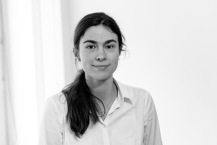 |
During the spring semester of 2026, I was an academic visitor in the Department of English and Related Literature at the University of York, hosted by the Centre for Renaissance and Early Modern Studies (CREMS). I worked on my doctoral thesis on dissimulation and states of epistemic uncertainty and ignorance in early modern English drama. I expect to submit the thesis in 2027 at LMU in Munich. In particular, I developed a chapter on folly and satire, revised earlier work on sartorial images of courtship and flattery, and began a paper on the rhetoric of plain style and humility in Coriolanus, which I presented as part of the Shakespeare Seminar of the German Shakespeare Society and will be published in the conference proceedings. Since my research brings together intellectual and rhetorical approaches with material and practical perspectives, CREMS and the University of York provided the ideal setting for my project.
My semester at CREMS in York provided a perfect balance between intellectual exchange and the space to pursue my own work independently. I thoroughly enjoyed my time at CREMS and particularly appreciated the opportunity to engage both other postgraduate students and scholars whose research interests intersected with mine, which created a welcoming, friendly, and stimulating environment for my work. The CREMS seminars provided further opportunities for academic exchange. At a showcase organised by the postgraduate-led forum Cabinet of Curiosities, I presented some of my ongoing research and received valuable feedback during the discussion. During my time at the university, I consulted materials in libraries and archives in York, including the Borthwick Institute and the Minster Library, and made several trips to other institutions and collections, among them Chatsworth House, the Shakespeare Institute Library and the Shakespeare Birthplace Trust in Stratford-upon-Avon, the British Library and the Victoria and Albert Museum in London.
I am grateful to everyone who made this stay so enriching and memorable, especially Professor Kevin Killeen. I hope to stay in touch with everyone I met in York.
|

