
Borthwick Institute for Archives

- Borthwick Institute for Archives
- News
- 2026
- Borthwick Newsletter - March 2026
Borthwick Newsletter - March 2026
Posted on 26 February 2026
March in the Archives - delve into our catalogues with this month’s featured description
Henry Powell Bequest: Notices about Distribution of Hot Cross Buns and Plum Loaves on Good Friday and Easter Sunday, 1896-1897 [Parish Records of Pocklington, PR/POCK/59].
What’s New?
As well as our usual round of enquiries, research visits, classes and outreach events, we spent a week in February catching up on important behind the scenes work as part of our annual Collections Development Week. This year we were able to re-box and list two new archives, finish box listing a third, launder all of our book pillows and weights, and reorganise our stationery and packaging store (a Herculean task by itself). You can read about some of the fruits of our labours below!
New Accessions
In February we took in seven additions to the University of York Archive. These included copies of student newspapers and handmade ‘zines created by the Black Trowel Collective and the LGBTQ+ Network in Archaeology, as well as additional records of the departments of History and History of Art, and the Institute of Advanced Architectural Studies.
We also added the archive of the Sheldon Memorial Trust, which was established in 1953 to commemorate the life and work of Oliver Sheldon, a man who has, incidentally, also been described as the founder of the Borthwick Institute. Sheldon was a director of Rowntree & Co. Ltd and a member of the York Academic Development Committee, which began campaigning for a university in the city in the 1940s. As part of this campaign, the committee ran annual summer schools on architecture and archives, the latter drawing on the vast archive of the Diocese of York, which was then being sorted and catalogued by the diocesan archivist, Reverend John Stanley Purvis.
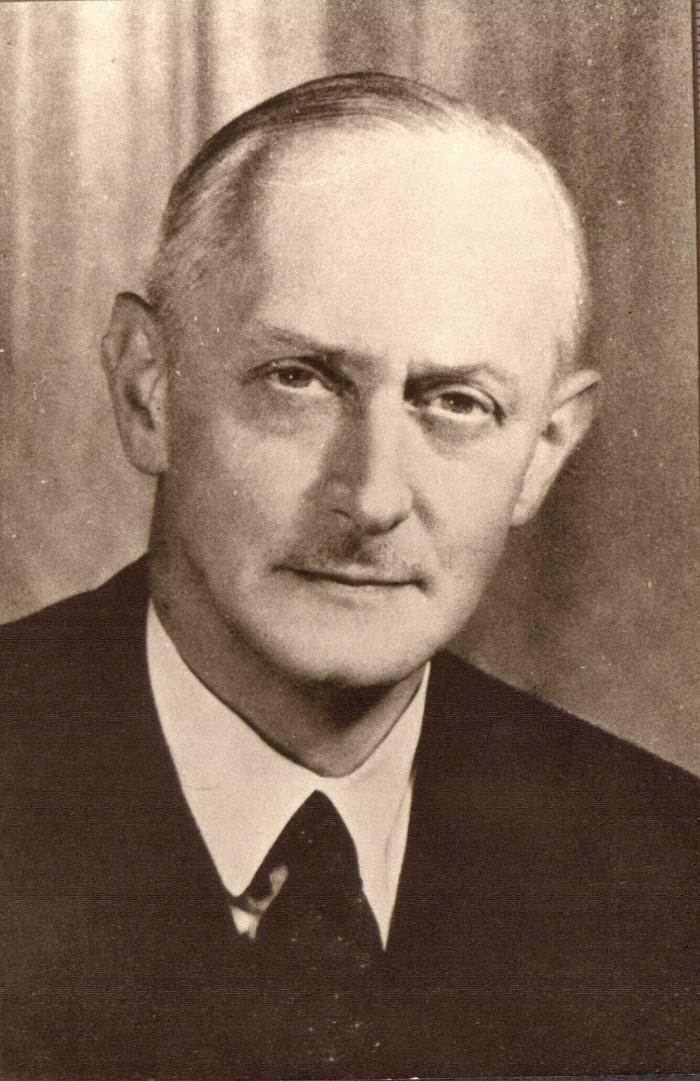
Oliver Sheldon
The archive was crucial to the committee’s scheme to launch York as a centre for further education and specialist study, and when a plan to house it at York Minster Library fell through, it was Sheldon who set about developing an alternative scheme which saw the archive housed at the empty St Anthony’s guild hall in central York. To achieve this he had to persuade the Archbishop to loan the archive and York Corporation to renovate and lease the hall at a negligible rent, as well as getting the approval of the Deputy Keeper of Public Records, Sir Hilary Jenkinson. He managed all of this in just a few short months and when he died unexpectedly in 1951, he was already in negotiations with the Trustees of William Borthwick of Scarborough for the legacy that would eventually become our endowment.
Sheldon never saw his plans for the Borthwick or the university come to fruition, but his legacy lives on in the success of both, and in the creation of the Trust, which promotes education in history of the arts and funds the regular Sheldon Memorial Lectures on all aspects of York history. We’re pleased to say this accession has already been boxlisted and can be browsed at the link above!
New Catalogues
Number of archival descriptions on Borthcat on 1st March 2026: 151,706
Thanks to some hard work during Collections Development Week you can also now browse complete box lists for the archives of comedy writer John Antrobus and of economist Robin Murray. As a member of writing co-operative Associated London Scripts from 1955, Antrobus worked alongside Ray Galton and Alan Simpson, Eric Sykes and Spike Milligan and had a long career writing for television, film and theatre. Robin Murray’s work in turn focused on addressing structural inequalities in international trade, particularly in advocating for alternative economic models that did not disadvantage marginalised communities. To that end he co-founded ‘Twin Trading’ in 1985, the organisation that helped to set up Cafédirect, the UK's first fair trade coffee brand, as well as Divine Chocolate, which gave co-ownership to Ghanaian cocoa farmers.
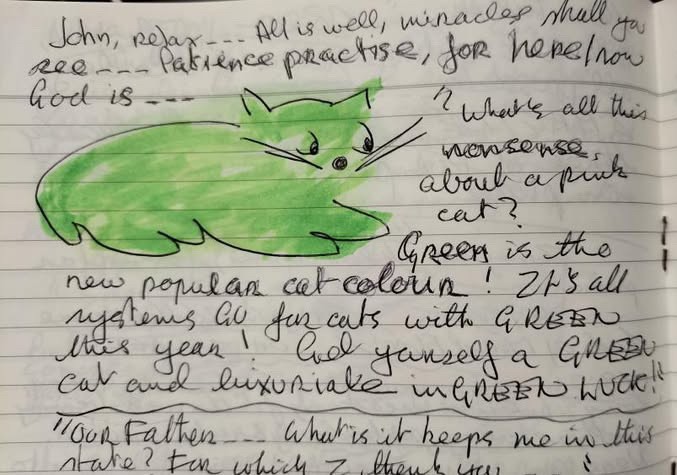
A page from one of the notebooks of John Antrobus.
We’ve also added full catalogues for two more of our parish archives. The parish archive of Saxton dates back to 1538, although there was a church recorded at Saxton in Domesday in the 11th century. The archive of Scampston, St Martin’s is more recent; it only became a parish in 1766, having previously been a chapel in the larger parish of Rillington. Both are relatively small archives, with the usual parish registers, accounts and administrative records you might expect, but for any railway enthusiasts out there the Scampston archive also includes a series of 1844 maps charting the course of the proposed Pickering branch line of the York and Scarborough Railway through the township, with details of landowners and sectional plans of the route.
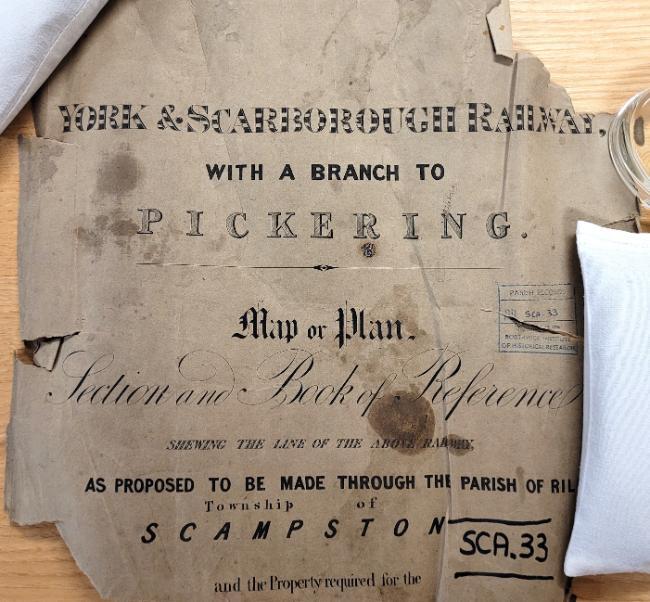
Map or plan of the proposed line to Pickering, 1844.
Borthwick Out and About
We were out and about on campus in February with a stall at each of the university’s Post Offer Visit Days. These events are designed to give prospective students the opportunity to visit the campus, meet staff and get an idea of the services on offer - including (of course) the extensive archive and rare book collections. They can even view a small selection of original documents, including the will of Charlotte Bronte and a 1485 deed of King Richard III, set out in a specially adapted display case.
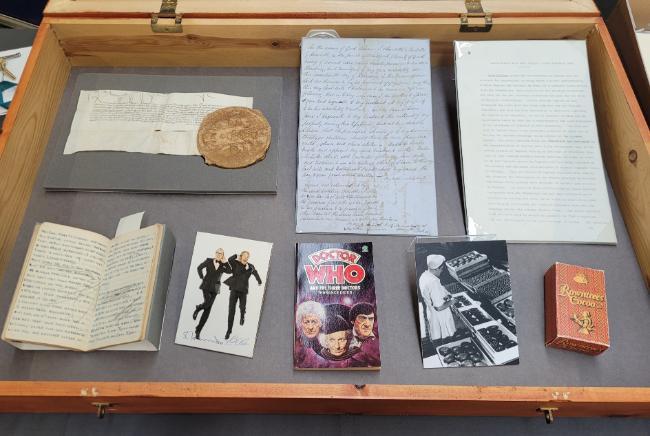
Our display case at the Post Offer Visit Day
As well as our usual university classes and workshops, we were pleased to host a class of secondary school pupils who’d travelled all the way from Oxfordshire to look at our records relating to Tudor rebellions. We also welcomed some of our colleagues from the North Yorkshire Record Office at Northallerton who came for a tour of the strongrooms and to view a specially curated display of some of our favourite items from across the collections.
Some of our archives also appeared in a new article in ‘Current Archaeology’. ‘From lunatic asylum to hospital: Tracing the evolution of attitudes towards mental health at Clifton Hospital, York’ by Anne Jenner and Katherine Bradshaw appeared in the February edition and includes several photographs from the Clifton Hospital Archive.
Looking ahead to March, we’ll be popping up at a few more Post Office Visit Days, and we’re very much looking forward to a visit from the Doctor Who Societies of the University of York and of York, St John, who will be coming to see our new Terrance Dicks Archive. No word yet on whether we’ll be doing a dramatic reading of the original script for The Six Doctors…
Archive of the Month: Henry Isaac Rowntree & Co Ltd
What is it? The records of the business that would go on to become the world famous Rowntree confectionery company.
Where can I find it? The complete catalogue is available to browse on Borthcat.
Why is it Archive of the Month? The archive of Rowntree & Co Ltd is one of our largest business collections, charting the rise of the York company from its incorporation in 1897 to its takeover by Nestle in 1988. However the true story of Rowntree’s confectionery started some thirty years earlier with the ambitions of a young man called Henry Isaac Rowntree.
Like his brothers John and Joseph, Henry served an apprenticeship in the family grocery business on Pavement, but unlike them, in 1860 he went to work for the Quaker Tuke family who specialised in tea, coffee and cocoa. In 1862, at the age of 24, he purchased their cocoa, chocolate and chicory workshop and set about establishing himself as an independent trader. A popular and charismatic figure, records suggest that Henry set about the task with more enthusiasm than skill. Although he had some success with his principal ‘Rock Cocoa’ product, winning a medal for it at the Yorkshire Fine Art and Industrial Exhibition in 1866, wider success, and profit, eluded him and by the end of the decade he was facing the very real risk of bankruptcy.
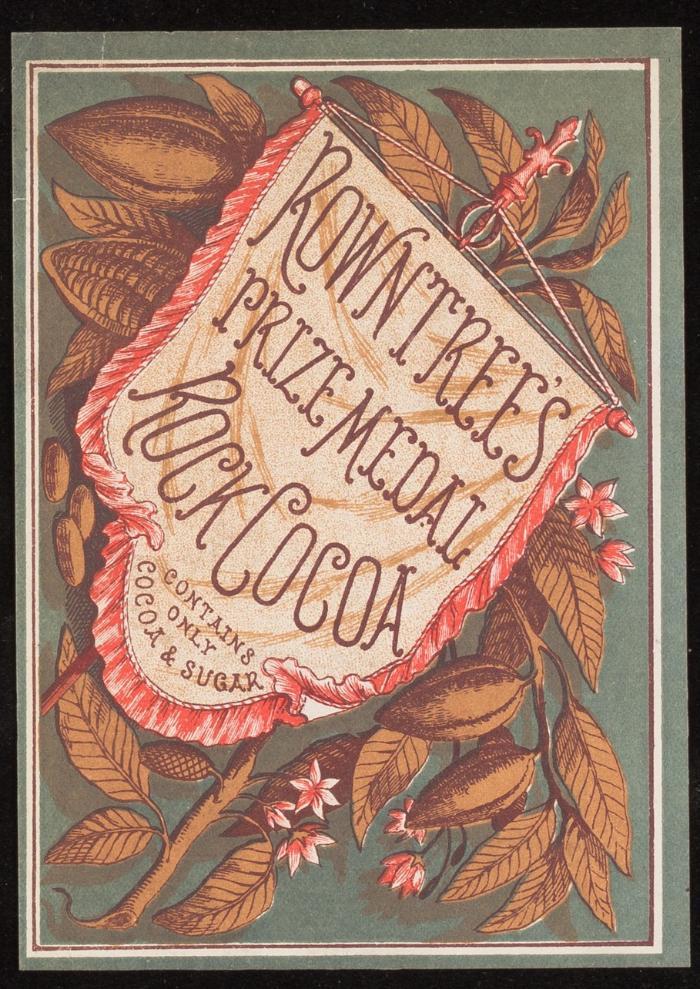
Advertisement for Rowntree's prize winning Rock Cocoa
This might have been the end for Rowntree confectionery but, fortunately for Henry, his elder brother Joseph now came to the rescue, joining the business as partner and bringing some much needed capital with him. In an 1890 memorandum from the archive Joseph set down the difficulties he had faced. ‘At the age of 33,’ he wrote, ‘I found I must begin & learn a new business. The struggle was severe & at times it seemed doubtful what the result would be.’ His solution was to devote the next few years to acquiring ‘by steady & patient enquiry’ as wide a knowledge of the industry as he could, seeking out managers and workmen in the trade, visiting manufactories and working with Henry to analyse the methods and products of their competitors while constantly refining their own.
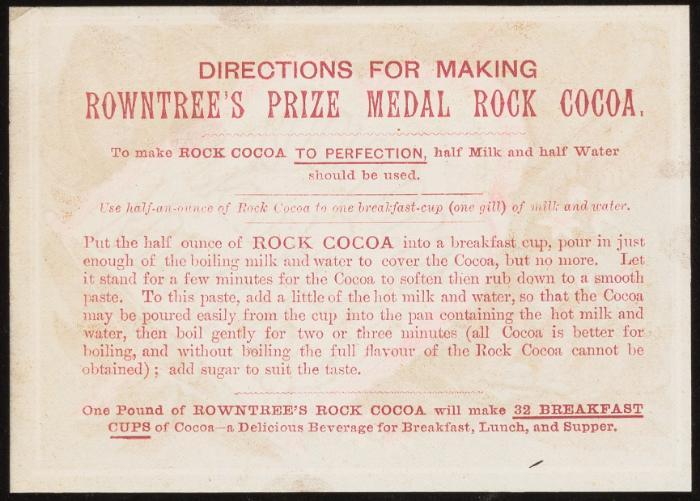
Instructions for preparing Rowntree's prize winning Rock Cocoa
Progress was slow,and the business continued to make substantial losses throughout the 1870s, but Joseph’s patience, and Henry’s vision, eventually paid off with the launch of Rowntree’s gums and pastilles in 1881. They became an immediate success, putting the business on a secure footing for the first time.
Henry died unexpectedly two years later, but the business continued to grow over the next decade and a half under Joseph’s leadership, with their famous Elect Cocoa joining the Rowntree product line in 1888. Whilst the company would go from strength to strength in the 20th century, bringing the world KitKat, Aero, Smarties, Black Magic and more, the archive of Henry Isaac Rowntree & Co. shows just how much work it took to get there - and how close they came to failure. From Henry’s early recipe books to Joseph’s detailed memoranda on the cocoa and confectionery trade; from price lists to packaging, the surviving records offer a fascinating insight into a business that could easily have been a footnote in the history of York, but instead became one of its greatest successes.
We’ll be back in April with more news and events from the archives!
Borthwick Institute for Archives
University of York,
Heslington,
York,
YO10 5DD,
UK
Tel:
01904 321166
|
borthwick-institute@york.ac.uk

Legal statements | Privacy | Cookies | Accessibility
© University of York | Modify | Direct Edit