
Borthwick Institute for Archives

- Borthwick Institute for Archives
- News
- 2026
- Borthwick Newsletter - June 2026
Borthwick Newsletter - June 2026
Posted on 28 May 2026
June in the Archives - delve into our catalogues with this month’s featured description.
Printed copies of two songs: 'Rockingham Blood!' and 'The Glorious Fourth of June', 1807 [Harewood West Indian Archive, LASCELLES/Posters/31]
What's New?
As we head into June, things will start to look a little different in the Morrell Library which houses the Borthwick Institute. As part of the University's long-term investment in campus infrastructure, the main entrance to the library will be redeveloped over the summer months, which will in turn affect access to the public lift and the location of the library entrance and helpdesk. We have posted full details on our website but please be assured that we will be open as usual throughout and that lift access to the reading room and microfilm room will always be available by prior arrangement. When you book an appointment with us, we will outline the current access arrangements and will keep you up-to-date with any upcoming changes.
New Accessions
We took in 10 accessions in May, five of which were additions to the ever-growing University of York Archive, including records relating to the development of the Heslington campus site and records of the Department of Chemistry and the university's careers service. We also added articles, letters and press cuttings to the archive of journalist and anti-apartheid activist Patrick Duncan and digital copies of 15 scripts for the ITV television show 'Hark at Barker' to the archive of playwright Sir Alan Ayckbourn. The series, which was broadcast in 1969, starred Ronnie Barker, who had worked with Ayckbourn in his play 'Mr Whatnot' some years earlier. Although 'Mr Whatnot' had not been a success, Barker and Ayckbourn got on well and, despite being under contract to the BBC, Ayckbourn wrote a number of sketches for 'Hark at Barker', albeit safely under the pseudonym of Peter Caulfield!
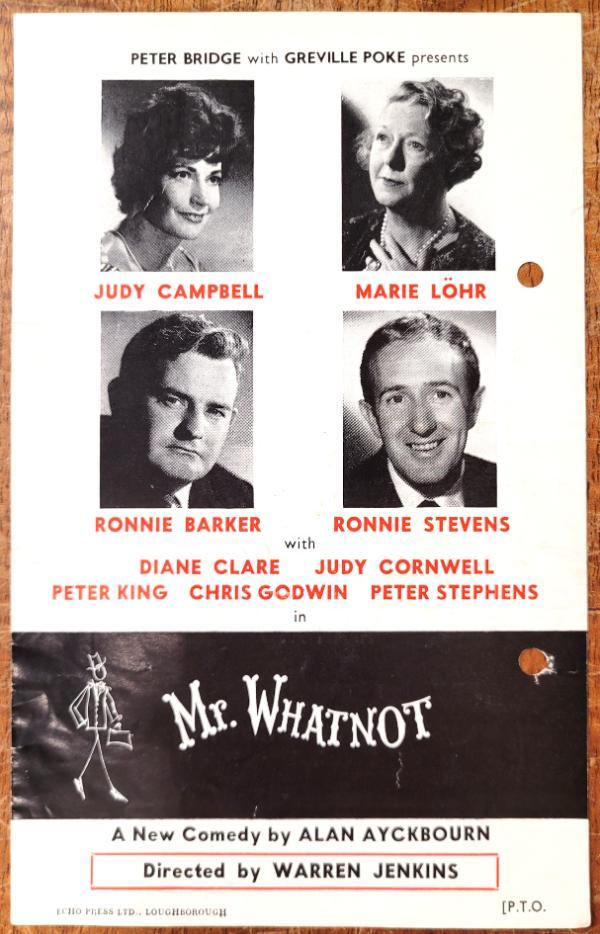
Leaflet for Ayckbourn's 'Mr Whatnot' starring Ronnie Barker.
Finally we added six boxes of material to the archive of John Stapylton Habgood, Archbishop of York between 1983 and 1995. Ordained as a priest in 1955, Archbishop Habgood spent the early years of his career in London and Cambridge before being appointed Principal of a theological college in Edgbaston in 1967. In 1973 he became Bishop of Durham and ten years later he was elevated to the Archbishopric of York. In that role he was notable for his support for the ordination of women and for voting against Section 28 in the House of Lords, a measure which banned local authorities and state schools from 'promoting homosexuality'. The new accession includes early writings and sermons, personal and professional correspondence, press cuttings, photographs, articles and notes, as well as audio recordings of sermons.
New Catalogues
Number of archival descriptions on Borthcat on 1st June 2026: 154,247
In May we added a full box list for the Terrance Dicks Archive, pending a catalogue at a later date. You can now browse the contents of 65 boxes of scripts, book drafts, letters, press cuttings and a whole host of ephemera charting Dicks' career as a novelist, script editor and screenwriter, most notably for long running BBC science fiction show Doctor Who.
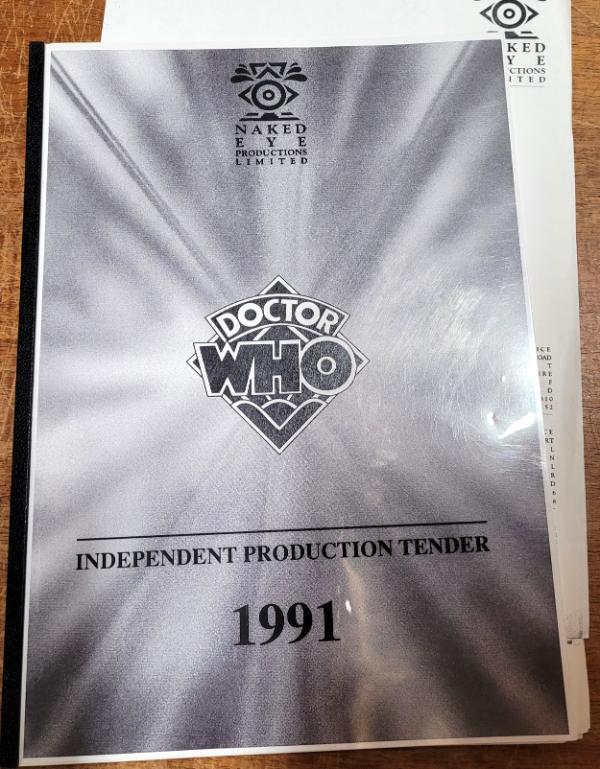
An independent production tender for Doctor Who, 1991
Take a look in Box 54, which contains a tantalising 1991 tender for an independent production of Doctor Who following its controversial cancellation by the BBC. The never-to-be-seen pilot was to star Tom Baker as the Doctor, alongside Luke Skywalker himself, Mark Hamill, with conceptual design by one H.R. Giger - best known as the man who gave the world the terrifying Xenomorph of the 'Alien' franchise. Or maybe you'd prefer Box 9 and the first script for 'The Six Doctors', which includes Fourth Doctor Tom Baker before his exit from the project and its subsequent retitling. The archive is open to the public so get in touch if you'd like to have a look for yourself!
Borthwick Out and About
May began with a strong art theme as we hosted a workshop by the Centre for Medieval Studies on the 1st, focusing on our current exhibition of facsimiles of Dante's 'Divine Comedy'. Monika Beisner, an internationally acclaimed artist who undertook to illustrate all 100 cantos of the book, was a special guest at the event, which discussed her artistic practice and inspiration. This was followed on the 6th by a talk by University Art Curator, Helena Cox: ‘A Deeper Dive: How Japanese Prints Changed Western Art’. The talk accompanies an exhibition on Japanese woodblock print at York Art Gallery which runs until the end of August.
On the 13th May, Keeper of Archives Gary Brannan gave a talk on our Eric Morecambe archive at the University of Lancaster as part of an event to mark the centenary of Morecambe's birth, and on the 15th we welcomed members of the Dunnington Women's Institute for a tour and introductory talk and document display. On the 16th Gary joined Access and Digital Engagement Archivist Laura Yeoman for the Great York Walk, raising £2575 for Team Borthwick in aid of Mentally Fit York. Gary completed the walk in the uniform of a First World War soldier to mark 110 years since his great-grandfather served on the Western Front and you can see his replica uniform in the coverage by the York Press.
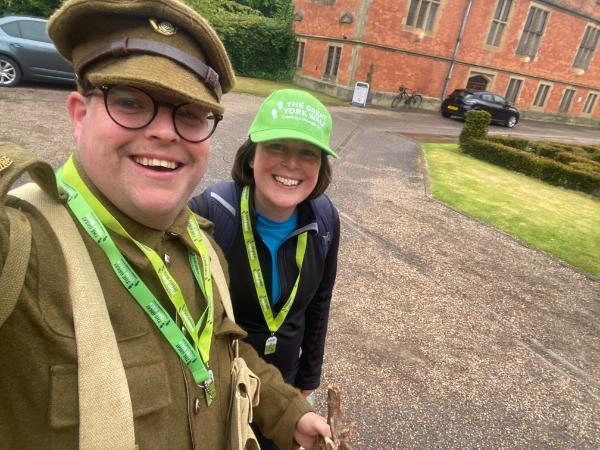
Gary Brannan and Laura Yeoman on the Great York Walk
In mid-May we shared two guest blogs by Diana Wallis, research associate at the University of York’s Centre for Medieval Studies, which drew on the archive of the Company of Merchant Adventurers of the City of York. The blogs explore the history of the 1478 Petition of the York Mercers, which protested the erosion of their trading rights in favour of their London rivals, as well as the response to the petition by nobles and King alike. You can also listen to a companion podcast featuring Diana in conversation with Laura Yeoman.
We finished the month with our first York Festival of Ideas event of 2026, in which Borthwick Conservator Catherine Firth joined Emma Lloyd Jones to run a workshop on Creative Bookbinding Skills. The Festival of Ideas programme continues into June and you can find Borthwick staff and records at multiple events. Gary will be chairing the Doctor Who themed ‘Adventures in Time, Space and Television’ on the 6th, and ‘Six Penn'orth of Hope: Gambling and the Rowntree Trusts’, presented by Professor Sue Mendus and drawing on our extensive Rowntree archives on the 9th. On the 5th June, Minster and Rare Books Librarian Sarah Griffin will join Professor Rachel Cowgill to talk about the Kendrew family of printers in 19th century York, and on the 7th, Catherine and Research Services Archivist Lydia Dean will be leading ‘Space to Play: Board games from the archives’. This event pulls together a number of real historic games from our archives (which attendees will get to play!) and is accompanied by an exhibition in the display cases outside of the Yorkshire Room in the Morrell Library.
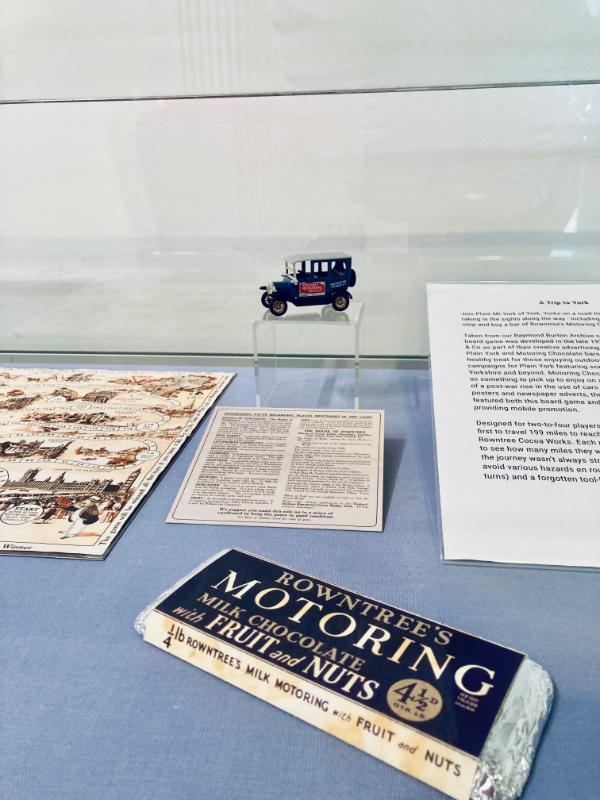
A sneak peek of the exhibition of historic games from the archives
You can also find us at Derwenthorpe Community Day on the 6th June, discussing the importance of community archives and sharing some historic photographs of New Earswick, and at the university Open Days on the 20th and 21st, where we'll be manning our usual display of highlights from the archives!
Archive of the Month: Charles Wood Archive
What is it? Scripts, correspondence, publicity materials and more for television, film, theatre and radio productions written by Charles Wood.
How do I find it? The archive has been fully catalogued and can be searched on Borthcat.
Why is it Archive of the Month?
If you've owned a television in the past half century, chances are you've watched something written by Charles Wood. From Hollywood epics to BBC and ITV drama serials, there seemed to be no genre to which he could not turn his hand (or pen). Born in 1932, Wood's parents were actors in repertory theatre and the young Charles often travelled with them, assisting backstage and occasionally taking small acting roles. In 1948 he was admitted to Birmingham School of Art to study theatrical design and lithography but in 1950 he swapped art school for the army, spending five years with the 17th/21st Lancers.
His military service would have a lasting impact on his literary output, which was strongly anti-war and empathetic towards its effect on the ordinary soldier. His first play, 'Prisoner and Escort' in 1959, followed a soldier on his way to a court martial, and war and its aftermath was a theme he would return to in his first television play 'Traitor in a Steel Helmet' in 1961, 'The Drill Pig' in 1964, and perhaps his most famous anti-war work, 'Tumbledown', in 1988, which starred a young Colin Firth as a disillusioned veteran of the Falklands War.
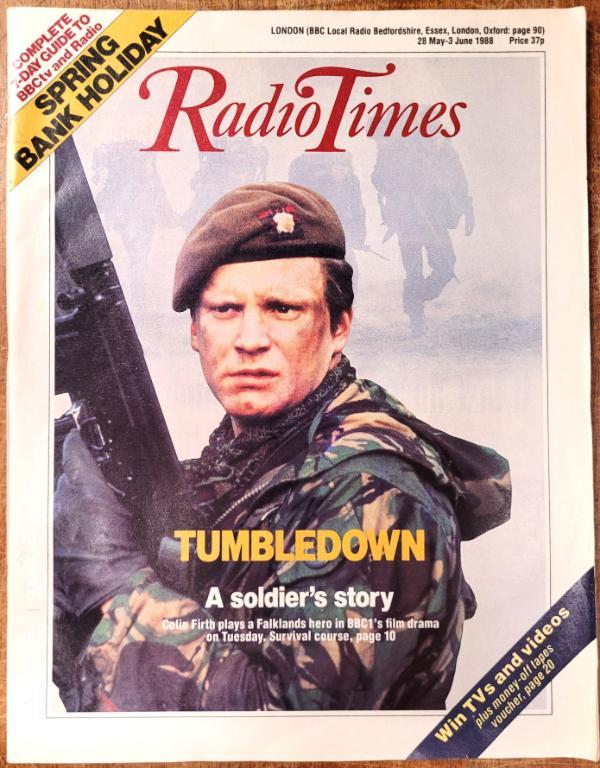
Tumbledown on the front cover of the Radio Times, 1988
On the big screen, Wood became known for his work with American director Richard Lester. Two of these - 'How I Won The War' in 1967 and 'The Charge of the Light Brigade' in 1968 continued the anti-war theme, but the pair also collaborated on the Beatles' musical film 'Help!' and comedy film 'The Knack…and How To Get It', both released in 1965. Later, Wood would balance big screen projects such as the 1995 film 'An Awfully Big Adventure' starring Hugh Grant, and the 2001 biopic 'Iris' starring Judi Dench as writer Iris Murdoch, with scripts for small screen hits like Sharpe, Inspector Morse, Kavanagh QC, Hornblower, and The Prisoner of Zenda.
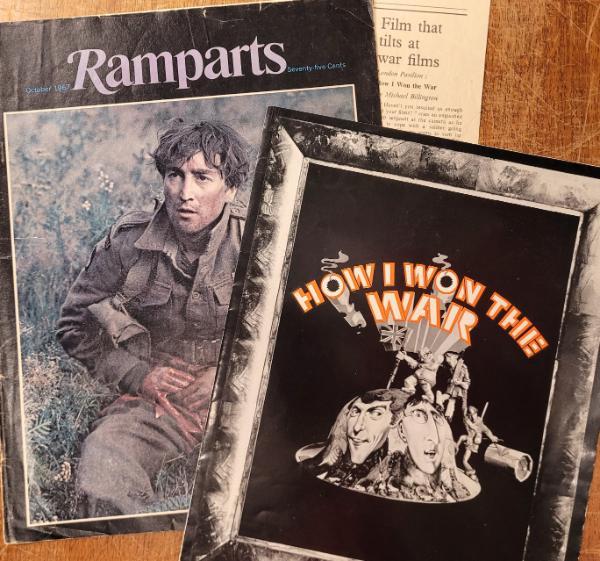
Promotional materials for 'How I Won The War', starring John Lennon
The resulting archive captures the long and sometimes fractious journey from initial idea to final, finished (or sometimes not-finished) productions for more than 100 projects by Wood, arranged in alphabetical order. For the Beatles fans there is correspondence and publicity material for 'Help!' as well as scripts, correspondence and press material for 'How I Won The War', starring John Lennon. For those who remember his stark anti-war television works and films, you can read about the controversy faced by the award-winning 'Tumbledown' for its criticism of British government and society in the wake of the Falklands conflict, or explore his research for a never-realised project on Gulf War Syndrome, 'Burning Soldiers'. Or perhaps you'd just like to see the multiple drafts and revisions 'Sharpe's Waterloo' went through on its way to the screen in 1997! The archive is a fascinating glimpse behind the curtain for television, film and social history fans alike.
We'll be back in July with more news and events from the archive!
Borthwick Institute for Archives
University of York,
Heslington,
York,
YO10 5DD,
UK
Tel:
01904 321166
|
borthwick-institute@york.ac.uk

Legal statements | Privacy | Cookies | Accessibility
© University of York | Modify | Direct Edit