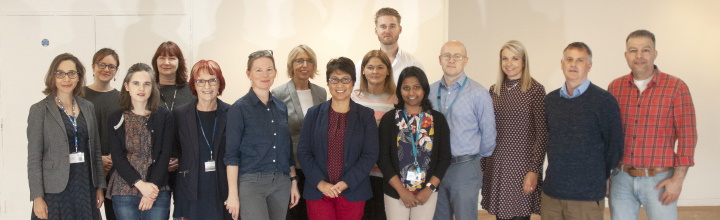
Centre for Language Learning Research

Leader:  Professor Leah Roberts

Overview

The Centre for Language Learning Research currently comprises ten members of academic staff.  Its primary objective is to lead cutting edge inter-disciplinary research relating to language learning and language in education, encompassing foreign, second, bilingual and first language acquisition and the relations between them. 

Staff in the Centre undertake research in a range of contexts, investigating the development and nature of, for example, phonology, grammar, vocabulary, figurative language, literacy, language processing, cognition, motivation, and identity. Staff research and evaluate the role and nature of language teaching and its impact on language learning at all levels of education, in a diverse range of settings including classrooms, laboratories and in healthcare. Research in the Centre also focuses on natural discourse in a large variety of teaching and learning contexts, with a view to uncover how the use of language shapes, and is shaped by, specific educational settings.  

Members of the Centre recognise the complementarity of different approaches to research (e.g. naturalistic and interventionist designs) and tap into a wide repertoire of expertise in research methods, using for example, learner language elicitation tasks and online psycholinguistic techniques, as well as interviews, questionnaires, observation, introspection, corpora, systematic review, and conversation, discourse, interaction, text and linguistic analyses.   Languages researched include English, French, Mandarin Chinese, Serbian, Spanish and Thai.    

Research carried out by Centre members contributes to understanding and theory development in international academic communities of enquiry. Members also strive to inform language-related policy and practice at local, national and international levels.  We have a large cohort of PhD students for whom we provide training and supervision in a wide range of areas relating to language learning and teaching.

The Centre complements the already vibrant language research community at the University of York, with staff collaborating with other departments, centres and research groups that have a focus on language, including the Centre for Reading and Language, the Psycholinguistics Research Group, the Centre for Advanced Studies in Language and Communication, and the Department of Language and Linguistic Science.

Membership

Student Membership

The group complements the already vibrant language research community in York. Other departments, centres and research groups with a focus on language include:

We welcome applications and research proposals from students whose interests are close to those of one or more of our members. We also encourage cross-departmental collaboration and would like to hear from students with inter-disciplinary interests.

For more information, please feel free to contact any of us. For information on how to apply, you can contact the Higher Degree Co-ordinator, [educ510@york.ac.uk], Department of Educational Studies, University of York, York YO10 5DD, UK.

Staff membership

Dr Benedetta Bassetti

  •  Bilingualism; second language learning; biliteracy; second language reading; Chinese as a Second Language; writing systems

Joe Fagan

  • ELT Methodology, Learner & Teacher Beliefs, Learner Writing, Corpus Linguistics, Written Discourse Analysis, Modality.

Dr Zoe Handley

  • Computer-Assisted Language Learning (CALL), second language acquisition, task-based language learning, second language speech perception and pronunciation, speech and language technologies, computer-mediate communication

Dr Jan Hardman

  • Classroom discourse; Written discourse analysis; Second language writing; Language curriculum evaluation

Annie Hughes

  • Teaching English to Young Learners, particularly the patterns, problems and passions emerging from Action Research carried out by TEYL practitioners; the use of meaningful and purposeful activities in TEYL; the use of story in TEYL; the use of song, rhythm, rhyme and chant in TEYL.

Dr Jim King

  • Silence in L2 learning; intercultural communication within academic settings; applied linguistics.

Dr Irena Kuzborska

  • Teacher cognition in language teaching; teaching second language reading; English for specific purposes; materials evaluation and design for language learning.

Dr Graham Low

  • English as a foreign language; language testing and programme evaluation; language needs analysis; metaphor and figurative language in use; applied linguistics and language teaching; language in academic settings; Questionnaire design and evaluation
Dr Emma Marsden
  • Foreign language teaching; teaching and learning grammar; psycholinguistics; second language education policy and practice

Dr Beatrice Szczepek Reed

  •  phonetics/phonoloy, conversation analysis, ESOL teaching methodologies, cross-cultural interaction.

Dr Florentina Taylor

  •  Foreign language learning and teaching; self and identity; classroom interaction; motivation; involvement avoidance
Dr Danijela Trenkic
  • Second language learning; second language grammars; second language processing; second language production; second language comprehension; definiteness; psycholinguistics; eye-tracking; experimental research

Publications

Selected current publications. Please see members' webpages for more information

Benedetta Bassetti

Bassetti, B. (2011) The grammatical and conceptual gender of animals in second language users. In V. J. Cook and B. Bassetti (eds.) Language and bilingual cognition (pp. 357-384). Oxford, UK: Psychology Press.

Bassetti, B. and Cook, V. (2011) Language and cognition: The second language user. In V. J. Cook and B. Bassetti (eds.) Language and bilingual cognition (pp. 143-190). Oxford, UK: Psychology Press.

Jan Hardman

Hardman, F., & Abd-Kadir, J. (2010) Classroom discourse: towards a dialogic pedagogy. In D. Wyse, R. Andrews & J. Hoffman (eds.) The International Handbook of English, Language and Literacy. London: Routledge, Taylor and Francis.

Graham Low

Todd, Z., & Low, G.D. (2010). A selective survey of research practice in published studies using metaphor analysis. In L. Cameron & R. Maslen (Eds.), Metaphor analysis: Research practice in applied linguistics, social sciences and the humanities (pp. 26-41). London: Equinox.

Cameron, L., Low, G.D., & Maslen, R. (2010). Finding systematicity in metaphor use. In L. Cameron & R. Maslen (Eds.), Metaphor analysis: Research practice in applied linguistics, social sciences and the humanities (pp. 116-146). London: Equinox.

Low, G.D., & Todd, Z. (2010). Guidelines for good practice in metaphor analysis. In L. Cameron & R. Maslen (Eds.), Metaphor analysis: Research practice in applied linguistics, social sciences and the humanities (pp. 217-229). London: Equinox.

Low, G.D., Todd, Z., Deignan, A., & Cameron, L. (Eds.) (2010). Researching and applying metaphor in the real world. Amsterdam & Philadelphia: John Benjamins.

Low, G.D. (2010). Wot no similes? The curious absence of simile in university lectures. In G.D. Low, Z. Todd, A. Deignan & L. Cameron (Eds.) (2010). Researching and applying metaphor in the real world (pp. 291-308). Amsterdam & Philadelphia: John Benjamins.

Emma Marsden

Marsden, E. (2010).  Language testing in second language research.  In Chapelle, C. (Ed.) Encyclopaedia of Applied Linguistics.  Oxford: Blackwell.

Beatrice Szczpek Reed

Szczepek Reed, B. (2010a). Analysing Conversation: An Introduction to Prosody. Basingstoke: Palgrave Macmillan.

Szczepek Reed, B. (2010b). Speech rhythm across turn transitions in cross-cultural talk-in-interaction. Journal of Pragmatics 42(4), 1037-1059.

Szczepek Reed, B. (2010c). Intonation phrases in natural conversation: A participants’ category?. In: D. Barth-Weingarten, E. Reber and M. Selting (Eds.), Prosody in Interaction. Amsterdam: Benjamins. 191-212.

Szczepek Reed, B. (2010d). Prosody and alignment: A sequential perspective. Cultural Studies of Science Education 5(4). 859-867

Szczepek Reed, B. (2010e). Units of interaction: Tone units or Turn Constructional Phrases?. In: E. Delais-Roussarie (Ed.), Conference Proceedings: Interface Discourse and Prosody. University of Chicago. Paris, 9-11 September 2009.

Florentina Taylor

Taylor, F. (2010a). Surreptitious teacher development: Promoting change from within. Romanian Journal of English Studies, 7, 401-409.

Danijela Trenkic

Projects

Current Projects

Benedetta Bassetti

Bilingualism and thought: counterfactual reasoning in Chinese-English bilingual speakers

Aims
This project aims at testing whether knowing more than one language affects the way people think, by investigating the effects of knowing English on counterfactual reasoning in Chinese speakers. This project is sponsored by the British Academy

Bilingualism and thought: the grammatical and conceptual gender of entities in bilinguals

Aims
This project aims at testing whether knowing more than one language affects the way people think, by investigating the effects of knowing two languages that have a grammatical gender system on the mental representations of animate and inanimate entities.

Jan Hardman

Project in Course Evaluation

In the summer of 2010, the Department of Education via the Centre for English Language Teaching (CELT) launched a new course in Graduate Certificate in English Language Teaching for international students. Dr Jan Hardman of the MA TESOL Programme in collaboration with Dr Paul Roberts of CELT are currently conducting a research project to explore the effectiveness of the Graduate Certificate Course as a preparation for the MA TESOL Programme. The project compares two groups of students: those who followed the Graduate Certificate course and those who did not. A mixed method approach, consisting of document analyses, assessment results, semi-structured interviews and journals, is adopted. The research will inform future innovations of related courses and student recruitment and admission criteria.


Project in Second Language Writing in Higher education

A research project entitled ‘The affective domain of thesis writing in English as a second language: A longitudinal study of PhDs in a British University’ is currently being conducted by Dr Jan Hardman. This study explores affective elements that are commonly associated with thesis writing such as the student's levels of confidence, motivation, stress and enjoyment as well as their attitudes, anxieties, expectations and values. Students’ experiences of thesis writing are tracked and documented at different stages of their PhD programmes. This study will inform the development and enhancement of research student support programmes at both the departmental and university level.

Emma Marsden

Instruments for Research Into Second Language Learning: Establishing a Digital Repository

This project, funded by the ESRC, will establish a digital repository of instruments used to collect data for research into second language learning and teaching (IRIS). The two-year project is in collaboration with Professor Alison Mackey (Georgetown University, US), Julie Allinson (Digital Library, University of York), and a wide international network of researchers, journal editors and professional associations. This searchable and sustainable resource will facilitate collaboration and replication, and enhance the scrutiny of research instruments, amongst many other benefits.

Storing grammar when learning a novel language, and the role of orientation of attention: Can verb inflections be primed?

In collaboration with Dr John Williams (University of Cambridge) and Dr Xierong Liu (Psychology, York) this project involves a series of experiments that investigate whether adult learners can ‘pick out’ and store a simple grammatical system after a very brief exposure to it.  The learning phase simulates three different ways of orienting learners’ attention to grammar; learning is tested using a cross-modal priming technique.  The project is funded by a University of York Anniversary Lectureship awarded to Dr Emma Marsden. 

Regression to the Mean and Educational Research: A systematic review.

This project is investigating the potential role of ‘regression to the mean’ (RTM) on interpreting results of educational research with a longitudinal ‘pre-post’ design that does not have a control or comparison group.  Dr Emma Marsden and Professor Carole Torgerson (University of Birmingham), I am carrying out a systematic review of educational research published in 2009 to assess the extent to which RTM offers a potential explanation for the findings reported.

Why is learning a foreign grammar so difficult? Testing a theory of ‘attentional blocking’.

In this project, in collaboration with Professor Gareth Gaskell and Dr Xierong Liu (Psychology, University of York), we are using a sequence monitoring technique to investigate whether school learners of Spanish and Spanish natives are less able to attend to a grammatical feature when that feature is communicatively ‘redundant’ compared to when that feature is the sole carrier of a meaning.  The project is funded by a Department Research Pump Priming award to Dr Emma Marsden.

Florentina Taylor

Improving the perceived relevance of Modern Foreign Languages in Year 9 : An experimental intervention

With Emma Marsden and Chris Kyriacou  (University of York)

Funded by the British Academy

There is a continuing decline in the number of pupils opting to study modern foreign languages in Key Stage 4 in England, which is considered to have serious repercussions on uptake at all subsequent levels. One of the main reasons for this decline has been identified as the perceived irrelevance of foreign languages. This ongoing project is testing whether an intervention involving discussions with adults that portray both ‘success’ (useful language study) and ‘regret’ (lack of language study) scenarios can increase the perceived relevance that foreign languages have for Year 9 students about to choose their GCSE subjects in several secondary schools in the North of England. While various projects have aimed to increase the students’ awareness of the opportunities facilitated by foreign language skills, no published research has systematically measured the impact of such interventions. By using a randomised controlled trial and comparing our findings with actual uptake statistics, we are investigating whether the intervention had any measurable impact on pupils’ final option decisions, providing insights into the effectiveness and limitations of such interventions. Our findings will be of interest to schools, researchers and policy-makers.

Identity in foreign language learning and teaching: A comparison of four European countries

With Emma Marsden (University of York), Vera Busse (University of the Basque Country, Spain), Barbara Roosken (Fontys University, the Netherlands ) and Lubina Gagova (University of Sofia, Bulgaria)

Funded by the British Council (English Language Teaching Research Partnership)

Learning a new language has been equated to learning a new identity, one’s sense of self being most vulnerable when its most natural form of expression is only just developing. This would appear to be particularly important in adolescence, when most foreign languages are learnt through limited contact time at school. Thus, the identity issues inherent in adolescence overlap with the identity issues associated with learning a foreign language, in an environment where contradictory relational contexts (e.g., teacher vs. peers), therefore contradictory social expectations, meet. Yet these dynamics have not inspired much research to date, the existent literature addressing such topics only to a limited extent. Our project is responding to this research need by investigating learners’ identity perceptions in three relational contexts (teachers, peers and family) compared to teachers’ identity perceptions in three relational contexts (students, colleagues and head teachers). In order to identify any effects specific to language learning, we are exploring the students’ identity perceptions in learning English as a foreign language and a control subject (Mathematics). Our participants are 100 teachers of English and 4,000 learners of English as a foreign language and Mathematics in four European countries: Bulgaria, Germany, the Netherlands and Spain. Our findings will be of interest to classroom practitioners, teacher trainers, researchers and policy-makers.

Identity perceptions amongst international MA TESOL students: A comparative longitudinal study

With Margaret Hearnden (University of York) and Martin Lamb (University of Leeds)

Studying abroad for a year, immersed in a foreign language and culture, is an experience that can have significant impact on the identity of international students, yet few studies have explored the developmental aspects of this impact and the perceived fluctuations that various identity components can have during a year-long postgraduate degree in a foreign country. This comparative longitudinal study is exploring such developmental perceptions with international students enrolled on MA TESOL/ TESOL Studies programmes at the University of York and the University of Leeds, UK, with a view to better understanding and supporting their socio-academic adjustment.

Using collaborative action research to improve postgraduate supervision

With Margaret Hearnden (University of York)

Differences are often reported between the perceptions and expectations of supervisors and supervisees on postgraduate taught courses with regards to the dissertation research project. Due to various factors such as limited contact time and large student cohorts, supervisors are sometimes unaware of some of the difficulties that their supervisees are encountering on their research projects, such perceived difficulties being aggravated by limited access to other students facing similar problems. Through this collaborative action research project we are exploring the perceived dissertation difficulties and solutions of our supervisees by providing opportunities for them to share their experiences and possible solutions with other students and with us, thus helping us understand their postgraduate research experience better and provide better supervisory guidance.


Beatrice Szczepek Reed

Prosody in conversation: Implications for teaching English pronunciation

In this project findings from research on conversational prosody are explored for their implications for teaching English speaking skills and pronunciation. Two main areas are focused on in particular: the relationship between prosodic form and interactional function, particularly with respect to prosody and turn taking; and the role of prosody for interactional alignment, in particular the sequential practice of designing a turn either as responsive to prior talk, or as a new beginning.

Units of Talk – Units of Action

Together with my colleague Geoffrey Raymond (Dept of Sociology, University of California, Santa Barbara) I am co-editing a volume for Benjamins that collates work from conversation analysts and interactional linguists who reflect on the question of units in talk-in-interaction.

Learning and teaching strategies in music education: An investigation of vocal masterclasses

With my colleague Elizabeth Haddon (Dept. of Music, University of York), I conduct a research project on music education in the masterclass setting, i.e. one-to-one teaching in front of an audience of peers. In a typical masterclass, an expert performer will coach an advanced student or young professional, with whom s/he has had no prior contact. The data for our research are a collection of recordings of masterclasses that were held at the Music department at the University of York in 2010.

Recently completed projects

Processing grammar in a second language: implications for learning (2008)

Linguistic development in L2 Spanish: creation and analysis of a learner corpus (2008)

Past projects

 Incidental learning of second language grammar (2006) EPPI projects (also see CIRSE)

Margaret Hearnden

Coming to terms with MA supervision

The increasing emphasis on internationalisation of universities means that growing numbers of students from non-English speaking countries are seeking to study in the UK and elsewhere (Stacey, 1999). For most academics in the UK, a key aspect of their position is student supervision, yet supervision practices and their impact have received limited research attention (Brown, 2008; Spencer-Oatey & Xiong, 2006).Research that has been conducted indicates a number of issues in the student-supervisor relationship, such as supervisors needing to be more culturally sensitive, have greater expertise in specific areas relevant to their research interest, to devote more time to supervision (Geake & Maingard, 1999), or simply to communicate the point of the activity better (Back, 2008). This is a one-year longitudinal study of the perceptions and experiences of overseas students coming to study in the UK on a one-year MA programme. Data from a self-selected sample of 80 MA TESOL students is being collected through interviews and questionnaires, examining how student expectations of and perceptions about supervision develop across the one year programme.

Nursing across cultures: the communicative needs of internationally educated nurses working with older adults

Internationally educated nurses (IENs) provide valuable resources to address existing and predicted nurse shortages concurrent with the needs of aging and growing multicultural populations in Australia, Canada, the UK and the US (Buchan, 2001; Hawthorne, 2001). Whilst research indicates that limited language proficiency hinders some IENs entering or staying in the workforce (Munro, 2003), availability of sector specific English as a second language programs is limited. Moreover, research into the experiences of IENs is scant. The aim of this study was to address this gap in current literature by exploring the communication skills required of nurses working with older adults in Ontario, with specific regard to how far current educational opportunities facilitate the integration of IENs into their chosen profession from a sociocultural and sociolinguistic point of view. Findings indicate that current educational opportunities fall short of providing adequate sociolinguistic and sociocultural preparation for many IENs to be able to function at the required entry level.

Seminar Series

Centre for Language Learning Research Seminar Series 2011 - 2012

All seminars are on Wednesday, 15.15 - 16.15 in L/N/003 unless otherwise stated


Speaker

Date

Title

Term 1

Dr Chris Hall (University of York St. John)

7th December

Ontologies of English: Can teachers’ beliefs be reconciled?


Term 2

Professor Vivian Cook (University of Newcastle)


7th March

Bilingual cognition


 Term 3


Professor Marianne Gullberg, (Lund University)


25th April

ARRC Auditorium (Alcuin Resource Research Centre, RC/014)
4:30pm - 5:30pm

Two talen at once. Towards the experimental study of code-switching in bilingual sentence production


Term 3 Dr. Martin Lamb (University of Leeds) 13th June

ARRC Auditorium (Alcuin Research Resource Centre, RC/014)

A comparison of  urban and rural learners' motivation to learn English in Indonesia

Language Education Summer 2012 Seminar Series

Speaker  Date/Venue  Title 
Nigel Harwood (University of Essex)

9 May, 1.15 - 2.15

Room: BB/002

Experiencing supervision: two case studies of MA dissertation writers
Lewis Lansford (Freelance Materials Developer)

23rd May, 12.15 – 1.15

Room: BB/002

From Roughneck to Romeo: Case Studies in ESP Materials Development’

Past Seminars


null

Further Information