Department of Biology

- Department of Biology
- Research and impact
- Plant Biology
- Bowles, Professor Dianna J
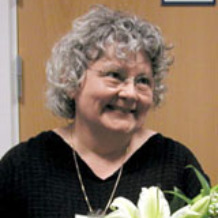
Professor Dianna J Bowles
Emerita
Profile
Career
| 2019 - 2021 | Emeritus Fellowship | The Leverhulme Trust |
| 2012 - | Emeritus Professor | Department of Biology, University of York |
| 2008 - 2012 | Chair of Biochemistry | CNAP, Department of Biology, University of York |
| 2001 - 2008 | Founder/Director of CNAP / Weston Chair of Biochemistry | Department of Biology, University of York |
| 1994 - 2000 | Established Chair | Department of Biology, University of York |
| 1990 - 1993 | Director of the Centre for Plant Biochemistry & Biotechnology | University of Leeds |
| 1979 - 1993 | Lecturer and Senior Lecturer in Biochemistry, Reader and Personal Chair in Plant Biochemistry | University of Leeds |
| 1978 | Postdoctoral Research Fellow | University of Regensburg, Germany. EMBL, Heidelberg, Germany |
| 1976 - 1977 | Postdoctoral Research Fellow | University of Cambridge |
| 1976 | Postdoctoral Research Fellow | The Weizmann Institute of Science, Israel |
| 1975 | Postdoctoral Research Fellow | University of Regensburg, Germany |
| 1973 - 1975 | Postdoctoral Research Fellow | University of Kaiserslautern, Germany |
| 1973 | PhD Biochemistry | University of Cambridge |
| 1970 | BSc Botany | University of Newcastle-upon-Tyne |
Research
Overview
I am interested in understanding the natural world at the molecular level. As a scientist, I also believe we have a responsibility to pursue our interests in biology to benefit society and develop natural solutions to the problems facing people across the world and their environments.
My major research outputs and impacts have concerned plant biology, biochemistry and chemical biology. This initially involved the study of the membrane compartments involved in making the plant cell wall and other glcoproteins and glycolipids. Through the role of glyco-molecules in plant defence and stress responses, I became interested in local and systemic cell signaling during a plants response to injury. This led on to our discovery of a large multigene family of enzymes playing a key role in metabolic management and cellular homeostasis. We cloned , characterized and made a recombinant platform for chemical biology of these small molecule glycosyl transferases, thereby increasing our fundamental knowledge of the enzymes and their properties and using them to make new flavours, fragrances and pharmaceutical products.
My interest in the bioactivity of natural products encouraged me to work on the plant, Artemisia annua. I led, together with Professor Ian Graham, a six year, large, multidisciplinary project, funded by the Gates Foundation, to develop improved varieties of the plant for production of artemisinin, a key treatment of malaria. In parallel, I collaborated with Dr Jack Lim and Profeesor Paul Kaye, to explore the human health impact of structural decorations on plant natural product scaffolds found in the diet. We discovered an exquisite level of specificity in relation to stimulating cytokines of inflammation.
Since I have lived in the Uplands, I have also become interested in sheep, particularly locally adapted sheep such as the Herdwicks. My research in this area has focused on determining the spatial distribution of breeds and currently we are building on those data and using DNA-based techniques to explore their genetic distinctiveness and utility of traits for future food security and environmental sustainability.
Discoveries
Discovery that decoration of plant natural product scaffolds affect inflammatory cytokines.
Discovery that genetic variation in Artemisia annua can lead to the identification of individuals for use as parents for the development of new improved and robust hybrids.
Discovery that native sheep breeds of the UK are highly geographically concentrated and their genetic resources provide novel insights into environmental adaptation and ability of the sheep to survive harsh conditions.
Awards
- Election to the European Molecular Biology Organisation (2001)
- Fellow of the RSA (Royal Society for the encouragement of Arts, Manufactures and Commerce) (2002)
- President of the Herdwick Sheep Breeders' Association (2003)
- Officer of the Order of the British Empire (OBE) (2003)
- Award from Yorkshire Forward: personal contribution to Bioscience in the region (2004)
- Elected Fellow of the Society of Biology (2010)
Projects
- Exploring the genetic distinctiveness of Heritage Sheep Breeds in the UK.
- Using genomic technologies to identify environmental associations of important adaptation and production traits of sheep.
Publications
Selected publications
Bowles, DJ (2015) Recent advances in understanding the genetic resources of sheep breeds locally-adapted to the UK uplands: opportunities they offer for sustainable productivity. Frontiers in Genetics 6 : 24, 1-4
Lim E-K, Mitchell PJ, Brown N, Drummond RA, Brown GD, Kaye PM and Bowles DJ (2013) Regiospecific methylation of a dietary flavonoid scaffold selectively enhances IL-1b production following Toll-like receptor 2 stimulation in THP-1 monocytes. Journal of Biological Chemistry 2013 288 : 21126-21135.
Graham, I.A., Besser, K., Blumer, S., Branigan, C.A., Czechowski, T., Elias, L., Guterman, I., Harvey, D., Isaac, P.G., Khan, A.M., Larson, T.R., Li, Y., Pawson, T., Penfield, T., Rae, A.M., Rathbone, D.A., Reid, S., Ross, J., Smallwood, M.F., Segura, V., Townsend, T., Vyas, D., Winzer, T., Bowles, D. (2010) The genetic map of Artemisia annua L. identifies loci affecting yield of the antimalarial drug artemisinin. Science 327, 328-331.
External activities
Memberships
Current
- Founder, Director and Chair of the Trustees of the national charity, The Sheep Trust.
- Public lectures and outreach activities on the properties and uses of plant natural products, food and farming, sheep genomic resources.
Previously
- Member of Yorkshire Agricultural Society, Grants and Education 1998-2008, Council 2009-2014
- Founder and Chair of the YAS Farmer-Scientist Network 2012-2015
Reviewing
- Founder and Editor-in-Chief of The Plant Journal 1991-2002
- Editorial Board, Essays in Biochemistry 1992-2000
- OST GM Science Review Panel 2002-2004
- The Royal Society Working Group on Biofuels 2006-2007
- Board of Reviewing Editors, Science 2006-2008
- Sainsbury Laboratory Governing Council 2004-2007
Development of non-food uses of plants
- Founder DTI-sponsored Plant Protein Club 1997-2001
- OST Foresight FCCI Industrial Task Force 1999-2001
- Member of Government-Industry Forum on Non-Food Crops 2001-2004
- Co-Founder and Director of the National Non-Food Crops Centre 2003-2005
- Co-Founder and Chair of the UK DTI-funded Knowledge Transfer Network, Bioscience for Business 2006-2008
- Board Member of the TSB-funded Knowledge Transfer Network, "The Bioscience KTN" 2008-2013
- Chair of the Plant Sector Group of the Bioscience KTN 2008- 2013
- BBC Rural Affairs Advisory Committee 2002-2004
Research Council and Government Agencies
- AFRC Institute of Plant Science, John Innes, Research Visiting Group 1993
- AFRC Plants and Environment Research Grants Board 1993-1994
- BBSRC Molecular Plant Pathology Initiative Steering Group 1994
- BBSRC Plant Cell Wall Initiative Steering Group 1996
- BBSRC Wealth Creating Products of Plants Initiative Research Grant Assessment Panel 1995-1996
- BBSRC Training Awards Panel 1995-1997
- BBSRC Biochemistry and Cell Biology Committee 1996-1997
- BBSRC Committee on Studentships and Fellowships 1997-2000
- BBSRC Innovation Advisory Panel 1997-1998
- BBSRC Strategy Board 1997-1998
- MAFF [Defra] Central Science Laboratory Ownership Board 1995-2001
- MAFf [Defra] National Co-ordination Committee on the protection of biodiversity of the UK farm animal genetic resources 2001-2002
- ODA Scientific Advisory Committee of the Plant Sciences Programme 1993-1997
- Chair, ODA Working Group into Rice Transformation for the UK 1994
Policy input into the European Commission
- Steering Group of the US-EC Taskforce in Biotechnology Research, Bioproducts from Plants 2004-2008
- Director of a Science to Support Policy project: EPOBIO, "Realising the Economic Potential of Sustainable Resources - bioproducts from non-food crops" 2005-2008
- EU DGXII Directorate, Life Sciences and Technologies External Advisory Group on Cell Factories 1998-2003
- Chair of the External Advisory Group to the European Commission FP7 for the Thematic Priority 2 on "Food, Agriculture and Biotechnology" 2006-2008