

Sex Work, Lay Religion, and the Cloister in Renaissance Florence
Monday 10 March 2025, 6.00PM
Speaker(s): Dr Gillian Jack (Open University)
Ideology, Society and Medieval Religion seminar series
In Florence at the beginning of the fourteenth century, members of a lay religious confraternity, the Piccione, proposed a monastic solution to a very secular problem. Many women, they believed, had fallen into prostitution through poverty and, though they wanted to leave the profession, poverty trapped them in it. The Piccione wanted to build a monastic refuge to which these women could escape sex work and devote their lives to penitence. The founding group was a laudesi society: laymen who were responsible for singing lauds at the cathedral of Santo Spirito in the south of Florence. They also undertook various charitable activities, including running a small hospital for the poor. They built their new monastery next to it so the nuns could staff it. Their inspiration came from popular penitential piety and, maybe, the words of a charismatic preacher. They created a monastic institution dedicated to penance for the city’s worldliest women: Sant'Elisabetta delle Convertite opened in 1330 and soon became one of the most populous women’s religious houses in a city full of nuns. The monastery reveals the overlapping spheres and porous boundaries between lay and religious, worldly and spiritual. I also argue that it is the monastery’s important secular function that ensured its survival by fostering the interest of the city rather than church authorities.
Dr Gillian Jack completed her PhD at St Andrews and is writing a monograph on the monastery where these women took their vows. It is to be published by the University of London in 2026. She currently works for the Open University.
Book tickets
Please note: the seminar will take place over Zoom, and a link will be sent to you upon registration.
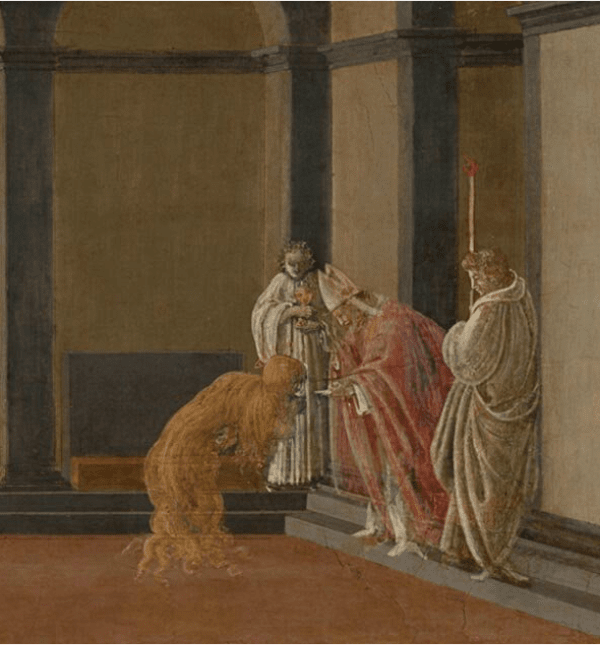
Event image: Detail from Last Moments of Mary Magdalene by Sandro Botticelli, c. 1484, from the high altarpiece of Sant'Elisabetta delle Convertite. Courtesy of the Philadelphia Museum of Art.
Location: online
Email: cms-office@york.ac.uk