

Disability and Access to Religious Space: Negotiating Liturgical Participation in Late Medieval Europe
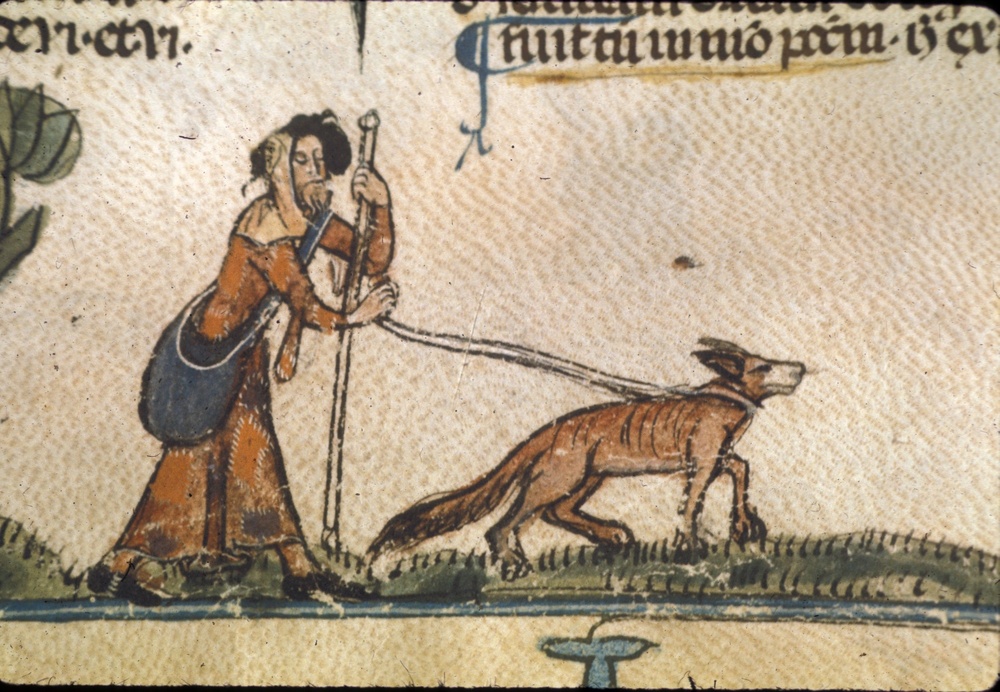
Monday 13 April 2026, 6.00PM
Speaker(s): Dr Ninon Dubourg (University of Cologne)
Ideology, Society, and Medieval Religion Seminar Series
This talk explores how late medieval Christians negotiated access to worship and religious service when bodies and senses did not match the expectations embedded in liturgy, canon law, and church space. Drawing on petitions and papal letters as a privileged archive of pastoral governance and legal accommodation, I develop a two-part argument. First, from the clerical perspective, I examine how men affected by blindness, illness, old age, or other impairments could remain in office through dispensations, delegation, and the appointment of coadjutors – mechanisms designed to reconcile sacramental efficacy, public reputation, and institutional continuity. Second, I shift to the laity to show how disability and frailty reshaped access to the parish church, domestic devotion, and obligations such as pilgrimage vows: chapels could be authorized or relocated, portable altars granted, and vows commuted into charitable substitutes when travel became dangerous or impossible. Throughout, I bring sensory impairment (blindness, deafness, and cognitive incapacity) into view to ask what it meant to “participate” in rites that depended on seeing, hearing, and understanding. Across these cases, disability emerges less as exclusion than as negotiation: a practical, legal, and emotional work of making Christian time, space, and ritual accessible.
NINON DUBOURG is an Alexander von Humboldt Fellow based at the University of Cologne. Her research interests revolve around old age and physical, sensory, and mental disabilities within the framework of Material, Cultural, and Social Medieval history. Her first monograph, Disabled Clerics in the Late Middle Ages: Un/suitable for Divine Service? (2023), delves into the relationship between the Church and disability. She is also co-editor of a special issue with Sara Scalenghe and Pieter Verstraete, "Disability History and History of Emotions", Journal of Medieval History, volume 25/2, 2025; and of 2 books, with Christophe Masson, Disability and War in the Late Middle Ages (Arc Humanity Press, 2025); and with Fabrice Bertin, and Gildas Brégain, Histoires des handicaps à travers les siècles. Identifications, trajectoires, institutions et sociabilités (Presses Universitaires de Rennes, 2026).
This seminar will last approximately 90 minutes including a Q&A, and will begin at 18:00 BST on Monday 13 April 2026. This is an online event, which will be broadcast on Microsoft Teams; a link will be emailed to you upon registration via Ticketsource. Please check your spam/junk folder for this email if you cannot find it. The talk will not be recorded
Location: Online