
Centre for Renaissance and Early Modern Studies

Landesmutter: Women, Environment, and Authority in Early Modern Northern Europe
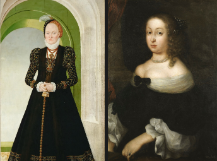
Wednesday 25 November 2026, 5.00PM
Speaker(s): Dustin Neighbors, University of Gothenburg, Sweden
The paper will explore the early modern concept of the Landesmutter—the “mother of the country”—as a lens for understanding women’s environmental authority in Northern Europe. Drawing on HERLAND’s research framework, it examines how elite women such as Electress Anna of Saxony (1532–1585), Queen Hedwig Eleonora of Sweden (1636–1715), and other noble women cultivated identities rooted in care, stewardship, and ecological expertise.
By situating the Landesmutter within broader patterns of women’s environmental labour—farming, healing, gardening, resource management—the lecture argues that this title was more than symbolic. It articulated a gendered form of environmental governance that blurred domestic and public spheres, positioning women as cultural mediators between household, landscape, and state. Through case studies from Sweden, Denmark, and Germany, the lecture shows how women’s ecological knowledge, daily practices, and interactions with natural resources contributed to environmental change and political identity in the Baltic world. Ultimately, the Landesmutter becomes a powerful framework for reassessing women’s agency in shaping early modern environments and for understanding the long historical roots of gendered environmental stewardship.
Book online attendance via Zoom
Seminars start 15 minutes after the advertised start time!
Dr Dustin M. Neighbors, FRHistS, is a Marie Skłodowska-Curie Fellow at the University of Gothenburg in Sweden. His project is HERLAND (“Between Household and Landscape: A Comparative Study of Women’s Engagement with Nature, Resources, and Animals, 1500-1800”/#101280677). Dustin completed his PhD at the University of York in 2018, under the supervision of Dr John Cooper. As a historian of England and Northern European history, Dustin specialises in the history of monarchy and court culture, with an emphasis on female power and the performativity of gender, material and political culture, cultural practices and environmental activities (i.e., hunting) within the sixteenth and seventeenth centuries, and the employment of digital methods of analysis within historical research.
Previously, Dustin was the Project Coordinator for the EU-Horizon funded project, Colour4CRAFTS, at the University of Helsinki. He was also a Postdoctoral Researcher with the Fashion History Lab at Aalto University and a Postdoctoral Research Fellow at the Centre for Privacy Studies at the University of Copenhagen, where he was part of a case team focusing on early modern Dresden.
Dustin has published in several journals, with several more essays forthcoming, including an upcoming article on the meanings of colour and dress at royal and princely courts. He was the lead co-editor of Notions of Privacy at Early Modern European Courts: Reassessing the Public/Private Divide, 1400-1800 published by Amsterdam University Press in 2024. He is currently completing a monograph on the life of Queen Christina of Sweden.
Location: H/G15, Heslington Hall and Zoom
Admission: All welcome - drinks and Nibbles provided after the seminar.
Email: crems-enquiries@york.ac.uk