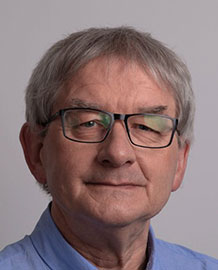
Professor Roderick E Hubbard
+44 (0)1904 328267
Email: roderick.hubbard@york.ac.uk
Fragment and structure-based discovery
Summary
My research interests for the past 45 years have been the structure of proteins – what they look like (structure determination and molecular modelling), how they perform their function (protein-ligand interactions, mechanism of action) and how to exploit that information (design of modified proteins and drug discovery).
Over the past 25 years, the focus has been on using information about protein structures to design small molecule compounds that change the way proteins work. Until 2025, I divided my time between academic research within York Structural Biology Laboratory and applied research in drug discovery at the pharmaceutical company, Vernalis.
At York, my research group worked on projects funded by the research councils, EU and companies primarily on developing methods in structure-based discovery (activating industrial enzymes, structure-based design, fragment design) and applications in chemical biology (see York Research Database for details of output). I became Emeritus Professor in 2020.
At Vernalis, I led the development and application of methods in structure and fragment-based drug discovery in collaboration with companies around the world to discover new compounds which can be taken forward in clinical trials to treat various diseases and conditions, including cancer, inflammation, infection and neurodegeneration. I retired from Vernalis in 2025 as I took up a consultancy with the parent company, HitGen Inc to advise on internal research and development at the Group which is a world leader in DNA-encoded library methods and its application in drug discovery.
Key recent publications
- Fragment-Based Discovery of Novel non-Hydroxamate LpxC Inhibitors with Antibacterial Activity.
Yamada et al., J Med Chem., http://dx.doi.org/10.1021/acs.jmedchem.0c01215.- Rapid optimisation of fragments and hits to lead compounds from screening of crude reaction mixtures.
Baker et al., Commun Chem., 2020, 3, 122- Water Networks Can Determine the Affinity of Ligand Binding to Proteins.
Darby et al., J Am Chem Soc., 2019, 141, 15818-15826.- Increase of enzyme activity through specific covalent modification with fragments.
Darby et al., Chem Sci, 2017, 8, 7772-7779- Twenty years on: the impact of fragments on drug discovery.
Erlanson et al., Nature Reviews Drug Discovery, 2016, 15, 605-619- Fragment-Based Lead Discovery.
Hubbard R E., in RSC Medicinal Chemistry Handbook, ed A. Davis and S Morley, 20- rDock: A fast, versatile and open source program for docking ligands to proteins and nucleic acids.
Ruiz-Carmona et al., PLoS Comp Biol, 2014, 10, Article Number: e1003571
Brief career summary
Apart from brief sabbaticals at Harvard with Martin Karplus, Rod Hubbard’s academic career was at the University of York. During the 1980s he was a pioneer in the development of molecular graphics and modelling systems for studying protein structure (HYDRA and QUANTA), which introduced methods that are still in use today. In the 1990s, he helped to build (and direct) the Structural Biology Laboratory at York as a major centre, with over 80 scientists studying the structure and function of proteins.
His personal research interests focused on understanding the relationship between structure, mechanism, and function in various protein systems (including proteases, nuclear receptors and kinases) and experimental and theoretical studies of protein-ligand interactions including some of the first work identifying very small compounds that bound to proteins that led to fragment-based methods in drug discovery. He also worked with research councils, government bodies and charities as a member of various committees, advisory and review panels, including an extended period as chair of a BBSRC research committee. He became Emeritus Professor at York in 2020.
From 2001 to 2025, he spent some of his time at the company Vernalis, where he helped establish and apply fragment and structure-based drug discovery methods. He was also a consultant to several pharmaceutical and technology companies.
He retired from Vernalis in 2025 to take up a senior advisory role with their parent company, HitGen Inc.
Five most cited papers
- Brzozowski, A.M., Pike, A.C.W., Dauter, Z., Hubbard, R.E., Bonn, T., Engstrom, O., Ohman, L., Greene, G.L., Gustafsson, J.A. and Carlquist, M. (1997), 'Molecular basis of agonism and antagonism in the oestrogen receptor', Nature, 389, 753-758
- Baker, E. N. & Hubbard, R. E. (1984) 'Hydrogen Bonding in Globular Proteins', Progress in Biophysics and Molecular Biology, 44 97-179
- Hyde, S.C., Emsley, P., Hartshorn, M.J., Mimmack, M.M., Gileadi, U., Pearce, S.R., Galagher, M.P., Gill, D.R., Hubbard, R.E. and Higgins, C.F. (1990) 'Structural Model of ATP-binding proteins associated with cystic fibrosis, multidrug resistance and bacterial transport', Nature, 346 362-365
- Pike, A.C.W., Brzozowski, A.M., Hubbard, R.E., Bonn, T., Thorsell, A.G., Engstrom, O., Ljunggren, J., Gustafsson, J.K. and Carlquist, M. (1999) 'Structure of the ligand-binding domain of oestrogen receptor beta in the presence of a partial agonist and a full antagonist' Embo J, 18 4608-4
- Erlanson, D.A., Fesik, S.W., Hubbard, R.E., Jahnke, W. and Jhoti, H. (2016) 'Twenty years on: the impact of fragments on drug discovery' Nat. Rev. Drug Disc., 15 605-19
- Baker, E.N., Blundell, T.L., Cutfield, J.F., Cutfield, S.M., Dodson, E.J., Dodson, G.G., Hodgkin, D.C., Hubbard, R.E., Isaacs, N.W., Reynolds, C.D., Sakabe, K., Sakabe, N., Vijayan, M. (1988) 'The structure of 2Zn insulin at 1.5A resolution' Phil. Tran. R. Soc. Lond, B319, 369-456