Department of Education

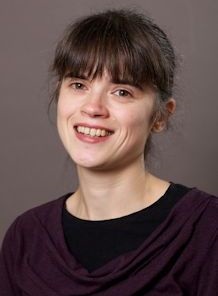
Dr Zoe Handley
Visit Dr Zoe Handley's profile on the York Research Database to:
- See a full list of publications
- Browse activities and projects
- Explore connections, collaborators, related work and more
Profile
Biography
I obtained a first degree in French Language Technology BSc from the Centre for Computational Linguistics, UMIST, Manchester in 2001 and a PhD in Informatics from the University of Manchester in 2006. Since completing my doctoral studies which investigated the use of speech synthesis in Computer-Assisted Language Learning (CALL), I have worked as a language specialist in the Speech Technology Group at Toshiba, Cambridge (2006-2007), as a Research Fellow in the Learning Sciences Research Institute at the University of Nottingham (2007-2009) investigating pronunciation training, and as an Oxford University Press Research Fellow in the Department of Education at the University of Oxford (2009-2011) studying the use of technology in primary and secondary English as a foreign language classes.
I joined the Department of Education at the University of York in September 2011 and was promoted to Senior Lecturer in 2017. Since joining the Department, I have taught across the undergraduate and postgraduate programmes. My main teaching responsibilities lie in the areas of research methods. I have also taught a range of modules in TESOL and applied linguistics, including Teaching and Assessing Speaking Skills and Technology Enhanced Learning and Teaching. I have played a lead role in a number of teaching innovations in the Department and received a Vice Chancellor’s Award for Teaching in recognition of these contributions in 2014.
Research
Overview
My research falls into two main areas, namely second language oral fluency, and computer-assisted language learning. In addition to this, I am also interested in second language pronunciation and the potential use of technology to support pronunciation teaching.
Second language oral fluency and its development
Within the area of oral fluency, I am currently completing two projects. The first, funded by the British Academy through a Skills Acquisition Award, focuses on answering the question “What is fluency?” and explores the relationship between Chinese masters students’ linguistic knowledge and processing and their oral fluency, where fluency refers to the fluidity of oral production. The second, funded by the British Council through an English Language Teaching Research Award, investigates the impact of study abroad on Chinese master’s students’ oral fluency development and compares a cohort of students studying in the UK with a similar cohort studying in China. These projects have the potential to inform approaches to measuring and assessing oral fluency as well as the focus of in-sessional support for Chinese international students.
Computer-Assisted Language Learning
Within the area of computer-assisted language learning, I am currently supervising doctoral students in the areas of computer-mediated communication and blogging. Other topics which I have worked on with research students include teacher professional development through online communities of practice, wiki-mediated collaborative writing, and the use of smartphones to support international students during study abroad. My own work in this area includes a systematic review of research on the use of CALL in primary and secondary EFL classrooms, an evaluation of different approaches to Computer-Assisted Pronunciation Training (CAPT), and an evaluation of the readiness of French Text-to-Speech (TTS) Synthesis for use as a speech module in CALL software. I have also written on methodological issues in the CALL literature.
Research group(s)
Available PhD research projects
I welcome applications from highly qualified students in the following areas:
- Second language oral fluency and its development
- Second language pronunciation learning and teaching
- Computer-mediated task-based language teaching
- Teacher cognition and decision making in relation to the use of technology in the language classroom
Applications which explore the specific affordances of individual technologies for the teaching of specific language skills will also be considered, in particular those which draw links with Second Language Acquisition (SLA) theory and research.
View all of our current available PhD research projects.
External activities
Memberships
Peer reviewer for:
Journals
CALICO Journal , CALL, International Review of Applied Linguistics in Language Teaching, JALT CALL, Language Learning, Language Teaching, System, and TESOL Quarterly.
Conferences
Interactive Technologies: Education, Disability and Rehabilitation Conference 2008, EC-TEL 2009, the European Conference on Technology Enhanced Learning, EUROSLA 24 – present, British Association of Applied Linguistics (BAAL) Language Learning and Teaching (LLT) SIG 2016, EUROSLA 27.
Grants
ESRC and Institute for the Promotion of Innovation by Science and Technology in Flanders.
Member of:
Past workshops