
Department of Philosophy

- Department of Philosophy
- Current staff and students
- Current students
- Skills for your future

Skills for your future
Philosophy graduates are equipped to enter a variety of jobs from health service management to banking, from tourism to government. Some continue in academic study and research, or take professional or vocational training to prepare for careers in, for example, education or law. This vast range of careers is made possible by the many transferable skills our students gain through their philosophy studies.
Transferable skills expressed in terms of York Strengths
- Problem Solver: critical thinking, analytical thinking, creative solutions
- Innovative thinker: creativity, curiosity, initiative and ideation
- Authentic Communicator: speaking skills, interpersonal awareness, clarity, active listening
- Relationship Builder: team building, collaboration, team-work
- Resilient Achiever: adaptability, versatility, flexibility
- Self Improver: self-motivation, emotional intelligence, giving and receiving feedback
- Digitally capable: digital literacy, IT skills, software expertise
Find out more about the York Strengths Professional Skills framework.
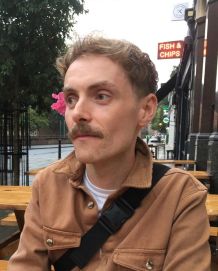 |
Jamie Riding, BA and MA PhilosophyVideogames production director“Leading production on games projects requires a unique balance: maintaining a 'zoomed-out' architectural view of how complex systems fit together, while simultaneously being able to attend to fine details in disparate fields. Philosophy provided the perfect training for this synthesis, teaching me to navigate complexity by understanding exactly how the parts relate to the whole. On a practical level, my background in logic also gave me an immediate leg up in understanding engineering challenges, allowing me to build stronger relationships with technical teams.” |
|---|
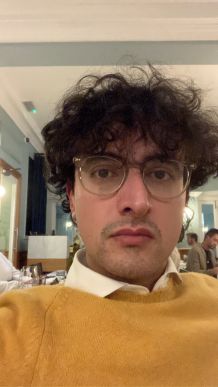 |
Zayn Qureshi, BA PhilosophyMA Conflict Studies and Human Rights, LLM in Law and Legal PracticePolicy and Legal Professional“My career to date has been marked by a lot of change. After leaving York, I went on to do a master’s in conflict studies and worked in human rights; I then spent five years working in public policy at a think tank in Westminster, and now I am working in law as a paralegal at the East Midlands Combined County Authority. I would not have been able to adjust to these shifts in my career were it not for the way my Philosophy degree at York trained me to think. Spending three years constantly engaged in thought experiments and trying to understand different points of view, especially ones I strongly disagreed with, has enabled me to adjust rapidly to different professional settings, cultures and expectations. Above all else, this is the skill I have valued most from my Philosophy degree and it is what makes me so proud to have pursued it at the University of York.” |
|---|