

New research led by the CMS's Steve Ashby just published in Antiquity!
Posted on 19 February 2026
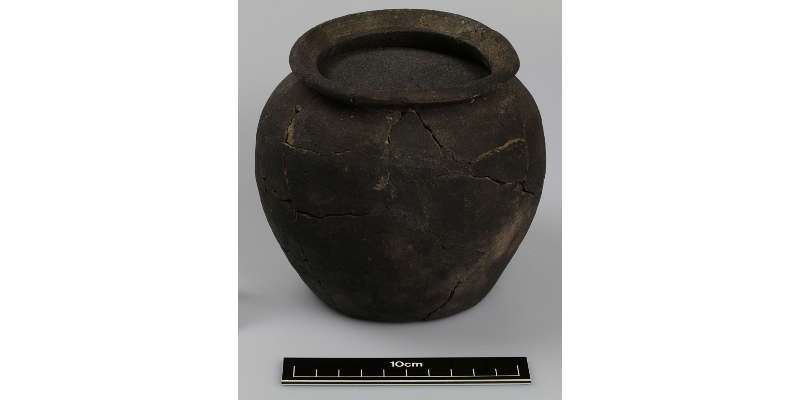
The expression of identity in Viking-Age England has long been a subject of discussion, but it is often investigated via language, landscape, architecture or artefacts. We know that food is an important medium in making identity, particularly in contexts of culture-contact. So might it be possible to see that in the archaeology? This project set out to explore this question, through the most extensive programme of organic residue analysis yet undertaken on early-medieval pottery, considering material from a range of sites in eastern England, including York, Lincoln, and London, as well as Ribe and Aarhus in Denmark.
The team were particularly interested in fish, as something often associated with 'Viking' identity. They found that while almost a quarter of the pots from sites in Denmark were used to cook fish, this practice was identified in less than 5% of samples from England. The appearance in England of new forms of pottery (which must suggest different ways of cooking) does not affect this pattern. Ashby et al suggest that this relates to the re-making of identities, as Scandinavians settled into new communities in eastern England, apparently pragmatically fitting into existing ways of cooking and eating.
The research was funded by the Arts and Humanities Research Council project ‘Melting pot: food and identity in the age of the Vikings’ (AH/M008568/1), with support from the Department of Archaeology Research Fund.
The paper is published in Antiquity, and available on Open Access.
Ashby, S.P., A. Radini, G.J. Perry, A. Lucquin & O.E. Craig. 2026. Cuisine and culture-contact: lipid residue analysis reveals lack of aquatic products in pottery from Viking Age England. Antiquity: Published online 2026:1-17. doi:10.15184/aqy.2026.10288