

Period Bands B/C
Critical Approaches to Architecture
Tutor: Helen Hills
Description
Architecture is not equivalent to a literal building. This module is designed to open up the examination and critical analysis of architecture in terms of history, materiality, and the question of the work of architecture. It approaches architecture through the lens of architectural discourse, embracing buildings, the figure of the architect, the architectural profession, architecture and religion, film, poetry and novels. It engages with interpretations of architecture from within art history and from outside its borders, including in film studies, anthropology, sociology, philosophy, and health sciences.
Objectives
By the end of the module, students should have acquired:
- critical reading skills and thoughtful critical evaluation of scholarly argument
- cross-disciplinary thinking
- sustained and independent work
- communication skills (group speaking and individual oral presentation)
- critical knowledge of a range of ideas and debates about architecture, particularly in relation to the problem of history
- knowledge of critical approaches to close reading of buildings and figurations of architecture of many kinds
- sharper skills and practice in thinking and writing critically about architecture
Preliminary Reading
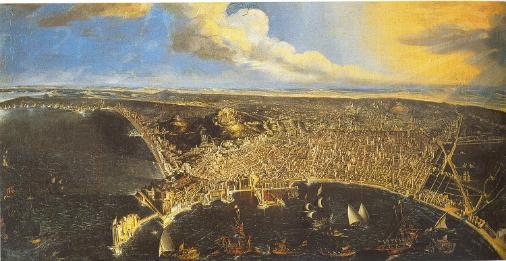
- Helen Hills, Invisible City. Architecture of Aristocratic Female Convents in Baroque Naples, Oxford University Press, 2004
- Catherine Ingraham, Architecture, Animal, Human. The Assymetrical Condition, London & New York: Routledge, 2006.
- William Braham & Jonathan Hale (eds), Rethinking Technology. A Reader in Architectural Theory, London & New York: Roiutledge, 2007.
- Radner, H 2011, The Apartment Plot: Urban Living in American Film and Popular Culture, 1945 to 1975 (& review: Journal Of American History, 98, 3, pp. 880-881).
- Booth, M 2010, Harem Histories [Electronic Resource] : Envisioning Places And Living Spaces / Marilyn Booth, Editor, n.p.: Durham [N.C.] : Duke University Press, 2010.
- Davidson, J 2011, Bodymaps: Sexing Space and Zoning Gender in Ancient Athens, Gender & History, 23, 3, pp. 597-614,
- Lori A Brown, Feminist Practices. Interdisciplinary approaches to women in architecture, Ashgate: 2011
- B Colomina (ed), Sexuality and Space, Princeton University School of Architecture: Princeton, 1992.
- Holmes, D, O'Byrne, P, & Murray, S 2010, Faceless sex: glory holes and sexual assemblages, Nursing Philosophy, 11, 4, pp. 250-259
- Shannahan, D 2014, Gender, inclusivity and UK mosque experiences, Contemporary Islam, 8, 1, pp. 1-16.
- Olkowski, DE 2001, Matter in Motion, Architecture and Sexuality, Parallax, 7, 2, pp. 95-106
- Baydar, G 2012, BEDROOMS IN EXCESS, Woman's Art Journal, 33, 2, pp. 28-34.
- Baker, CM 2005, Rebuilding the House of Israel: Architectures of Gender in Jewish Antiquity, Nashim, 9, pp. 191-203
- Baydar, G 2002, Tenuous boundaries: women, domesticity and nationhood in 1930s Turkey, Journal Of Architecture, 7, 3, pp. 229-244,
- A Friedman, Women & the Making of the Modern House, New York: Abrams, 1998.
- Pollock, G 2008, The visual poetics of shame: A feminist reading of Freud's Three essays on the theory of sexuality (1905), Shame and sexuality: Psychoanalysis and visual culture pp. 109-128 New York, NY, US: Routledge/Taylor & Francis
- Conan, M 2002, Bourgeois And Aristocratic Cultural Encounters In Garden Art, 1550-1850 / Edited By Michel Conan,: Washington, D.C. : Dumbarton Oaks Research Library and Collection, c2002
- Gershenson, O 2005, The Restroom Revolution Will Not Be Televised: The Transgender Movement and the Politics of Unisex Bathrooms, Conference Papers -- International Communication Association, pp. 1-26.
- P Bourdieu, Outline of a Theory of Practice, Cambridge UP: Cambridge, 1977, esp. chs. 2, 3, and 4.
- H Lefebvre, The Production of Space (La production de l’espace, Paris: Editions Anthropos, 1974), trans. D Nicholson-Smith, Blackwell: Cambridge, 1991.
- P Bourdieu, ‘The Berber House’ in M Douglas, Rules and Meanings, Penguin: Harmondsworth, 1973.
- Jarzombek, M 2010, Architecture and sexuality in the words of Filarete, Thresholds, 37, pp. 6-7.
- Prussin, L, Adan, A, Andrews, P, Fullerton, A, Grum, A, & Holter, U 1995, African Nomadic Architecture: Space, Place, And Gender, Washington, DC: Smithsonian Institution Press
- Baydar, G 2002, Tenuous boundaries: women, domesticity and nationhood in 1930s Turkey, Journal Of Architecture, 7, 3, pp. 229-244,
- Cheng, A 2009, Skin deep: Josephine Baker and the colonial fetish, Camera Obscura, 69, pp. 34-79,
- Betsky, A 1995, Building Sex : Men, Women, Architecture, And The Construction Of Sexuality / Aaron Betsky, n.p.: New York :
- Colomina, B, & Bloomer, J 1990, Sexuality and space: interview with Beatriz Colomina, Columbia University. Graduate School Of Architecture, Planning & Preservation Newsline, 2, 7, pp. 6-7,
- Shonfield, K 2000, Walls have feelings: cult films about sex in 1960s London, Architectural Design, 70, 1, pp. 32-35.
Module Code HOA00047H